Why Clay Pots Split in a September Shed and Plastic Ones Don't
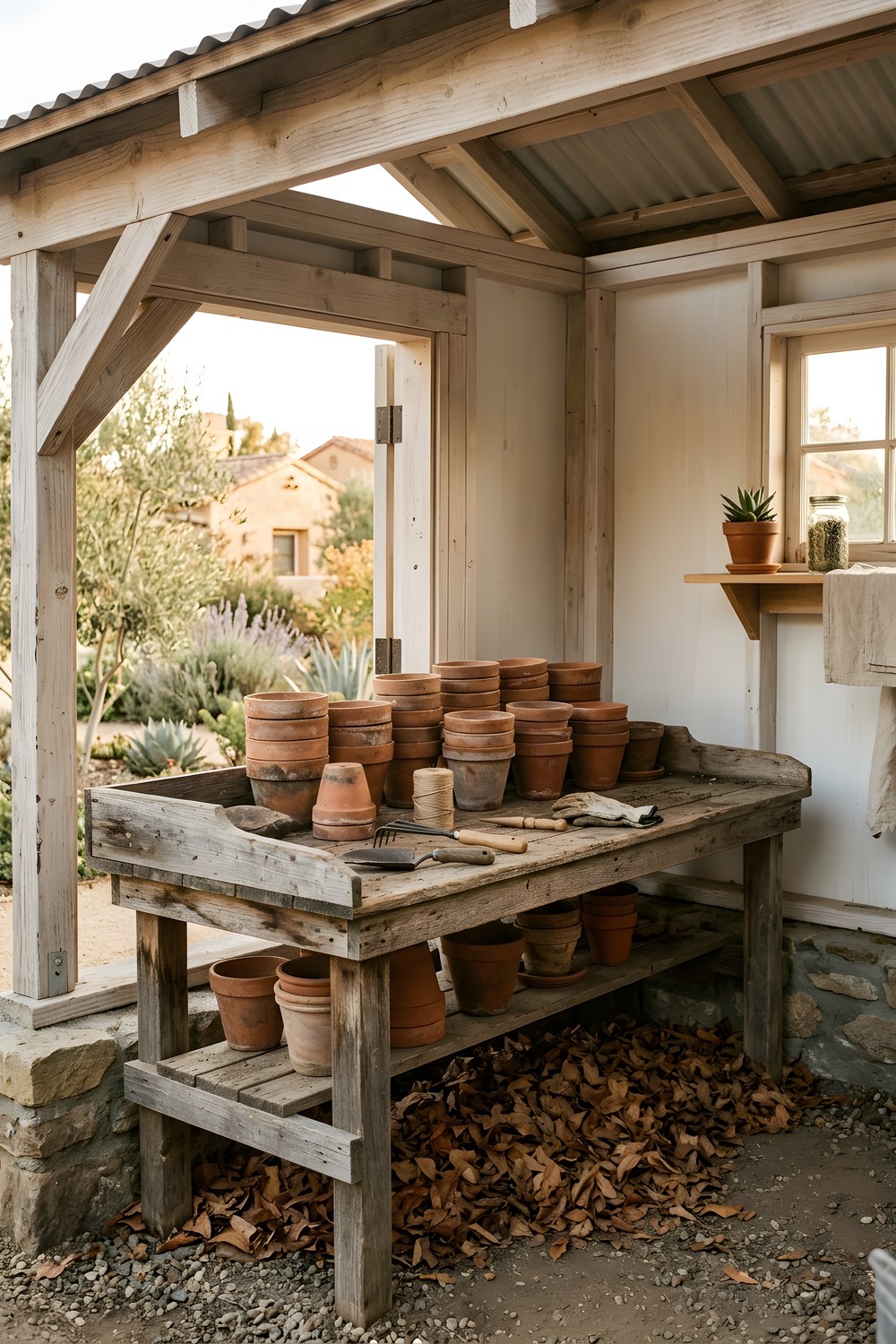
Stacked terracotta looks like storage but it is actually a slow experiment in freeze and thaw. Here is what decides whether it survives to spring.
The pot is a sponge first, a container second
Unglazed clay drinks water from the soil, from rain that blows in under an open shed roof, even from the humid air of a late summer evening. That water sits inside the porous walls long after the surface looks dry. It is not decoration; it is physics with a memory, and by autumn every stacked pot on a bench is carrying more moisture than its owner assumes.
What September actually changes
The swept pile of dry leaves in the corner of a shed is a small calendar. It marks the point where afternoon sun still warms the wood of a potting bench but the nights have started dropping enough to matter. That gap, warm days and cool nights, is exactly the condition that turns damp terracotta into a liability. Water trapped in the clay expands as it freezes, even briefly, and pushes outward against walls that have no give. A pot that survived five winters can fail on the sixth for no reason visible from outside, because the crack started as a hairline the previous spring and simply finished the job.
Glazed pots resist a little longer because the surface sheds more water, but glaze only covers the outside. The rim and the drainage hole stay porous, and that is usually where the first fracture shows up, not in the wide belly of the pot.
The fix is boring and it works
Empty pots stored on their sides, not upright, drain fully and never hold a collar of standing water at the base. Raised off the ground, even on a scrap of wood, they avoid wicking moisture up from packed earth. None of this requires a heated space. A shed with airflow and a slight slope to the floor does more for a stack of clay pots than any amount of bubble wrap, because the goal is not warmth. It is simply keeping the material dry enough that freezing has nothing to grip.