Taking you to Amazon … Continue manually
A quiet season for a study of how trauma lives in the body
Bessel van der Kolk M.D.
Check price on Amazon Opens Amazon.com · affiliate link
Author: Bessel van der Kolk M.D.; Format: Paperback; Publisher: Penguin Books; Publication date: September 8, 2015; Edition: Reprint; Language: English; Print length: 464 pages; Reading age: 18 years and up
For the stretch of the year when the house is quiet and there is room to think about what a body carries, this is a long, serious book on trauma and recovery. It sets out how overwhelming experience shapes brain and body, and it describes treatments that work through movement, breath, and relationships as well as talk.
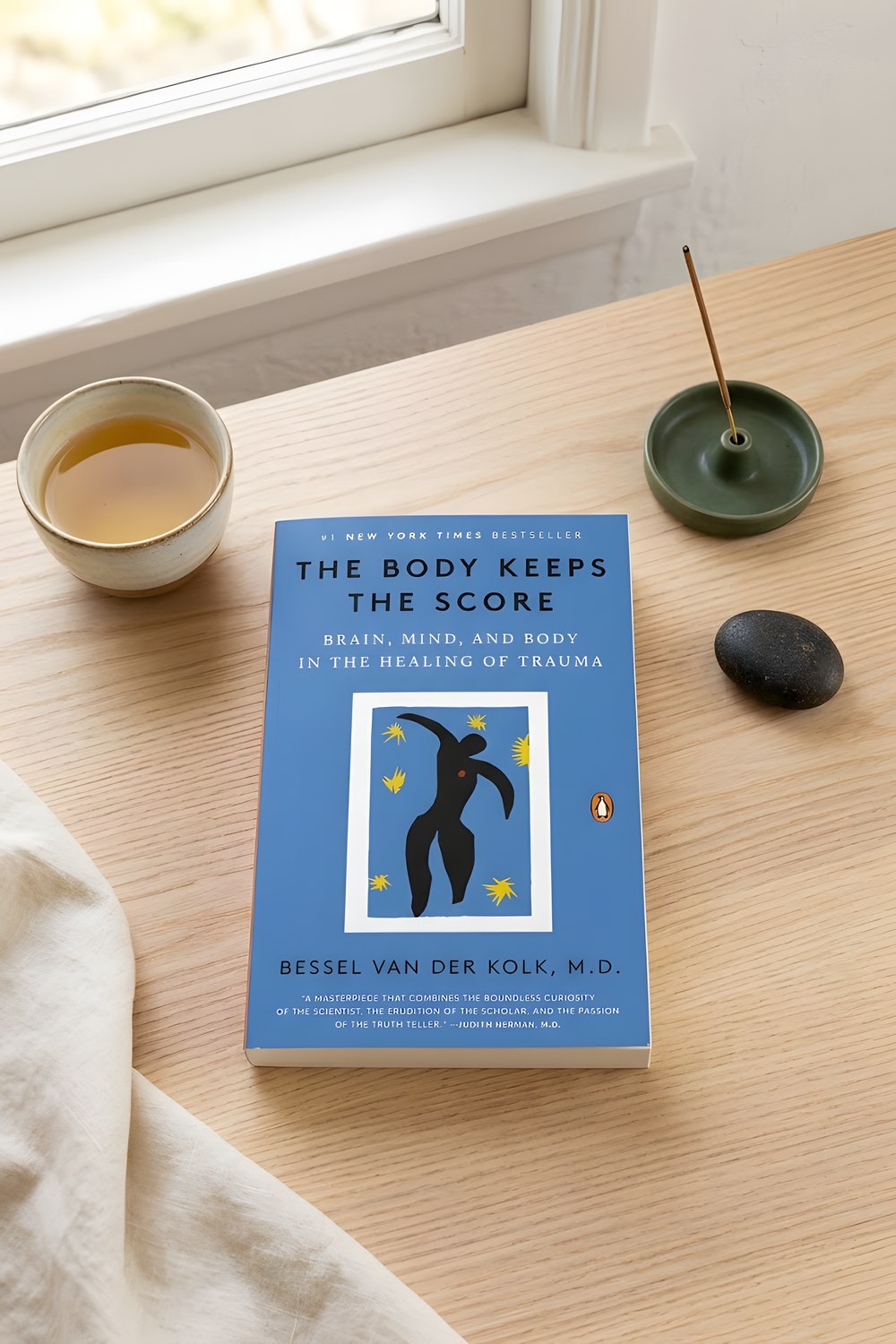
The Body Keeps the Score is a paperback reprint from Penguin Books, published September 8, 2015, and it runs 464 pages. The author, Bessel van der Kolk, is a psychiatrist who has spent three decades working with survivors of trauma. His subject is what follows overwhelming experience: combat, childhood abuse, neglect, violence at home. The description opens with figures meant to show how common this is in American life, including one in five Americans molested and one in four raised with alcoholics. The book treats trauma as an ordinary fact of life and not a rare event.
The central argument is that trauma reshapes both body and brain. According to the author, it can compromise a person’s capacity for pleasure, engagement, self control, and trust. He builds the case from neuroscience, from his own research and that of other specialists, and from accounts of patients. A reviewer in Nature notes his view that severe trauma is “encoded in the viscera,” and the same review follows how treatment has changed since the 1970s, when medication was often the main tool. The European Journal of Psychotraumatology adds that the book reaches past the body to cover the brain, attachment patterns in childhood, and chronic abuse.
The second half of the argument concerns recovery. Van der Kolk describes approaches such as neurofeedback, meditation, sports, drama, and yoga, and he ties them to neuroplasticity, the brain’s capacity to change. He also gives weight to relationships, which he says have great power both to hurt and to heal. That thread runs through the whole book and gives it a humane center beyond the science.
It suits several kinds of reader. Some have lived through something hard and want an explanation for the way their body reacts. Others are partners, parents, teachers, or caregivers who want to understand someone close to them. Clinicians and students will find a broad survey of research and treatment. It tends to matter most at a point when a person is ready to look at the subject directly, and only that person can judge when that is. Whether this is the right book now is a question of taste and readiness, not something a description can measure.
As a read, it is dense and it is demanding. New Scientist calls it “an intense read,” packed with science and human stories, and describes the struggle and resilience of the patients as very moving. At 464 pages in nonfiction form, it rewards a slow pace: a chapter at a time, set down when needed, picked up again on a calmer day. The book’s closing hope is a practical one, that a life can be reclaimed, and that the people around us have a real part in that work.
What we like about it
- Author: Bessel van der Kolk, M.D., a psychiatrist with three decades of work with trauma survivors
- Format: paperback reprint, 464 pages, in English
- Publisher: Penguin Books, published September 8, 2015
- Covers how trauma affects brain and body, plus treatments such as neurofeedback, yoga, and meditation
- Suits survivors, families, caregivers, and clinicians ready for a dense, serious read
Disclosure: Our links earn us a commission, at no extra cost to you. Thank you. As an Amazon Associate we earn from qualifying purchases. Prices and availability are shown on Amazon and can change at any time.