Why the empty snack bowl on movie night keeps getting refilled
Most snacking on the sofa is not about hunger. It is about the size of the container in front of you.
What usually goes wrong
A big bowl or a bag meant for a household gets set out for one person on the sofa, and the portion that follows has nothing to do with appetite. Research on eating behavior calls this the unit bias, the tendency to treat whatever is put in front of us as a single serving, whether that container holds a hundred calories or a thousand. Add a film or a show and the effect gets stronger, since attention is on the screen, not the hand moving back and forth. People eating in front of a screen have been shown to eat noticeably more than people eating the same food at a quiet table, and they usually cannot say afterward how much they had.
The dim light of an evening on the sofa adds a second problem. Low light and a glowing screen make it harder to notice how far down the bowl has gotten, so the visual cue that normally tells a person to slow down arrives late or not at all.
What to do instead
The fix has nothing to do with willpower and everything to do with the container. Portioning a snack into a single small bag or bowl before the film starts, rather than sitting down with the whole box, sets a boundary that the eye can register even in low light. A bag with a stated serving already marked on the outside removes the guesswork entirely, since the packaging itself sets the unit rather than leaving it to a hand reaching into a communal bowl.
Worth noting this only works for portion size, not for slowing the pace of eating. Turning the film’s volume down half a notch or pausing between episodes does more for that than any container choice.
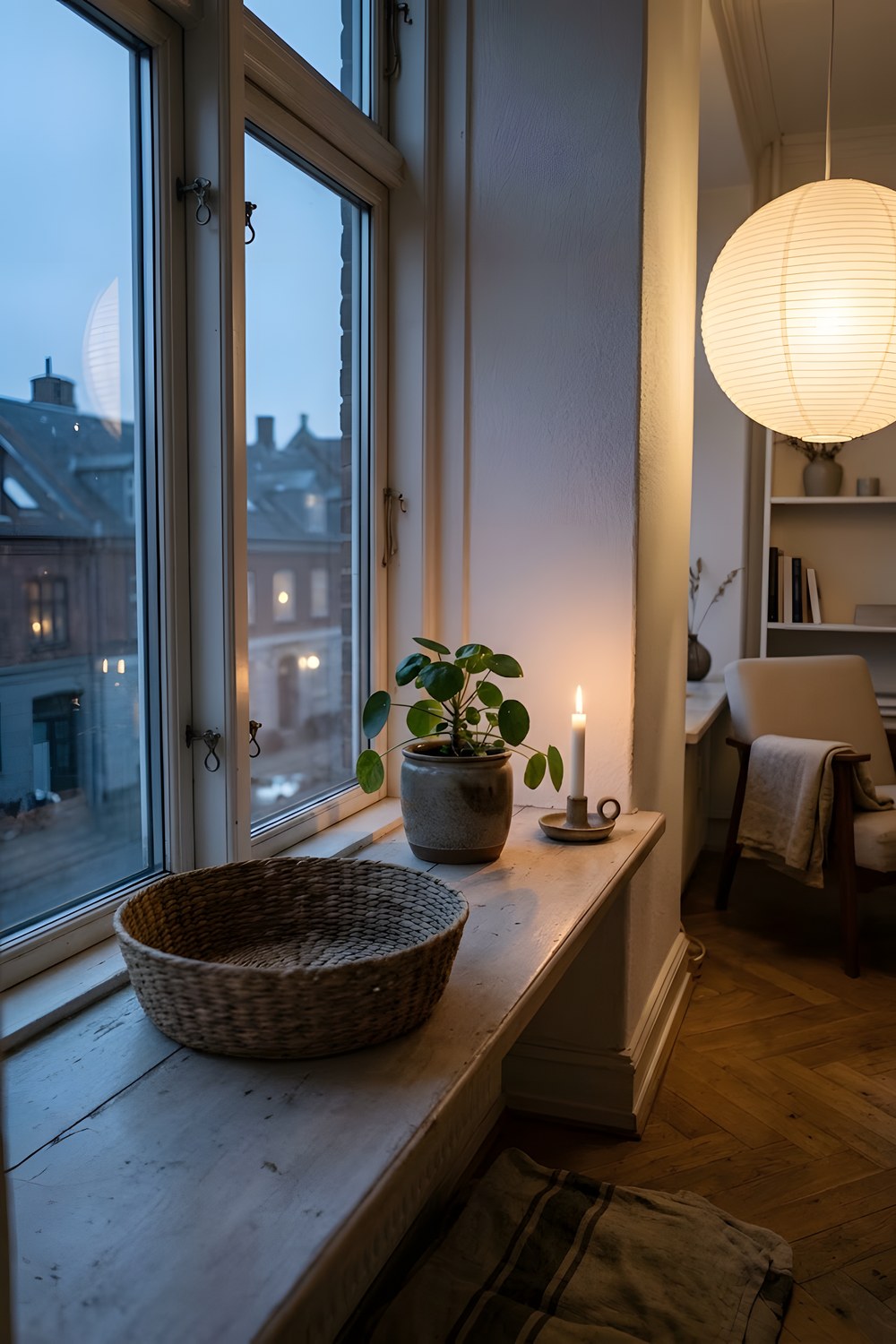
A plant on a quiet windowsill and a basket with nothing in it make an evening feel settled before the film even starts. The snack is a small piece of that same calm, and it stays that way only if its size was decided before the lights went down, not somewhere in the middle of act two.