How to Choose a Windowsill Pot That Will Not Rot Your Herbs
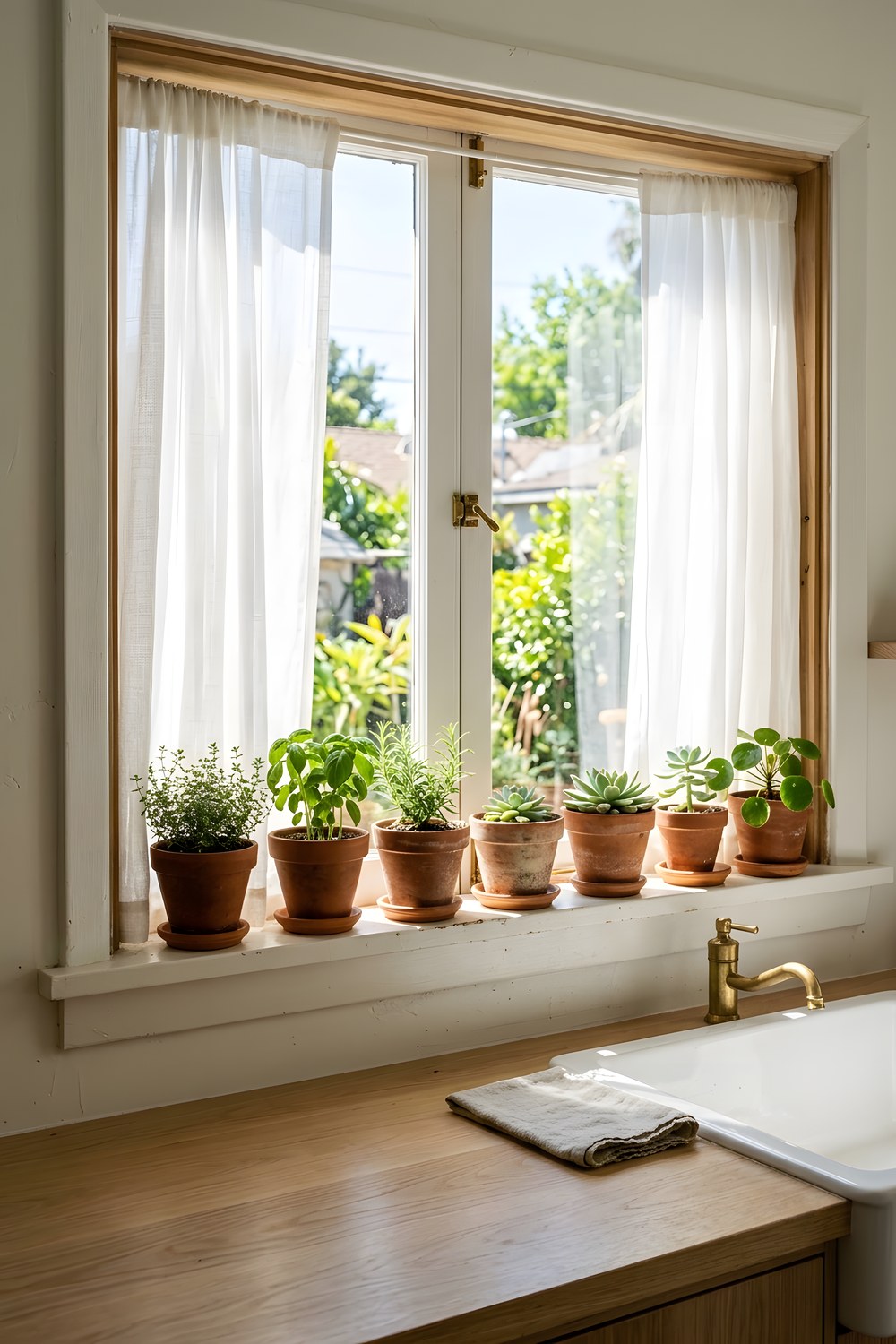
The pot matters more than the plant. A few measurements tell you whether roots will thrive or drown.
The Hole Decides Everything
A terracotta pot without a drainage hole is a liability, not a style choice. Herbs like basil and thyme fail more often from standing water than from thirst. Water needs a way out, and the saucer underneath needs to be emptied, not treated as a reservoir. If a pot has no hole and cannot be drilled, it belongs on the sill as decoration only, holding a plastic nursery pot inside it rather than soil directly.
Terracotta Is a Material With a Job
Unglazed terracotta is porous, which sounds like a downside until you understand what it does. The clay wicks moisture out through its walls, so the soil dries faster than it would in plastic or glazed ceramic. That is an advantage for herbs that resent wet feet, and a disadvantage for anything that wants consistent moisture, like mint. A pot four inches across dries out within a day or two in direct sun, which means a windowsill full of them needs a routine, not a memory.
Size Against the Light, Not the Counter
A pot is often chosen to match the row, all identical, all pleasing to look at. But root systems do not care about symmetry. A pot under four inches deep restricts most culinary herbs to a few weeks of healthy growth before they stall. Six inches of depth gives roots room and gives the grower more time between repottings. South facing sun, the kind pouring through sheer curtains at midday, will also heat a small clay pot faster than a large one, so the smallest pots in a row will need water most often, not least.
What to Ignore
Glaze color, texture, and the pot’s country of origin tell you nothing about how a plant will fare in it. A pot described as decorative is not making a claim about drainage or depth, and should not be read as one.