How to choose a book worth keeping by the bench
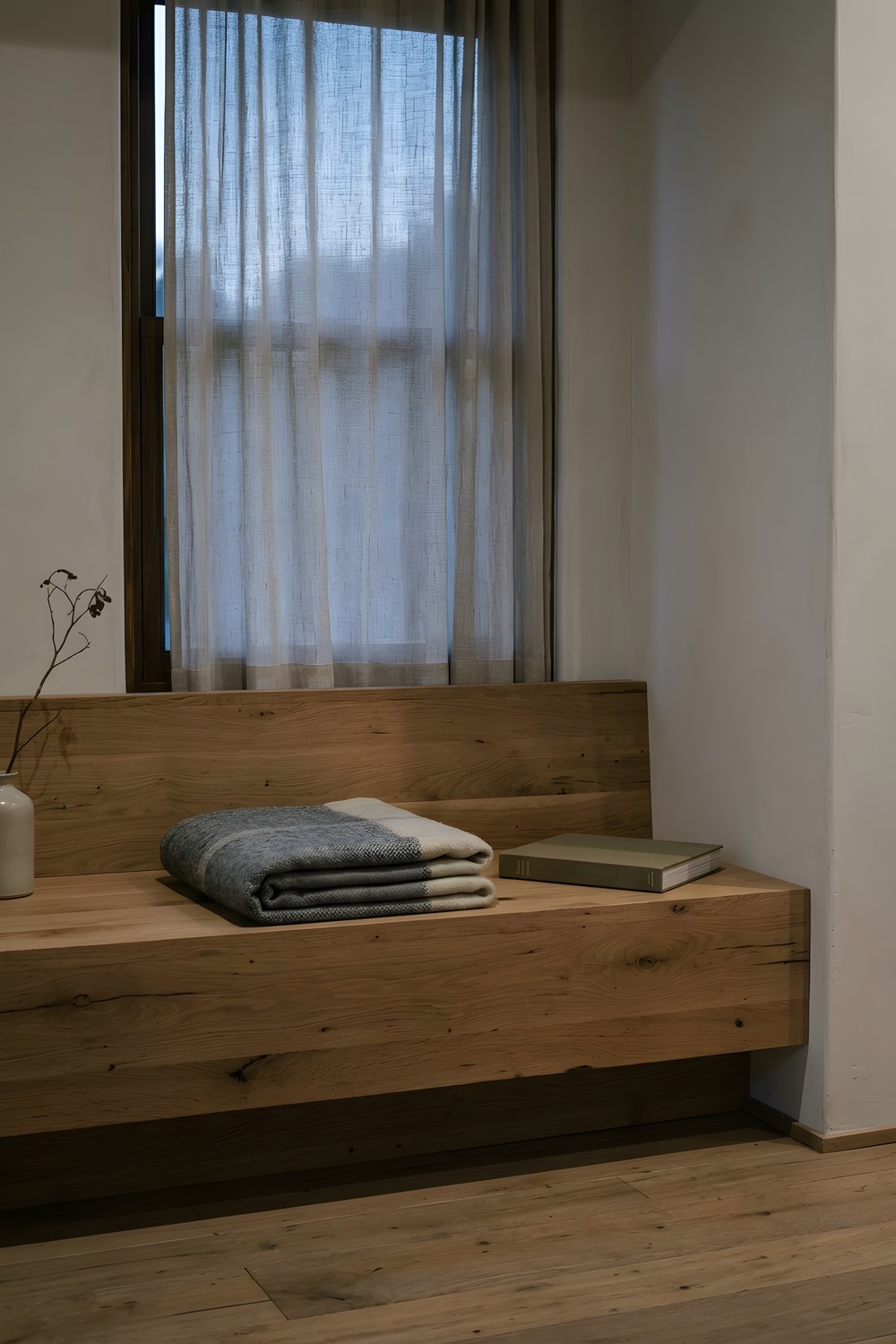
A closed book on a wool throw says more about a reading habit than a full shelf does. What separates a good bedside or bench copy from a poor one comes down to weight, edition and binding.
Format before content
A book meant to sit out in a room, on a bench or a low table, has different requirements than one meant for a shelf. Its trim size matters: something close to five by eight inches lies flat and holds its shape when closed, while an oversized trade paperback tends to splay and curl at the corners after a week of handling. Paper weight matters too. Thin, translucent pages show ghosting from the next page’s type and feel disposable; a slightly heavier stock gives the book a presence that matches the honesty of the materials around it, the wood grain, the plain wool.
Binding decides its lifespan
A sewn binding, where signatures of pages are stitched together in sections, opens flat and survives years of being picked up and set down again. A perfect bound paperback, where pages are glued to the spine, will eventually crack and drop pages if it is opened wide too often. For a copy that is going to live in one spot and get read in short sittings over months, sewn binding is worth seeking out even if it costs more or requires buying a slightly older edition.
Edition is not decoration
The edition line, usually on the copyright page, tells you whether the text has been reset, corrected or abridged since first publication. A first edition is not automatically the best reading copy; sometimes a later edition fixes translation errors or restores cut passages. Checking that line takes a few seconds and matters more than the cover design. A good cover is a matter of taste, not measurement, so choosing on lighting or color alone is a reasonable but separate decision from choosing a text that will hold up to rereading.