Why hair pins go missing more in early fall than any other season
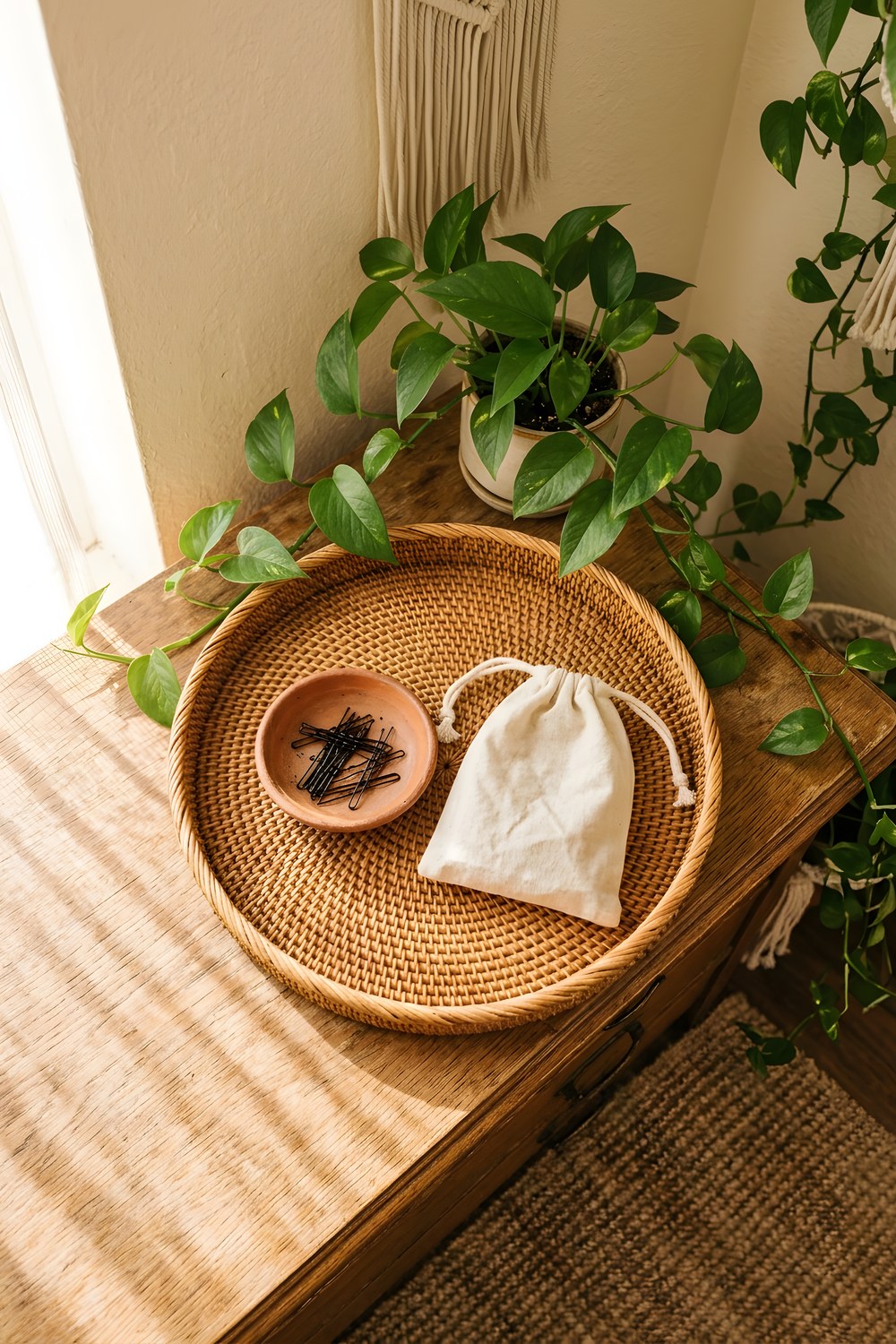
The little dish by the mirror empties out faster once the mornings turn cool, and the reason has more to do with static and wool than with carelessness.
The dish never stays full for long
A small dish of hair pins looks like the kind of thing that should just sit there, untouched, holding the same six pins all year. It does not work that way. Early fall is when pins vanish fastest, not because anyone loses more of them, but because more hands go into the dish. Cooler mornings mean hair gets pinned up under scarves and hats, twisted back before it gets tucked under a collar, or clipped away from the neck once the heater kicks on and the flat runs warm despite the cold outside. A dish that barely got used in August is suddenly in daily rotation by the third week of September.
Metal and static do not get along
There is also a quieter seasonal problem: static. Once the air turns dry, metal pins that slid in easily all summer start to grip and pull, sometimes taking a few strands with them. A pin left sitting on bare skin or an open shelf will also pick up a light film of dust faster once windows stay shut. Wiping the dish out with a dry cloth once a week, rather than letting pins collect grit at the bottom, keeps them sliding in clean rather than catching.
A pouch does a job a dish cannot
The linen pouch beside the dish is not decoration. Fabric breathes in a way a closed box does not, so anything kept inside, spare pins, a few clips, does not sit in trapped moisture the way it can in plastic. Linen also softens the small scratch sound metal makes against itself, which matters more than it sounds like it should when a shelf sits right by a headboard. As the season turns, sorting the dish and pouch separately, loose pins in one, spares in the other, is one of those five minute habits that only pays off once the mornings get rushed and cold enough that nobody wants to hunt for a missing pin.