How to Tell a Wool Blanket That Will Outlast Winter
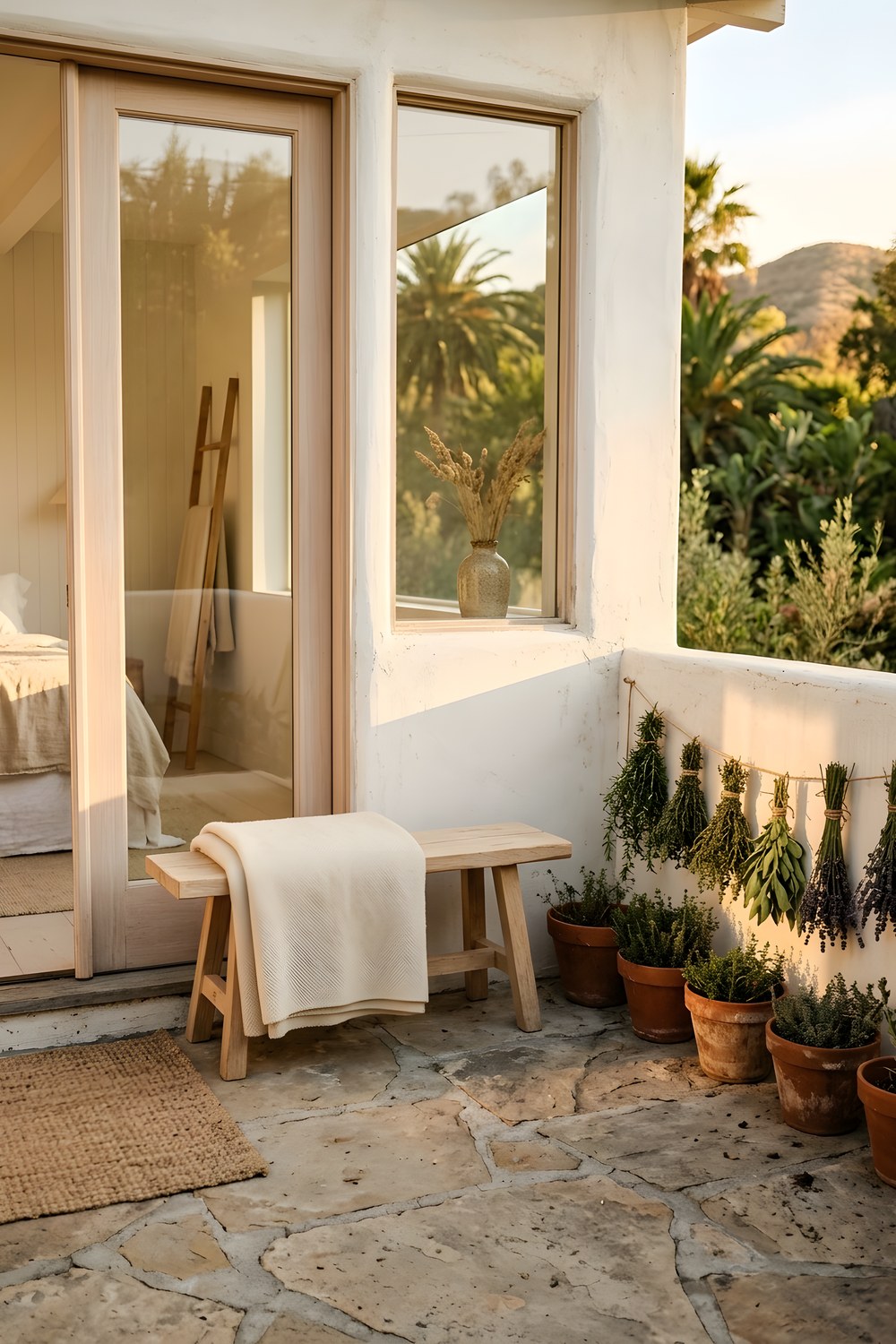
Left outside on a bench, most blankets fail quietly within a season. A few do not, and the difference is visible before the first frost.
What the Fiber Is Actually Doing
A blanket folded over an outdoor bench is not really furniture. It is insulation left to fend for itself against damp, UV, and whatever the evening dew decides to do. Wool survives this better than almost any other fiber, but not because it repels water the way people assume. It absorbs a surprising amount of moisture, up to a third of its own weight, without feeling wet to the touch, and releases it slowly as the air dries. Cotton and most synthetics do the opposite: they wick moisture to the surface, feel damp fast, and dry stiff. A wool blanket that has weathered a season will still drape softly. One made from a cotton blend usually will not.
Reading the Weave Before the Label
The honest test happens at the edge, not the label. Loosely spun wool, the kind that feels plush in a shop, sheds fiber and mats quickly once it takes weather. A tighter, denser weave resists this because there is simply less loose surface for moisture and grit to work into. Hold a corner up to light. If you can see daylight easily through the weave, the blanket is built for a sofa, not a terrace. Density also explains why a genuinely good outdoor blanket feels heavier than expected for its size. Lightness, in this one case, is not a virtue.
Where Terracotta Gets It Right
The same logic explains why terracotta pots suit drying herbs better than glazed or plastic ones nearby. Unglazed clay is porous, so it pulls excess moisture out of the soil and lets it evaporate through the pot wall itself, which keeps woody herbs like rosemary and thyme from sitting in damp roots, a common way they rot outdoors. A glazed pot looks tidier and holds water in exactly the way these plants dislike. Late sun on a stone terrace is a good test of both: watch which pots stay damp at the base long after the light has moved on.