Why wool sits in a basket instead of a drawer
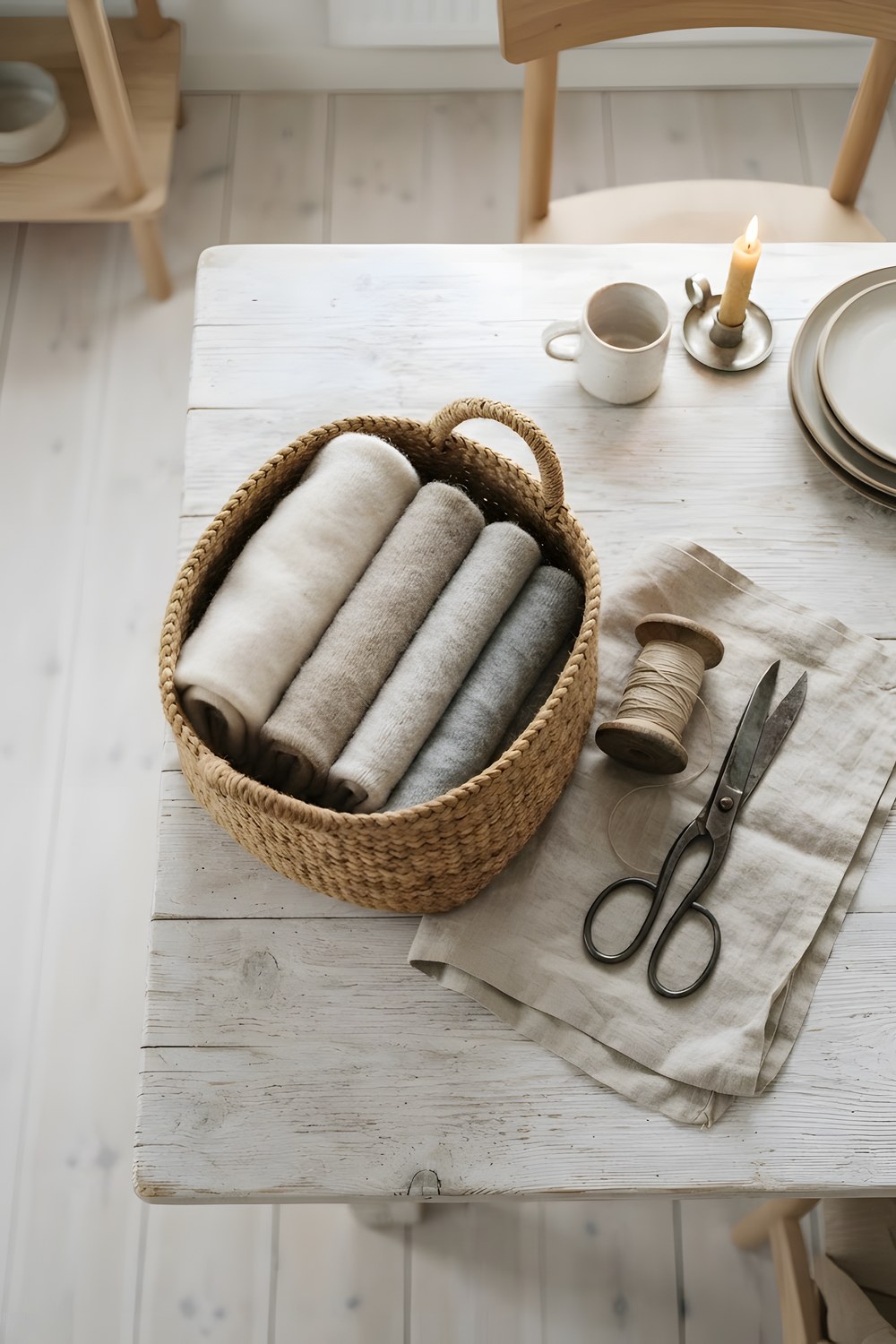
Folding a sweater for storage looks tidy, but it is often the fastest way to ruin it. Here is what actually keeps wool in shape between seasons.
The fold that ruins the shoulder
Most people store a wool sweater the way they store a T shirt: folded flat, stacked in a drawer, shoulders creased at the exact spot where the sleeve meets the body. Wool fiber has memory. Leave it folded under the weight of other garments for a few months and that crease sets. Come autumn, no amount of steaming fully lifts it. The fix is simple and almost nobody does it: fold wool loosely, just once if possible, and never let it bear weight from anything stacked on top for longer than a few weeks.
A basket is not just decoration
An open weave basket does something a closed drawer cannot: it lets air move through the wool. Moths are drawn to still, dark, undisturbed fiber, and a sealed drawer is exactly that environment. A basket with visible gaps in the weave keeps humidity from building up around the fabric, which matters more than people think in a house with radiators running most of the day. It will not stop an infestation on its own, but it removes the conditions moths prefer, and that is half the battle.
The thread spool is doing real work
A wooden spool and a pair of scissors kept in view, rather than buried in a sewing box, change behavior. A snagged thread caught early is a two second fix. Left for a season, that same snag unravels into a hole across three or four rows. Keeping repair tools within arm’s reach of where the wool actually lives, not in a separate room, is the difference between mending something in the time it takes to notice it and throwing it away because the damage has already spread.
What to check before the cold sets in
Before storing any wool piece for warmer months, check the underarms and cuffs first. That is where body oils and salt collect, and both attract moths more than clean wool ever will. A quick hand wash or gentle steam before storage does more to protect the garment than any amount of careful folding afterward.