Why sunrooms need less furniture in autumn than in summer
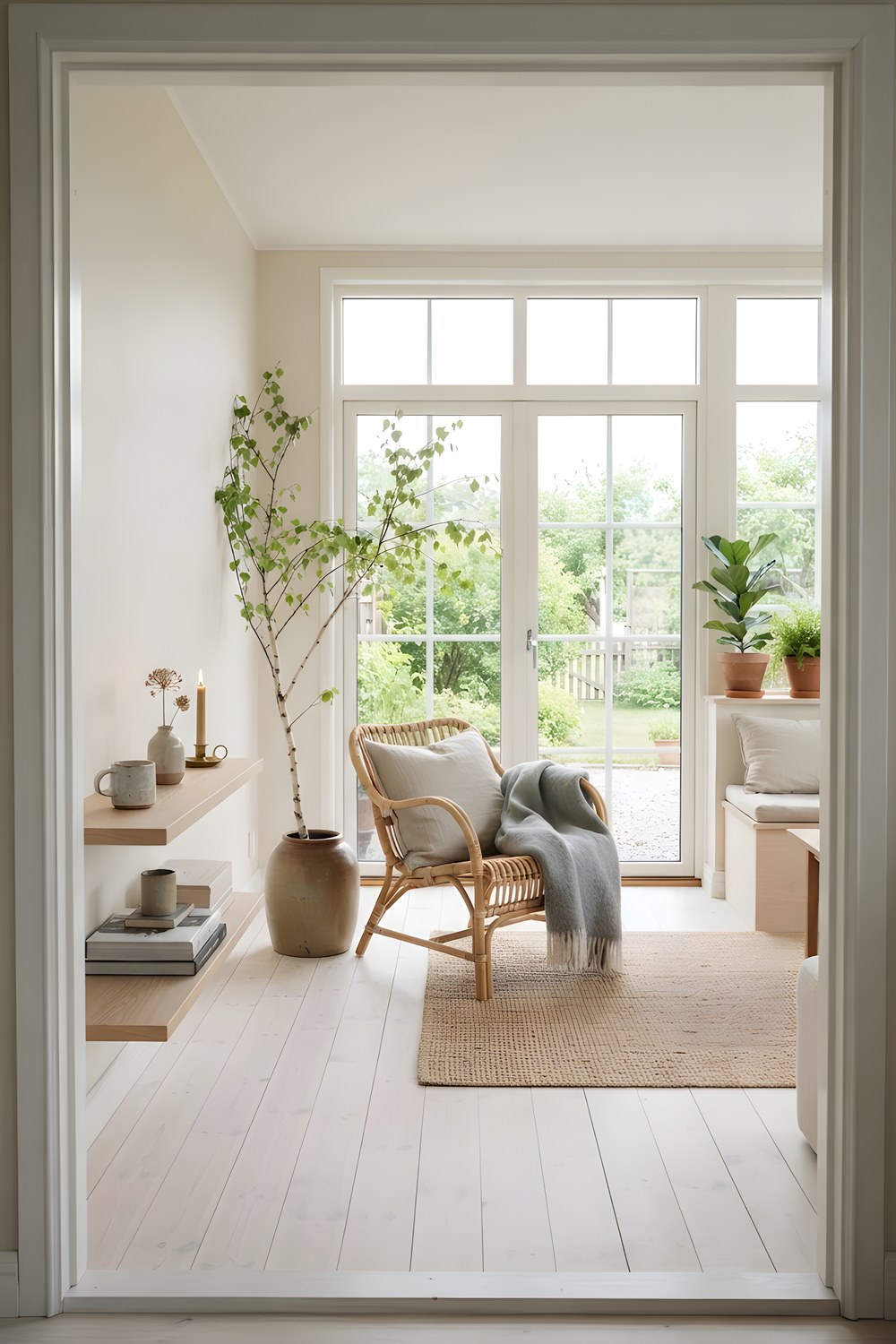
A room built for flat, low light asks for fewer objects, not more, once the season turns.
Light changes the arithmetic
A sunroom is really a light meter. In summer, high sun clears the roofline and drops almost straight through the glass, so a room can absorb a lot of clutter before it looks busy. Once the sun sits lower on the horizon in autumn, the same light comes in nearly sideways, raking across every surface at knee height. That angle finds texture and shadow that summer light hid, so a chair, a branch, and a cushion left in a room now read as three separate statements instead of one calm arrangement.
Rattan earns its keep now
Open weave furniture like a low rattan chair works with this seasonal light rather than against it, because the gaps in the weave let low sun pass through and cast a second, fainter pattern on the floor. A solid upholstered chair in the same spot just blocks the beam and leaves a flat shadow. This is one case where a lighter, more open structure genuinely earns its place in a room, rather than being a compromise on comfort.
What to take out, not add
The seasonal instinct is usually to bring more in: a throw, a second cushion, a lamp for the darker afternoons. A sunroom with this kind of light actually asks for the opposite. Potted branches near the glass already move with the season, dropping leaves or bark as autumn goes on, so keep the rest of the room still around them. One cushion in a natural fiber, left slightly off center on the chair, does more in low autumn light than a matched pair would in midsummer, because the single wrinkle and fold catches the raking light instead of competing with a second, identical one across the room.
By the time the light drops further into late autumn, the same room will read almost monastic with nothing added, which is the point: the light is doing the decorating, and furniture only needs to get out of its way.