Why a throw over a chair arm calms a room before you sit down
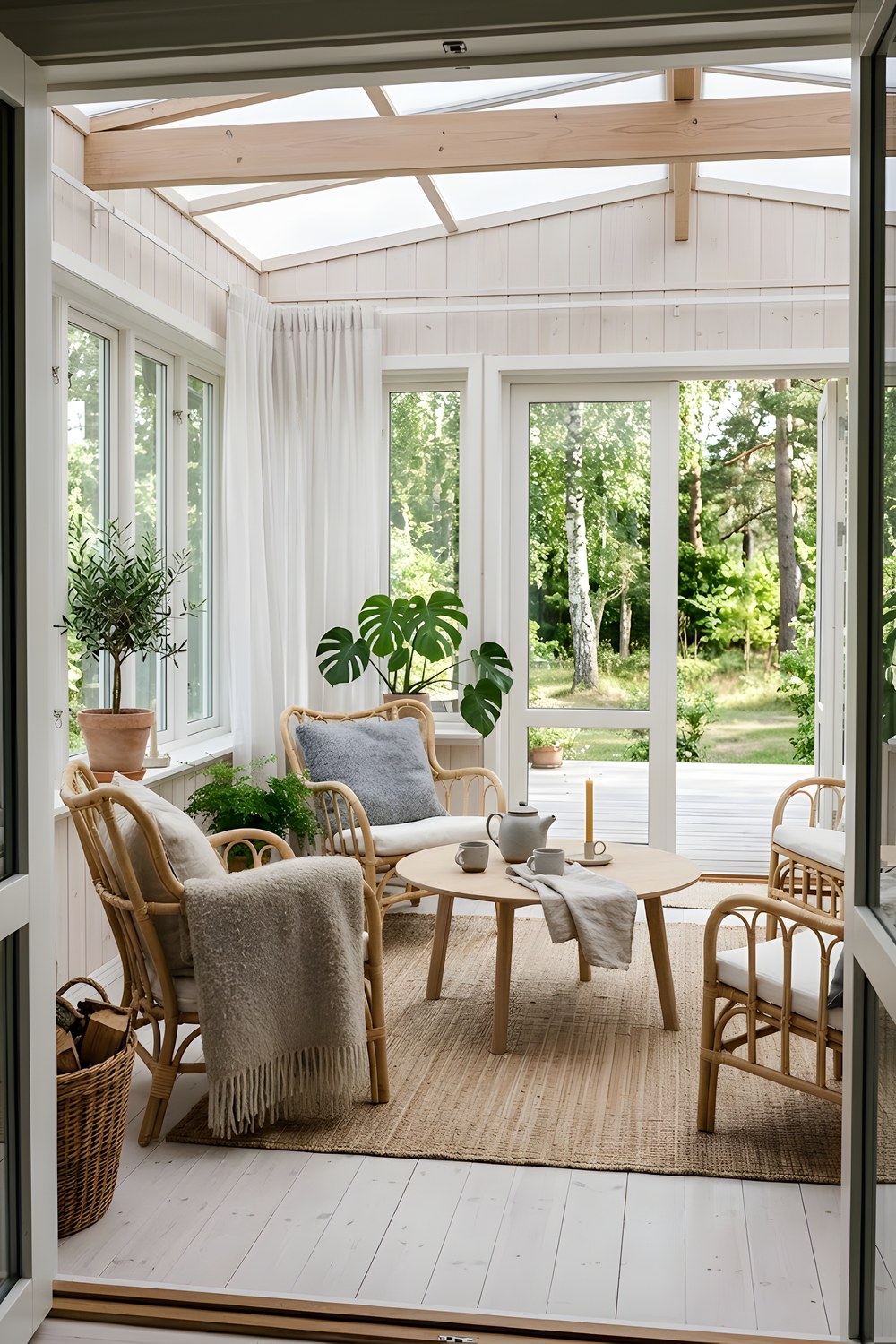
The habit of leaving a folded blanket over a chair arm is older than comfort. It is a signal the eye reads before the body does.
A small object doing a large job
A wool throw draped over the arm of a cane chair does not look like it is working. It sits there, half folded, catching midday light. But a room with a throw in view reads as a room that is used, not just furnished. The eye moves from an empty chair to a chair that someone has recently occupied, and calm follows from that small inference, not from the wool itself.
Why the habit persists
People keep a throw on a chair arm long after the cold months end because the gesture solves a problem that has nothing to do with temperature. An empty sunroom, however well lit, can look like a waiting room. Add one object that shows a trace of use and the space reads as lived in rather than staged. This is the same reason a used book on a side table feels warmer than a shelf of unread spines. The mind is quick to sort rooms into occupied and unoccupied, and it takes very little evidence to move a space from one category to the other.
The light does the rest
Flat midday light, the kind that comes through pale curtains without casting hard shadow, tends to flatten a room and make every object read as equally important. A throw catches that light differently from stone or wood because its texture breaks it up into small shadows. That is not decoration for its own sake. It is what gives a still room a sense of gentle movement, even when the curtains barely stir.
A reading corner set up this way rewards the same instinct that a good book does: it gives the mind a quiet place to settle before it does any work at all.