Why a chair beside a window still wins over a reading lamp
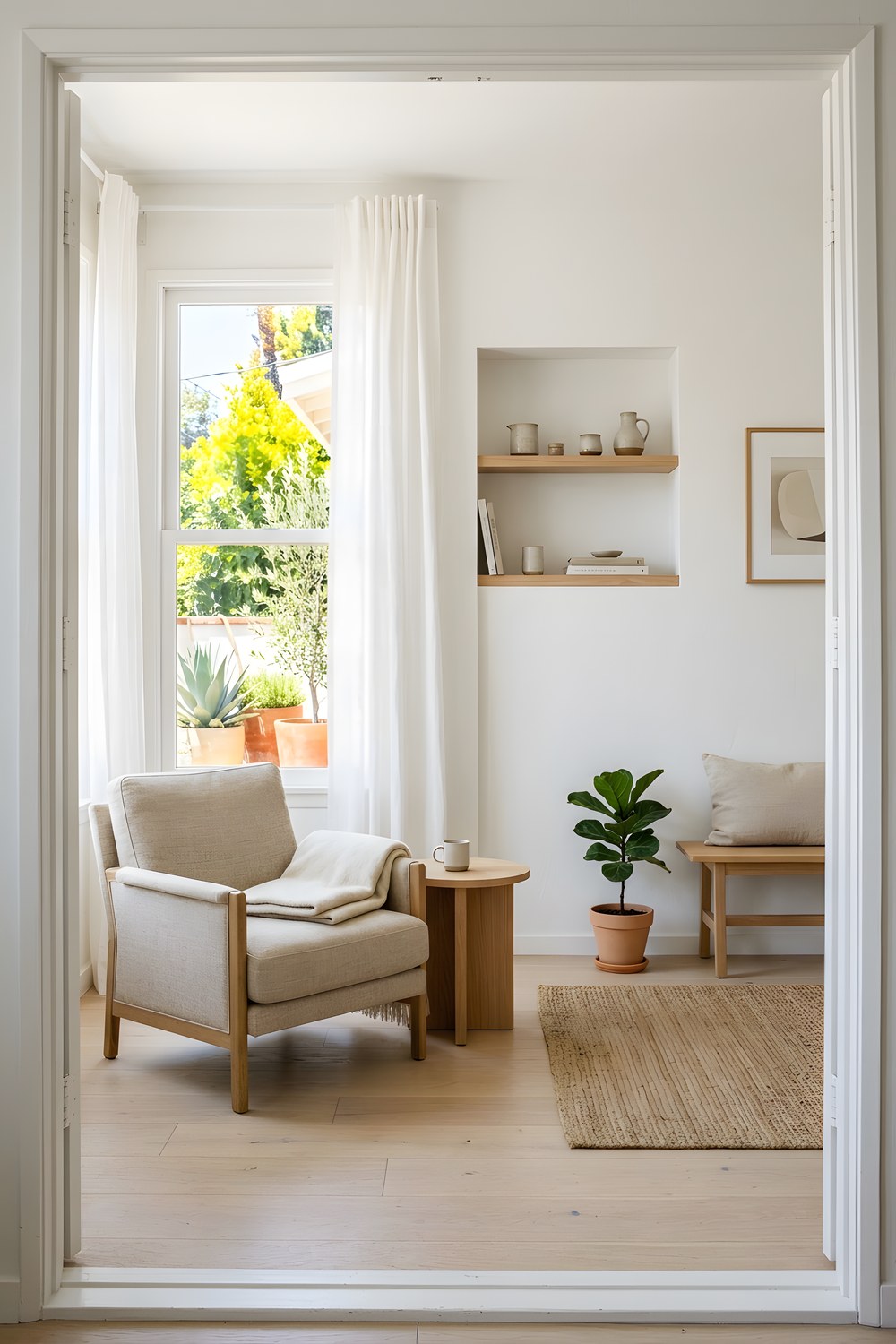
The habit of pulling a chair up to daylight instead of turning on a lamp is older than electric light itself, and the reasons for it still hold.
A body that expects daylight
A chair placed beside a tall window, angled so midday light lands across the shoulder rather than straight in the eyes, follows a pattern set long before electric light existed. Human vision adjusts to daylight differently than it does to any bulb. Daylight shifts in color temperature and intensity through the day, and the eye reads that shift as a cue for how long it has been looking at something. A steady lamp gives no such cue, which is part of why an hour under one can feel longer, or the page can feel flatter, than the same hour by a window.
Even light instead of a pool of light
Most reading lamps create a small bright circle surrounded by a darker room. The eye keeps adjusting between the page and the dim edges of that circle, a small effort repeated constantly. A room lit evenly from one side, the way flat midday light fills a white walled room, removes that repeated adjustment. The contrast between page and surroundings is lower, so the eye settles rather than resets. This is also why editions with heavier, more saturated paper photograph well near a window: the paper reflects the ambient light instead of glaring back a single bright source.
Why the chair, specifically, is beside the window and not facing it
Placing a chair beside a window rather than facing it keeps light off the page from an angle that avoids the reader’s own shadow falling across the text, a common problem with desks set directly under overhead light. Southern California interiors that favor plain materials and white walls amplify this further, since pale wood and unpainted linen bounce light around a room rather than absorbing it, extending the useful reading light later into the day than a room with dark furniture and heavy drapery would allow. The habit of choosing that seat, done without thinking by most people, is really a small piece of practical optics.