How to season firewood so it actually burns clean
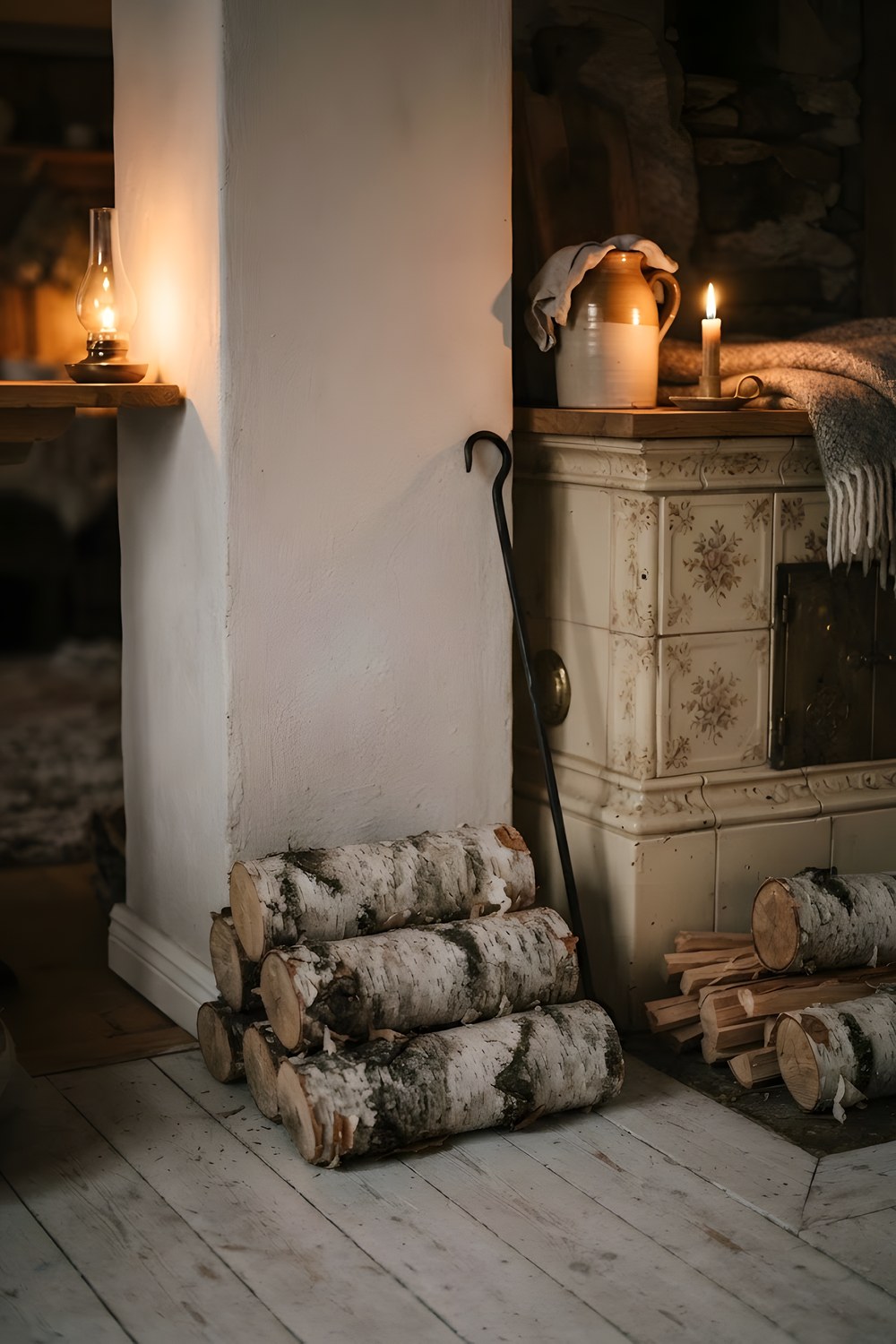
Birch stacked by a stove looks finished, but bark that bright and pale usually means the wood inside is still wet. Here is how to tell, and what to do about it.
Read the bark before you trust it
Fresh birch bark is pale and papery, almost silver under lamplight, and it stays that way long after the wood underneath has dried. Bark is not a good clock. A better test is weight: pick up two similar sized logs and compare. Seasoned birch feels noticeably light for its size, almost hollow, because a live log is close to half water by weight and a dry one has lost most of that.
A second test is sound. Knock two split logs together. Wet wood gives a dull thud. Dry wood gives a sharper, almost hollow crack, closer to knocking on a door than knocking on a brick.
Stack it so air, not looks, does the work
Birch splits should sit off the ground, on rails or pallets about ten centimetres up, so damp does not wick back in from below. Stack in a single row, bark facing out, with a few centimetres of gap between rows if you have more than one. A tight, decorative pile that looks neat beside a stove is often the same pile that traps moisture in the middle and never finishes drying.
Cover only the top third of the stack, and leave the sides open. A tarp pulled all the way down turns the stack into a greenhouse and the wood sweats instead of drying.
Give it the season it needs
Split birch takes roughly six months to a year to season properly, depending on how thick the rounds were before splitting. Wood cut and split in spring is usually ready by the following autumn. Wood that still hisses or bubbles sap at the cut end when it hits the fire is not ready, no matter how good it looks leaning against the plaster by an iron poker. Burning it too early coats the flue with creosote and wastes most of the heat boiling off water instead of warming the room.