How to keep an evening thought where you will meet it again
A short method for catching one line at the close of a day and finding it waiting for you the next time you need it.
Choose the moment, not the mood
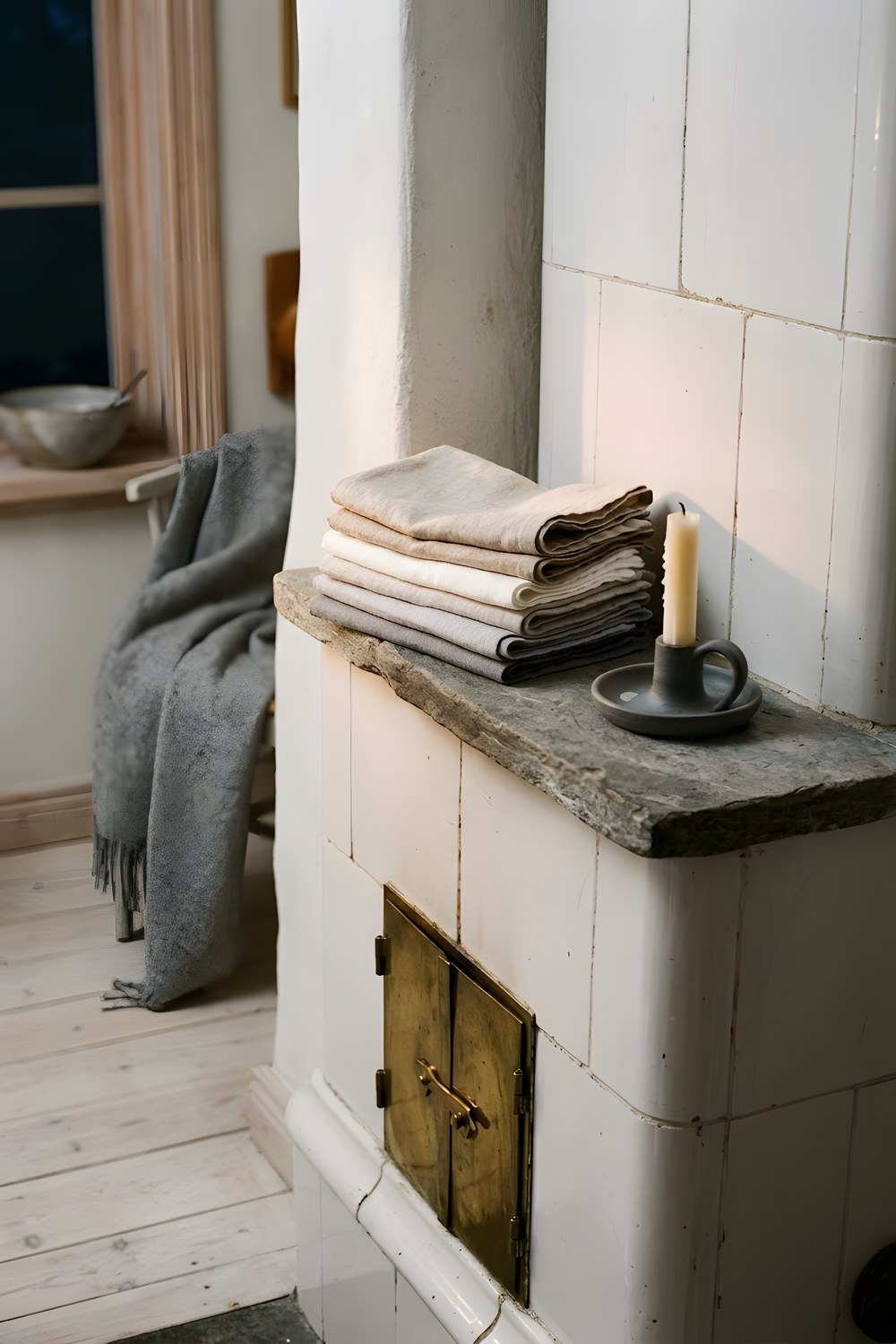
The habit works best fixed to a moment rather than a feeling, since moods are unreliable and moments repeat. Dusk is a good anchor: the light is going, the room is quieter, and most of the day’s decisions are already made. Pick something that already happens daily near that hour, a candle put out, a table cleared, a stove tended, and let that action be the signal to stop for two minutes.
Write down one sentence, not a page
The point is not a journal entry. It is a single sentence about what occupied the mind that day, written where it can be found again: the inside cover of a book kept on a low shelf, a card tucked into a folded napkin, a strip of paper under a candle holder. Keep the sentence plain. “Spent the afternoon annoyed at something small” is more useful later than a paragraph explaining why.
Return to it on purpose
Once a week, at the same quiet hour, read back three or four of these lines before writing a new one. This is the actual mechanism: thought patterns are hard to notice from inside a single day but become obvious across several. A person who keeps writing some version of “annoyed again” is looking at a pattern, not a coincidence. That noticing is the whole exercise; nothing more elaborate is required.
Keep the object low and close
Where the notes live matters more than what they are written on. A drawer that gets opened daily works better than a special notebook bought for the purpose and then misplaced. Proximity to an existing habit, a candle lit each evening, a shelf dusted each week, does more to sustain this than willpower does. The method fails most often not from lack of discipline but from being stored somewhere too easy to forget.