How to Choose Handmade Stoneware Bowls That Earn Their Shelf Space
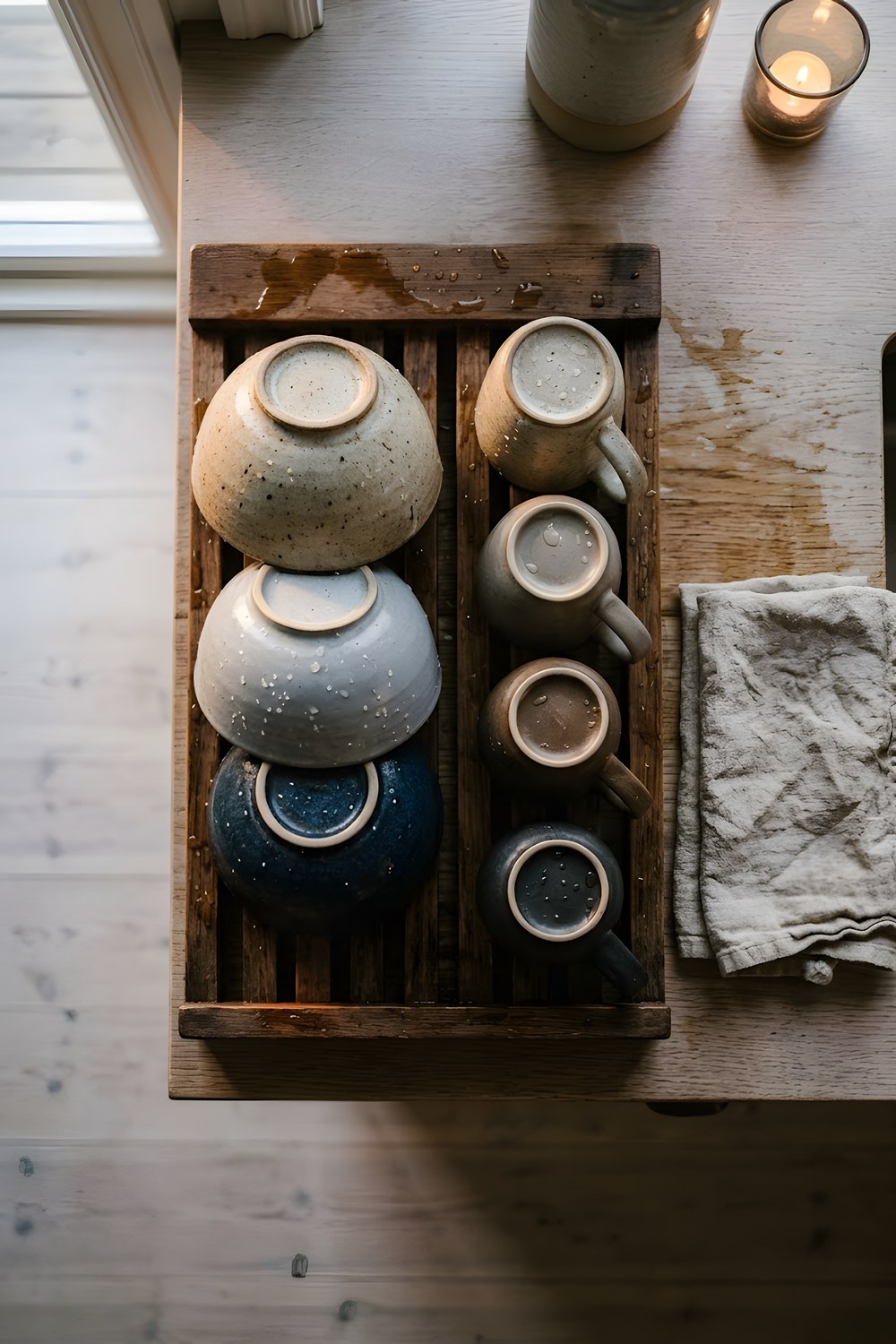
Not every handmade bowl survives daily use. Here is what separates the ones that stay in the cupboard for years from the ones that end up as a plant pot.
Weight tells you something
Pick a bowl up before anything else. A well made stoneware piece has a certain heft, not because heavy is better, but because it signals the clay was fired properly and the walls are thick enough to resist chipping. A bowl that feels papery light, almost like earthenware pretending to be stoneware, will usually show its first crack within a year of ordinary meals.
Run a thumb along the rim too. Handmade pieces will never be perfectly even, and that is fine, even desirable. What matters is that the unevenness feels intentional rather than accidental, a slight wave rather than a lip that catches a spoon or cuts a lip.
Glaze is where quality hides
Look at the inside of the bowl in good light. A glaze that pools unevenly in the bottom, leaving a rough patch of bare clay, will stain the first time someone leaves tomato sauce in it overnight. Bare or thin glazed spots also make a piece harder to clean and, over time, harder to trust with food at all.
The underside matters as much as the inside. A foot ring that is glazed smooth or waxed will not scratch a wooden table or a draining rack, while a rough unfinished base will leave marks within weeks. Turn any bowl over before deciding it belongs in daily rotation.
What separates a keeper from a curiosity
The real test of a handmade set has nothing to do with how it looks freshly unpacked. It is whether someone reaches for it on an ordinary Tuesday, not just when guests are over. Pieces with a slight irregularity in shape, a texture that grips the hand, tend to get chosen for daily oatmeal long after the flawless matching set from a big box store has been relegated to the back shelf. Charm fades. Usefulness, in a good bowl, does not.