Why grown adults are quietly rebuilding their childhood toys
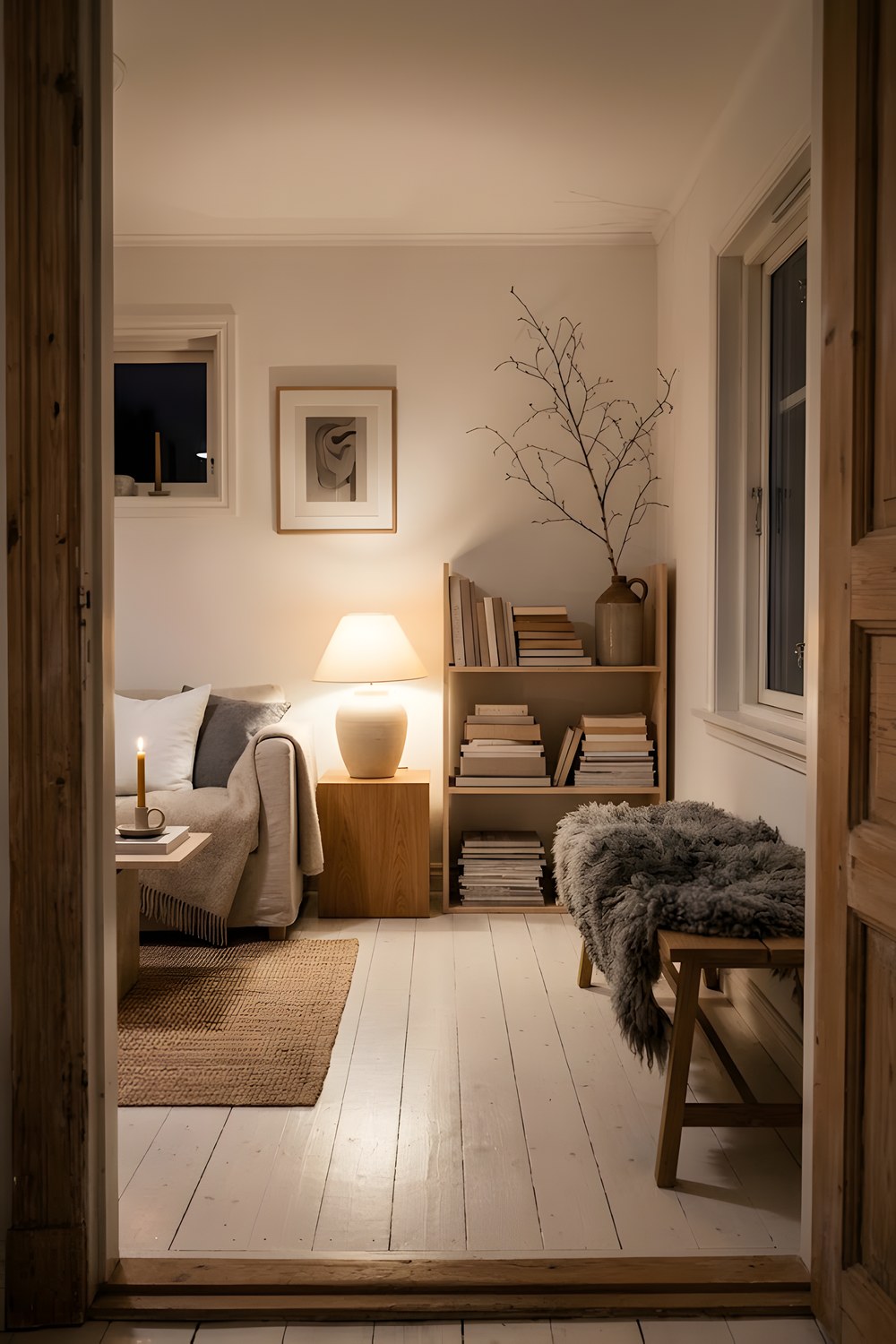
A small building set reveals something about why the hands need a task even after the eyes are tired of screens.
A room built for hands, not eyes
The corner in the photograph is full of things that ask nothing of the eyes after dark: a branch in a jug, wool underfoot, low lamplight instead of anything overhead. It is a room built for hands rather than screens, and that is worth noticing as the evenings pull in earlier and people start looking for something to do with their fingers besides scroll.
There is a small, well documented category of adult hobby building sets, aimed squarely at people who grew up with plastic bricks and now buy them again, on purpose, as a way to switch off. The appeal is not nostalgia alone. Following a sequence of small physical steps, sorting pieces, snapping them into place, produces a kind of attention that a phone cannot. Occupational therapists have long used repetitive, structured manual tasks to calm an overactive mind, and a building set does the same job without calling itself therapy.
What autumn does to this habit
September is when this shifts from a rainy day option to a real evening ritual. As daylight shortens, people spend more hours indoors after dinner, and the appetite grows for something finite: a project with a clear start and a visible end, unlike laundry or email. A building set finished over two or three evenings gives that sense of completion in a way longer hobbies do not.
The test that matters later
The honest measure of any object like this is not the hour it takes to build but where it sits in December. Plenty of these sets get built once, photographed, and boxed away. The ones worth giving are the ones that end up displayed on a shelf, the kind the room in the photograph has plenty of, becoming a small fixed point in a space rather than a one time diversion.