Why a shelf corner makes you want to sit down and read
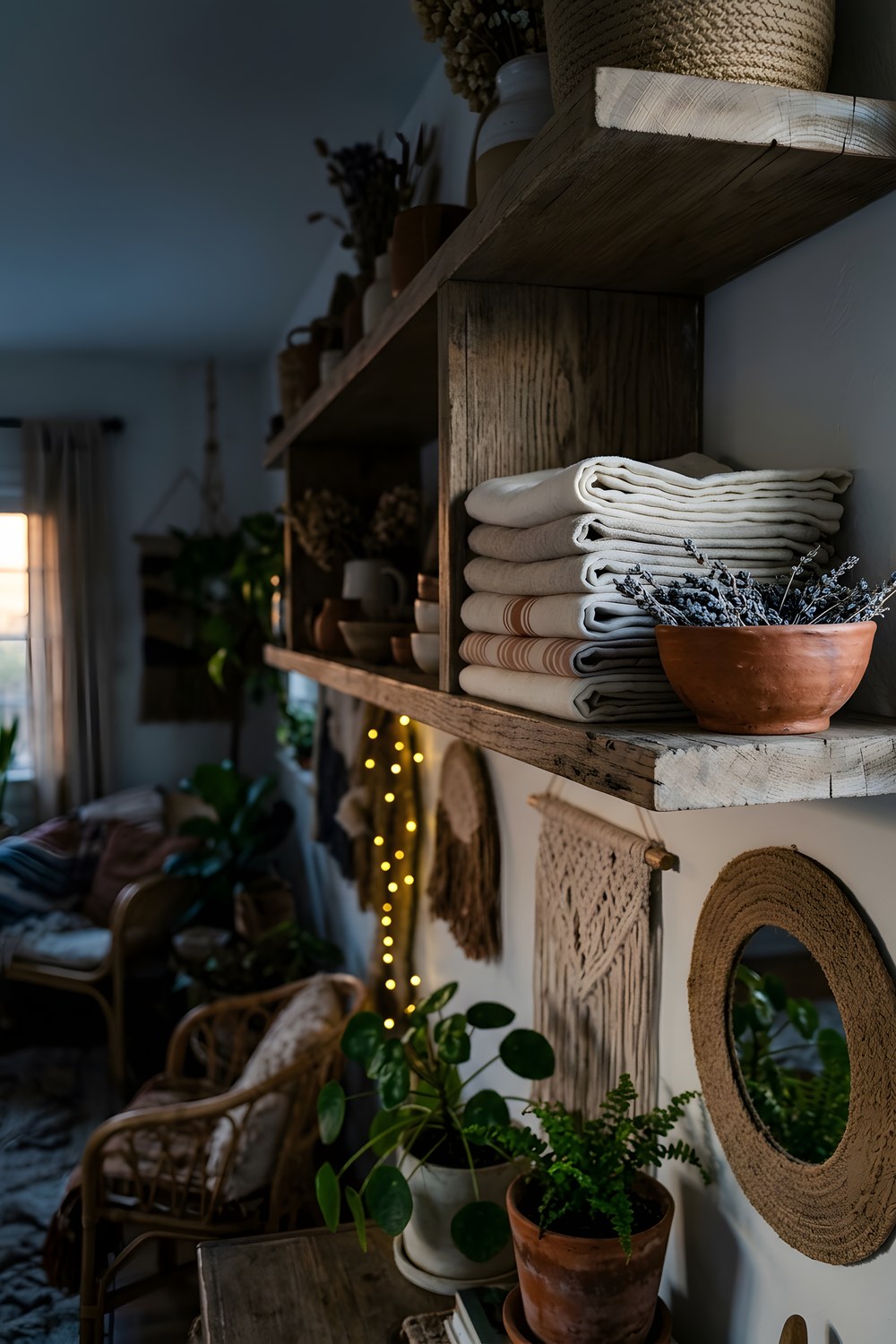
A folded stack of linen and a bowl of dried lavender do more work than any reading lamp. Here is the actual mechanism behind that pull.
The corner does the deciding for you
A reading habit rarely survives on willpower alone. What tends to hold it in place is a spot that has already been decided in advance, so the only choice left in the evening is whether to sit down, not what to do once seated. A shelf with folded linen, a small bowl of something fragrant, and low light at the end of the day removes about six small decisions that would otherwise compete with a book for attention.
This is closer to a known finding in behavior research than to interior taste. Environments that repeat the same cues, same textures, same light, wear a groove that the brain follows without discussion. Dried lavender in a clay bowl is doing a narrower job than it looks like it is doing. Scent is one of the few senses that reaches the brain without first passing through a relay station used for conscious thought, which is part of why a familiar smell can shift a mood faster than a familiar sight can.
Texture lowers the threshold to sit still
Folded linen and woven baskets are not simply decorative. Rough, varied texture gives the hand something to do at the edge of attention, the way people worry a coin in a pocket. A slightly textured chair or throw reduces the low grade restlessness that sends a reader back to a phone. Smooth, uniform surfaces do not offer that same small outlet.
Dusk light changes what gets picked up
The fading light at the end of the day is not just atmosphere either. Warm, dim light lowers cortisol and signals the body that the working part of the day has ended, which is precisely the state in which someone is more likely to choose a slower, harder task like reading over a faster one like scrolling. A corner built around that light is really built around that hormonal shift, whether or not anyone arranging it thought of it that way.