How to build a shelf that holds four books well, not forty badly
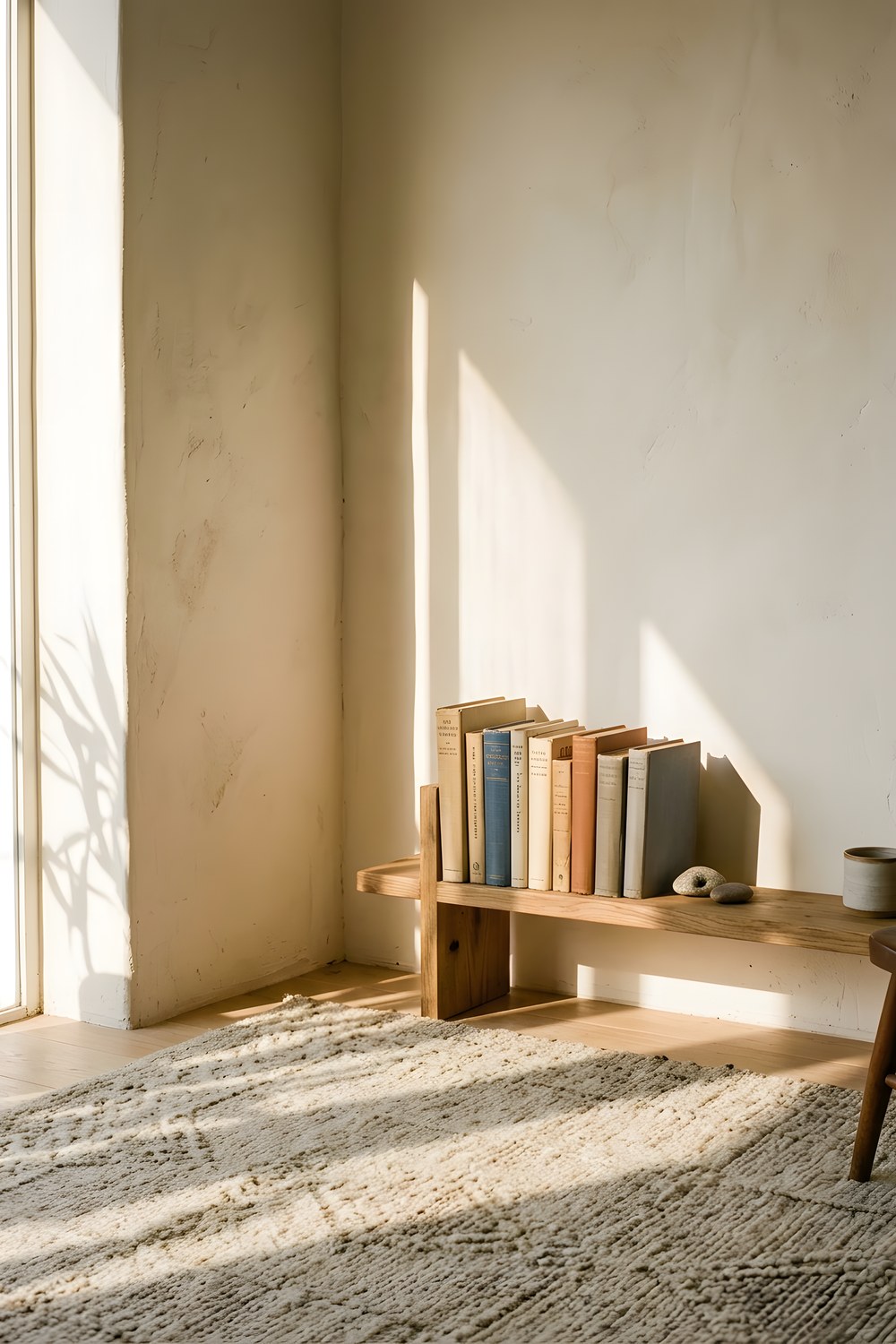
A low shelf with only a handful of books, seen in raking afternoon light, works because of what was left off it. Here is how that restraint is actually built.
Start with the count, not the collection
Most shelves fail because they try to hold everything a household owns. A shelf meant to be looked at, not just used for storage, should start with a number: six books, maybe eight, chosen and not merely available. Pull them from wherever they are scattered and set the rest aside in a box. The editing happens before anything touches wood.
Choose books that can stand and lie down
A row of spines all the same height reads as filing. Instead pick a mix: two or three tall enough to stand upright, and two or three thinner or more worn that can lie flat in a stack. The stacked ones become a small platform. This is also where restraint pays off, because a stack of three holds attention in a way a stack of twelve does not. If a shelf is shallow, standing books should sit slightly forward of the wall, which lets a shadow fall behind them instead of pressing flat against it.
Use the light instead of fighting it
Late in the day, light comes in low and throws long shadows across whatever sits in its path. A shelf placed to catch that light does not need other decoration. Skip bookends unless the books actually fall over. Skip a lamp on the shelf itself, since the room light will do more work than a fixture ever could at that hour. The gap of bare wood beside the books matters as much as the books, so resist the urge to fill it.
Check it from across the room
Once it is set, walk to the far side of the room and look back. If every object on the shelf can be named without thinking, it is doing its job. If the eye has to sort through clutter first, remove one more thing. A shelf like this is never finished by adding to it, only by taking away until what remains has a reason to be there.