How to strip a bathroom shelf down to what earns its place
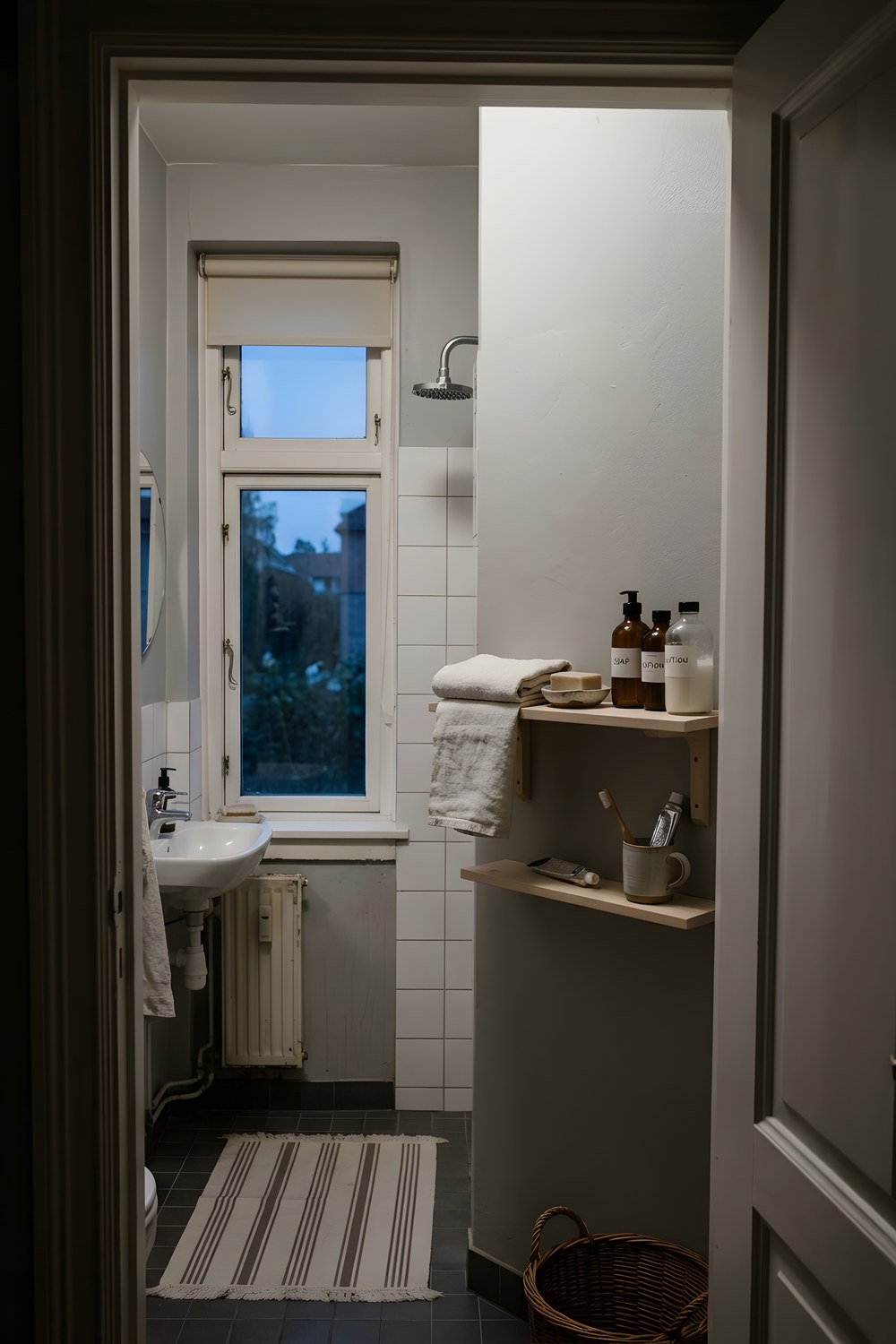
A single shelf works harder than a cabinet full of clutter once you decide what actually gets to stay. Here is a plain way to do that sort of edit.
Start by taking everything off
Empty the shelf completely, even the things you use daily. It is hard to judge an object honestly while it is still sitting in its usual spot. Wipe the surface, let it dry, and look at the bare wood or laminate before you put anything back. That blank moment is doing real work: it resets what counts as normal.
Sort into three piles, not two
Most people sort into keep and toss. Add a third pile called maybe, and put anything you have not touched in three weeks straight into it. Set that pile in a box, out of sight, for one month. If nothing gets fetched from it in that time, it was never earning shelf space to begin with. This avoids the trap of keeping something because it still has product left, which is a reason to finish it, not a reason to display it.
Group by how the thing is used, not by what it is
Instead of lining up bottles by height or brand, group by morning and evening. Whatever gets used before the day starts sits at eye level, front row. Anything for the evening, or used once a week, moves lower or to the side. This is a matter of your own routine rather than a fixed rule, so it will look different in every flat, and that is fine.
Leave one gap on purpose
When the sorted things go back, leave a visible gap of a few inches on the shelf rather than filling every inch. A shelf packed edge to edge reads as storage. One with breathing room reads as chosen. That gap also gives you somewhere honest to put the next thing you actually decide to keep, instead of squeezing it in wherever there is space.
Done properly, this takes under an hour, and the test of whether it worked is simple: a month from now, everything on that shelf should still be something you reach for.