How to tell a radiator worth keeping from one worth replacing
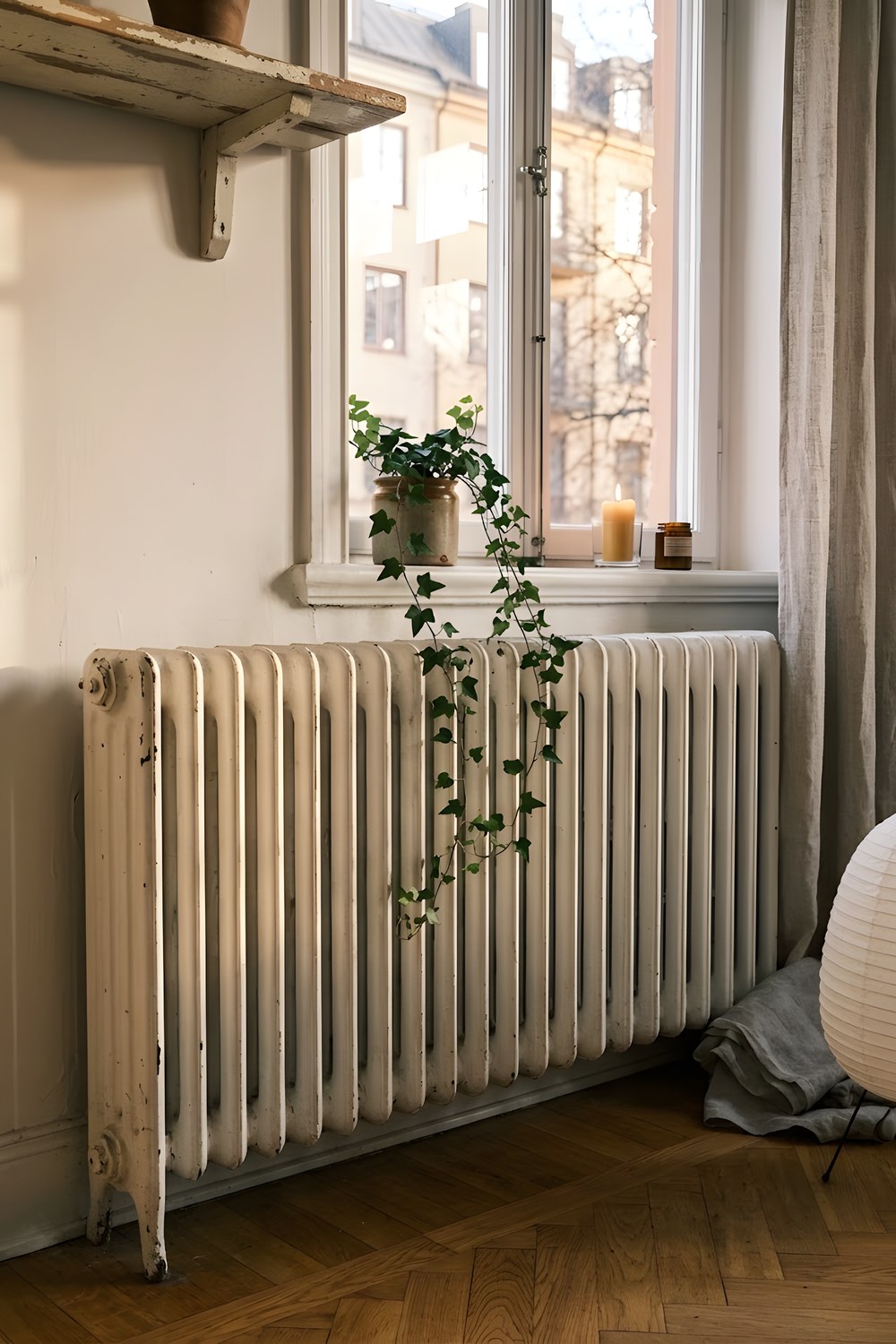
Old cast iron heating still turns up under tall windows in rented flats, and knowing what to look for saves you a cold winter and a wasted repaint.
Weight and welds tell the real story
A radiator built from cast sections feels heavy for its size and has visible joints between each rib. Pick up one end if you can, or knock on it. A dull, solid knock means iron. A tinny, hollow sound usually means a thin steel panel dressed up to look old, which heats faster but cools the moment the boiler cycles off. For a room with a tall window and thin curtains, the slow release of a cast piece matters more than a quick warm burst.
Check the ribs for even rust, not pitting. Light surface rust wipes off and repaints fine. Pitting means the metal has thinned from the inside, and no amount of paint fixes a wall that is about to leak.
Valves say more than the paint job
Look at the two ends. A working radiator needs a valve on one side and a lockshield on the other, both original or replaced together. Mismatched, corroded, or missing valves are the first sign a unit was pulled from somewhere else and never plumbed properly. If a landlord or seller cannot say when the valves were last bled, ask before assuming the piece even functions.
Fit the room before the eye
A radiator under a window should sit low enough that its top edge stays below the sill, and wide enough to cover most of the window’s width. Anything narrower leaves cold pockets by the glass. Trailing plants like ivy do well nearby precisely because the rising heat keeps the air moving without drying out the leaves the way a forced air vent would. If a shelf sits above the radiator, leave a hand’s width of clearance so heat is not trapped against the underside of the wood.
None of this needs a specialist. A radiator that is heavy, evenly rusted, and correctly valved will usually outlast whatever replaced it.