Why the empty table gets set before the food does
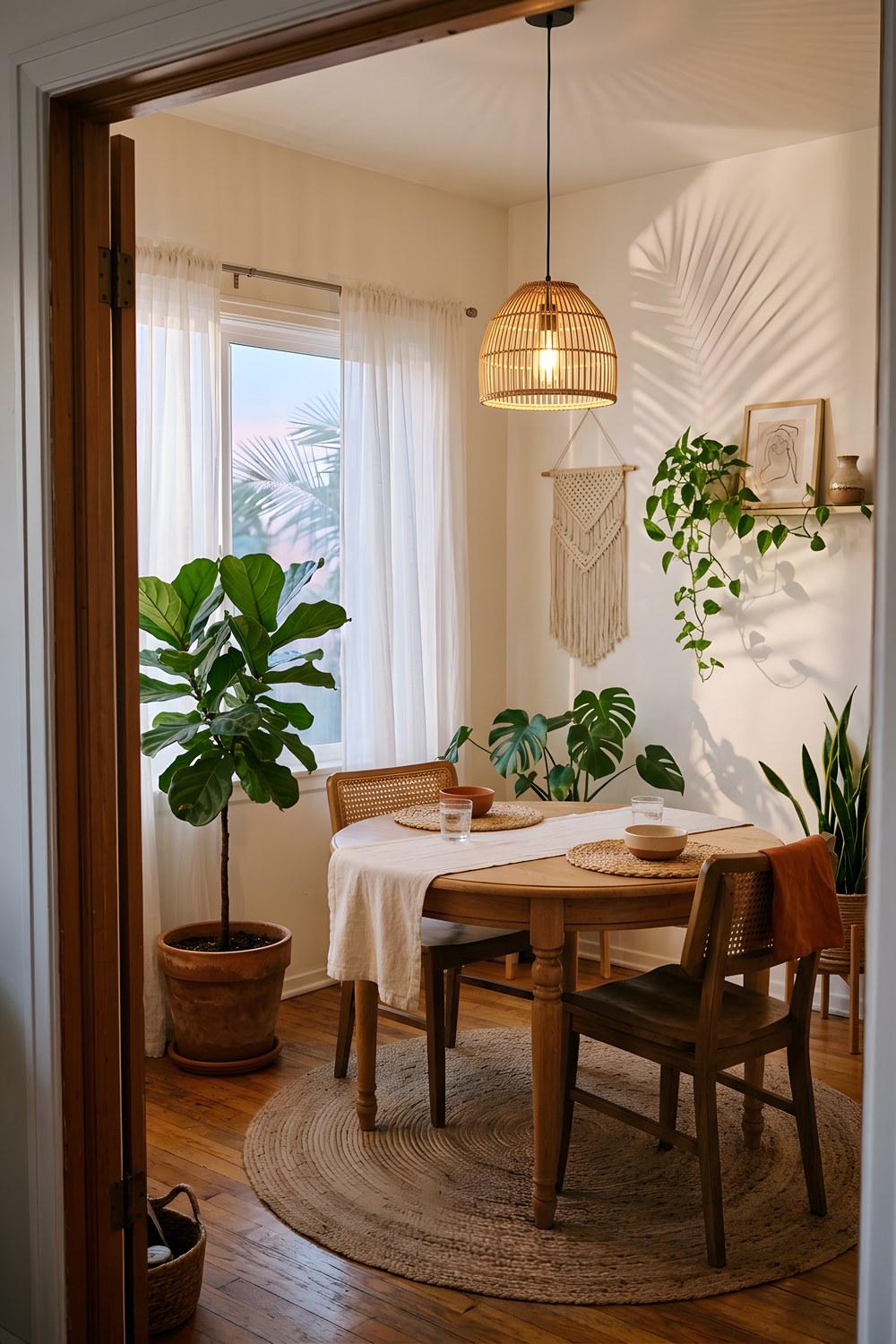
The bare cloth and the stacked bowls on a quiet table are not decoration. They are a small piece of planning that makes the rest of the morning easier.
The table that is already half ready
A table laid before anyone is hungry looks like a habit, and it is one, but the habit exists for a plain reason. Setting the surface first, a runner, a mat, a stack of bowls, removes decisions from the moment you are actually tired or rushed. By first light, choosing where to sit or what to eat from has already happened. All that is left is filling the bowl.
Why bowls do more work than plates
A bowl with real depth holds a growing family of morning foods that a flat plate cannot: porridge that needs a puddle of milk without spilling over the rim, yogurt with fruit stirred through it, a noodle soup with room for broth. A six inch bowl with sloped sides also concentrates the food toward the center, so a small serving still looks like a full one, which matters more than it should on a morning when appetite is uneven. Stoneware holds heat a little longer than thin glazed ware, which means the second half of the bowl is still warm by the time you get to it.
The logic of doing it the night before
The deeper habit behind the tidy table is a kind of quiet self negotiation. Laying it out the evening before is a promise to a future self who will not want to think about cupboards or dishes in the dark. It works because it removes friction at the exact point where friction usually wins, the gap between waking up and actually eating. A jute mat and a stack of matching bowls are not there to look good in a doorway. They are there so a slow morning can start slow, without a single decision standing between the kettle and the table.
The same reasoning explains why so many small kitchens keep a set of plain bowls in easy reach rather than one fine set saved for guests. Ordinary use, repeated daily, earns its place before anything ceremonial does.