Why late September is when porridge starts making sense again
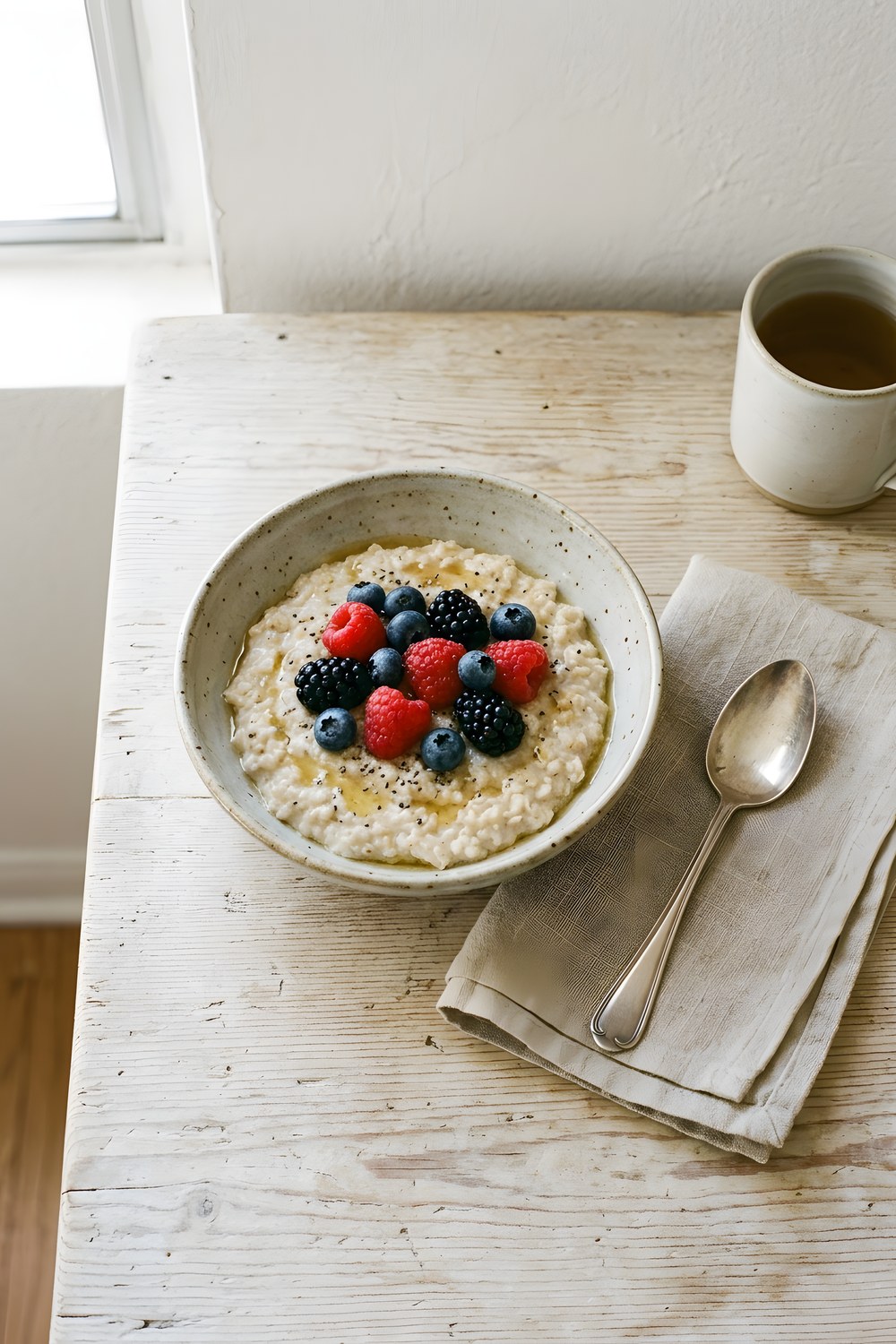
The shift from cold breakfasts to warm ones is not about temperature outside so much as light and appetite changing together.
The turn in the kitchen
Somewhere around the middle of September, a bowl of oats stops feeling optional and starts feeling correct. Nothing dramatic happens. The mornings are still bright, at least in a flat that catches Los Angeles light through a single window, but the air has a different weight to it. Bodies notice before minds do. A cold breakfast that made sense in July can feel thin in a way that is hard to name until you replace it with something warm and the difference is obvious.
Oats carry this well because they are patient rather than showy. A half cup of rolled oats, cooked slowly in milk or water or a mix of the two, thickens into something that holds heat for the length of a slow morning. The berries on top are not decoration so much as a counterweight, sharp and cold against the plain warmth underneath. Frozen ones work as well as fresh at this point in the year, since the last of the good local berries are thinning out and the imported ones rarely justify their price.
What actually changes
What shifts this time of year is not the recipe but the pace. Porridge asks for a saucepan watched for eight or ten minutes rather than a jug shaken and poured. That small stretch of attention, standing at the stove instead of already moving toward the door, is its own kind of seasonal marker. It is not about nutrition, though there is plenty to be said there, and it is not about comfort in the vague sense either. It is about the fact that a person eating slowly at nine in the morning is doing something they were not doing in August.
A folded linen napkin beside the bowl is a small, deliberate thing, the kind of detail that costs nothing and changes how the fifteen minutes feels. Worth noticing before the mornings turn properly cold and the whole ritual gets less choice and more necessity.