Why reading nooks face east even when no one plans it that way
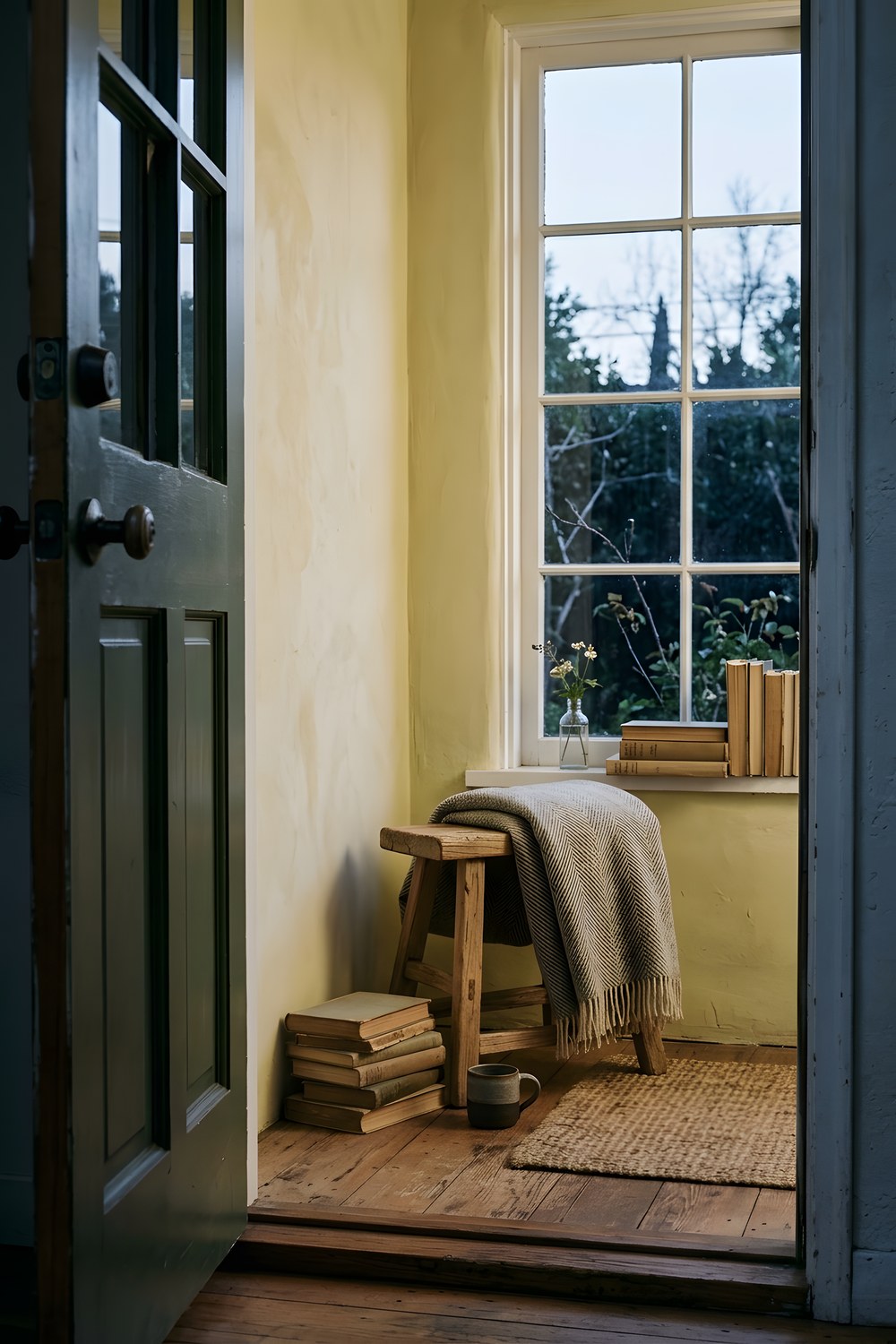
A small stool and a stack of books near a door catch the first gray light before sunrise. That placement is rarely accidental, and it says something about how houses get used.
An accident that keeps repeating
Walk through enough houses and you notice the same pattern. The chair for reading, the bench by a window, the stool tucked near a door: these things cluster on the side of the house that gets morning light. Nobody measures for this on purpose. It happens because that is where people already stand when the house is quiet, before anyone else is awake, and a flat surface within reach becomes a stack of books almost by default.
What changes in September
In Southern California the shift into fall does not bring shorter days in any dramatic sense, not the way it does further north, but it does bring a change in the color of early light. Summer mornings arrive already bright and a little flat. By mid September the sun comes up lower and slower, and for a short window the light is gray rather than gold, cool rather than warm. Wood surfaces read differently in that light. A plain stool that looked ordinary in July can look almost deliberate at 6 in the morning in October, simply because the light is doing less work and the material has to hold its own.
The door as the actual feature
The detail worth noticing is not the books or the stool but the open door itself. A nook seen through a doorway, rather than sealed inside four walls, stays connected to the rest of the house. It is not a separate room built for one purpose. It is a corner that happens to work, at one particular hour, for one particular activity, and reverts to something else the rest of the day. That flexibility, more than any furniture choice, is what makes a small reading spot last for years instead of becoming a guest room nobody uses.