How to roll pasta dough thin enough to see your hand through it
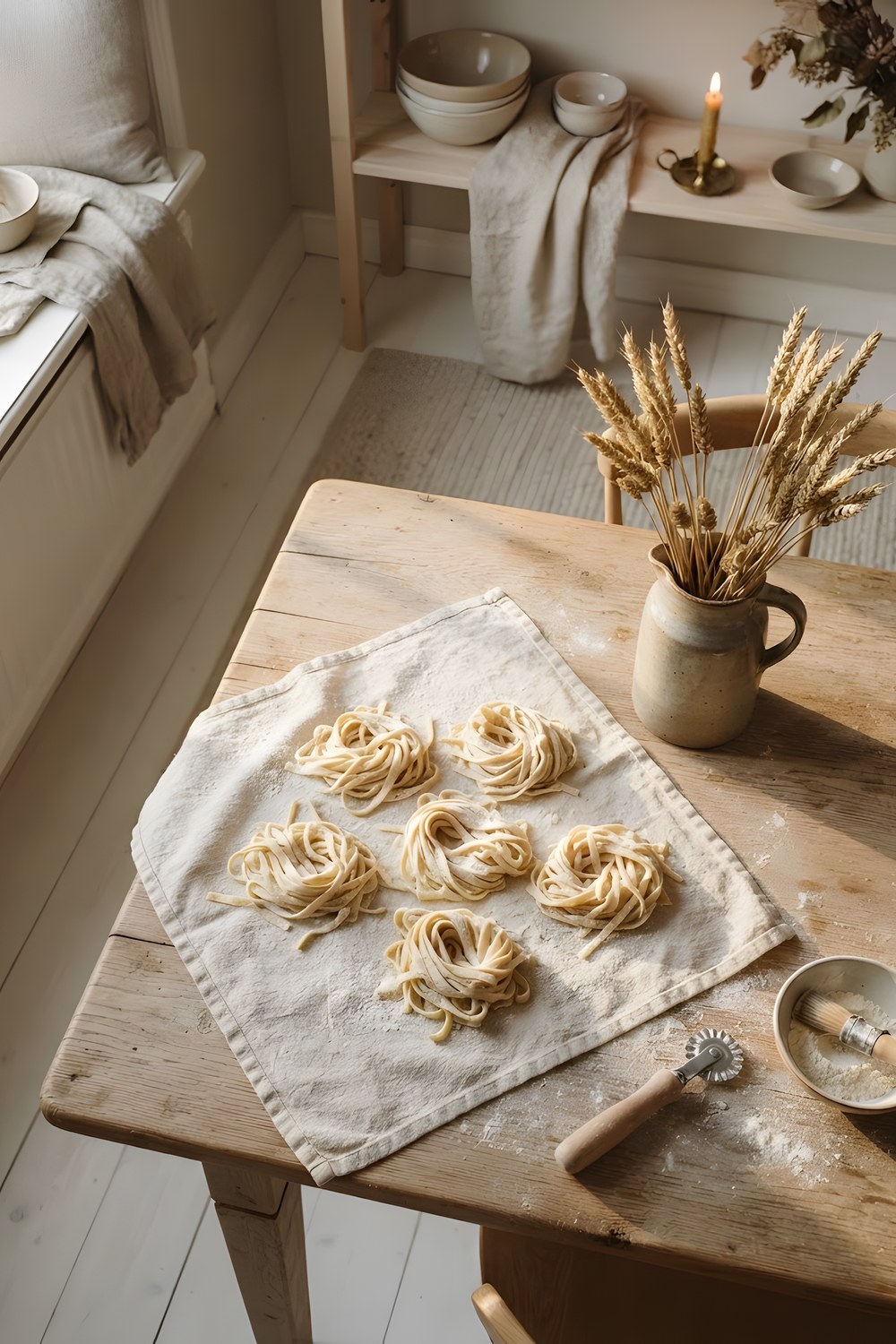
Getting from a ball of dough to a sheet you can read a newspaper through is a matter of patience and setting numbers, not strength.
Why thickness is the whole problem
Fresh pasta fails or succeeds on one measurement: how thin the sheet gets before it is cut. Dough rolled to a scant millimeter cooks evenly and holds sauce. Dough left thicker turns gummy in the center while the edges overcook. There is no shortcut around gradual reduction. Dough pushed straight from thick to thin tears, because the gluten has not had time to relax between passes.
The actual sequence
Start by resting the dough, covered, for at least thirty minutes after kneading. This lets the flour hydrate fully and the gluten loosen, so the sheet stretches instead of fighting back. Divide the dough into pieces about the size of a fist, and keep the rest wrapped so it does not dry out at the edges, which is the most common cause of cracking later.
Feed one piece through the widest setting first. Fold it into thirds like a letter, turn it ninety degrees, and pass it through the same wide setting again. This step, done two or three times, is what builds a smooth, even sheet rather than a lumpy one. Only after that folding stage should the setting narrow, one notch at a time, with a single pass at each width. Skipping a notch is how tears happen.
By the second to last setting, the sheet should be long enough that it needs two hands to support, one feeding and one receiving, so it does not stretch unevenly under its own weight. Lay it over a lightly floured cloth or the back of a hand and check for translucency before cutting. If light does not pass through, one more notch is needed.
Timing the cut
Cut the pasta shape while the sheet is still supple, not once it has dried at the edges, or the cutter will crimp rather than slice cleanly. Dust the strands lightly and rest them in loose nests rather than piling them, so they do not fuse together before cooking.