How to choose good chia seeds for a pantry jar
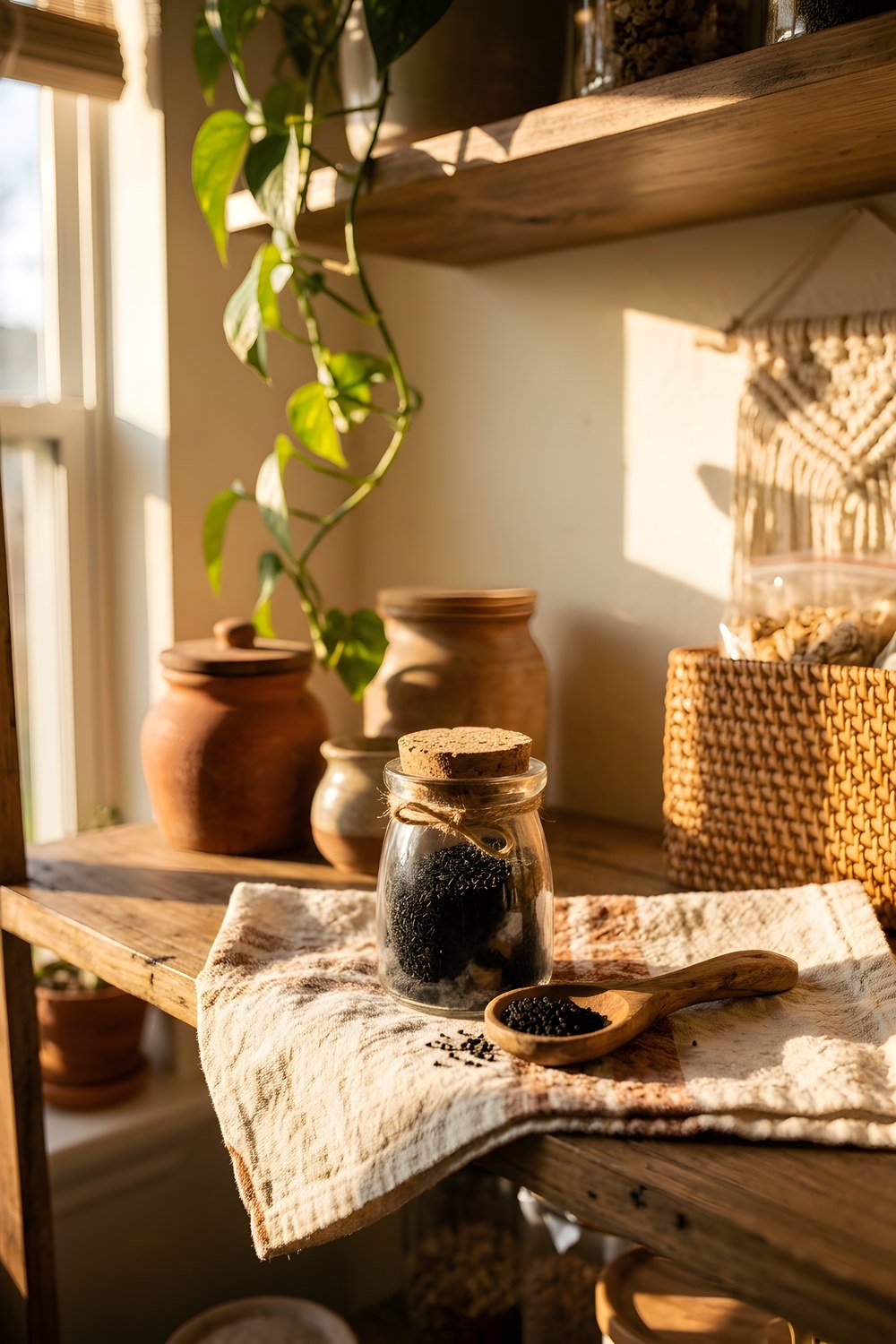
Not every small dark seed in a jar behaves the same way once it meets liquid. Here is what actually separates a good batch from a disappointing one.
What the seeds should look like
Good chia seeds are small, hard, and mostly black or dark brown, with a scatter of lighter tan or white ones mixed in. That mix is normal, since chia plants produce both colors depending on the variety. What matters more is uniform size and a dry, dustless feel when you pour them. If the jar has a lot of broken fragments or a fine powder settled at the bottom, the batch has been handled roughly or stored too long, and it will not gel evenly.
Why the gel test tells you more than the label
The real test happens in a bowl, not on a shelf. Stir a spoonful into water or milk and let it sit for ten minutes. Fresh, undamaged seeds swell into a thick, faintly wobbly gel because the soluble fiber in the outer coat absorbs many times its weight in liquid. If the mixture stays thin and watery, or only some of the seeds swell while others sink flat and dry, the batch is old or was stored somewhere warm and damp, which breaks down that fiber coat before it ever reaches your bowl.
Storage decides how long that quality lasts
Chia seeds carry a fair amount of oil, and that oil is what eventually turns a good batch rancid. A sealed glass jar kept away from direct sun does more for shelf life than any date on a label. Once opened, spooning seeds out with a dry spoon and closing the lid tightly matters more than people think, since moisture from a damp scoop is often what starts the seeds clumping or smelling faintly fishy, which is the first sign they have turned.
A note on color and taste
White and black chia seeds taste the same and gel the same way, so a jar that leans one color over the other is a matter of preference, not quality. What should decide a purchase is texture, dryness, and how the seeds behave once wet, not how uniform the color looks through the glass.