Why a tray under a teapot changes how a room feels
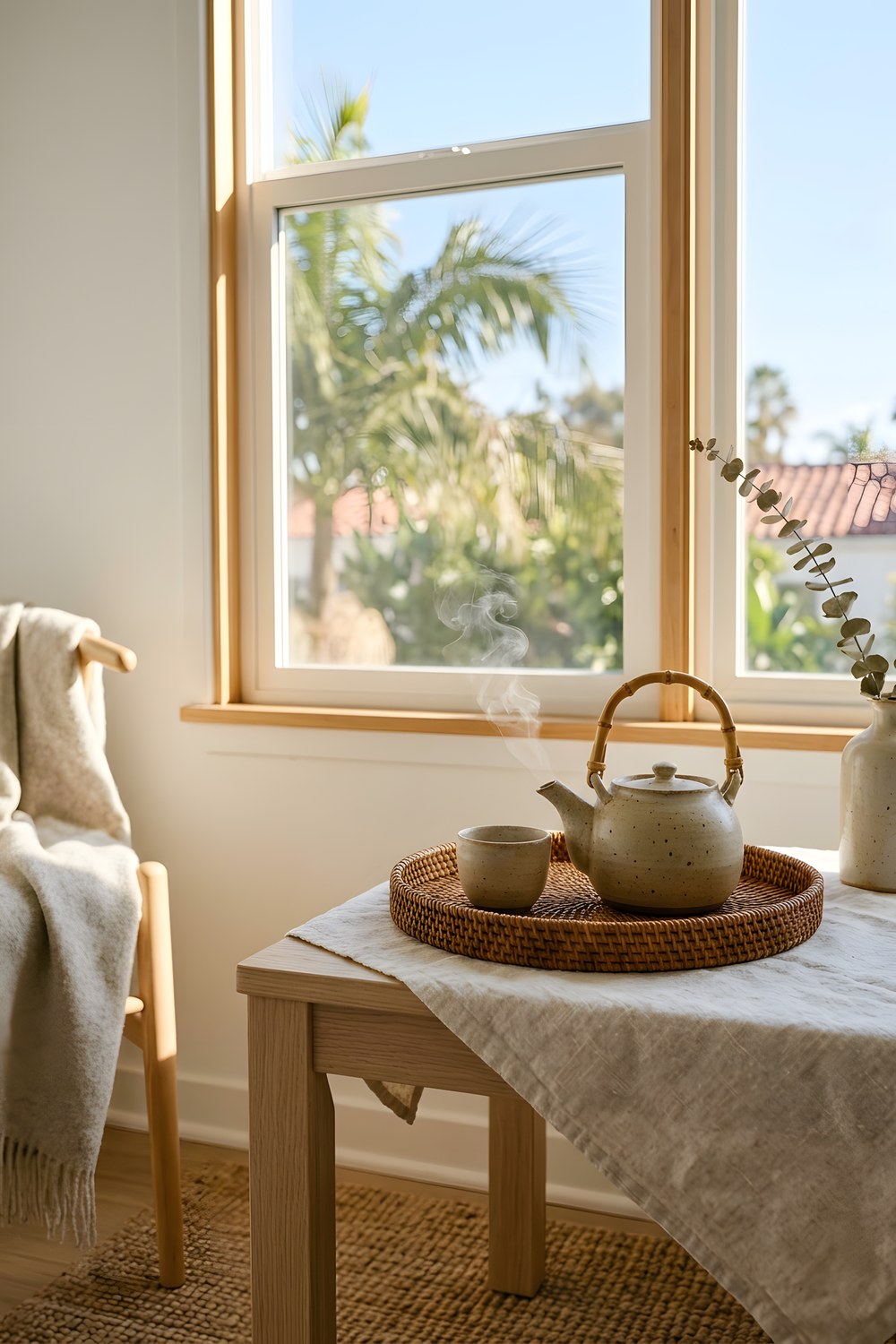
A woven tray under a teapot is doing more than catching drips. It is drawing a boundary that lets a whole tabletop feel calm.
A border the eye can trust
A bare wood table with a teapot, a cup, and a folded napkin scattered across it reads as clutter, even if nothing on it is out of place. Put those same three objects on a tray and the eye stops counting them one by one. It sees a single shape instead. This is a basic trick of visual grouping: anything inside a defined edge gets processed as one unit, so a table can hold real activity without looking busy.
That is also why the habit survives even in homes with plenty of surface area. It is not about running out of room. A large pale wood side table by a window has all the space a cup and pot need without a tray. People still reach for one because the tray sets a limit on where warm ceramic and spilled liquid are allowed to travel, and a fixed limit is easier for the eye to relax into than an open expanse.
Heat, moisture, and the wood underneath
There is a practical layer too. A teapot fresh off the heat can sit well above sixty degrees Celsius, and linen alone does not stop that warmth from reaching the wood grain beneath it fast enough to matter over months of daily use. A tray, even a thin woven one, adds a few extra millimeters of dead air, which is a poor conductor. That gap is what keeps ring marks and slight discoloration from building up on a table that otherwise gets strong afternoon sun through a large window, since sun already dries and stresses the wood surface on its own.
A boundary you can lift and move
The last reason is simply portability. A tray turns a fixed arrangement into one object that can be picked up, carried to a different chair, or set on a windowsill, without the ritual of resetting cup, pot, and napkin one at a time. Furniture rarely offers that kind of flexibility on its own, which is probably why the tray under the teapot outlasts almost every other tabletop trend.