Why an empty chair by the window gets used more than the sofa
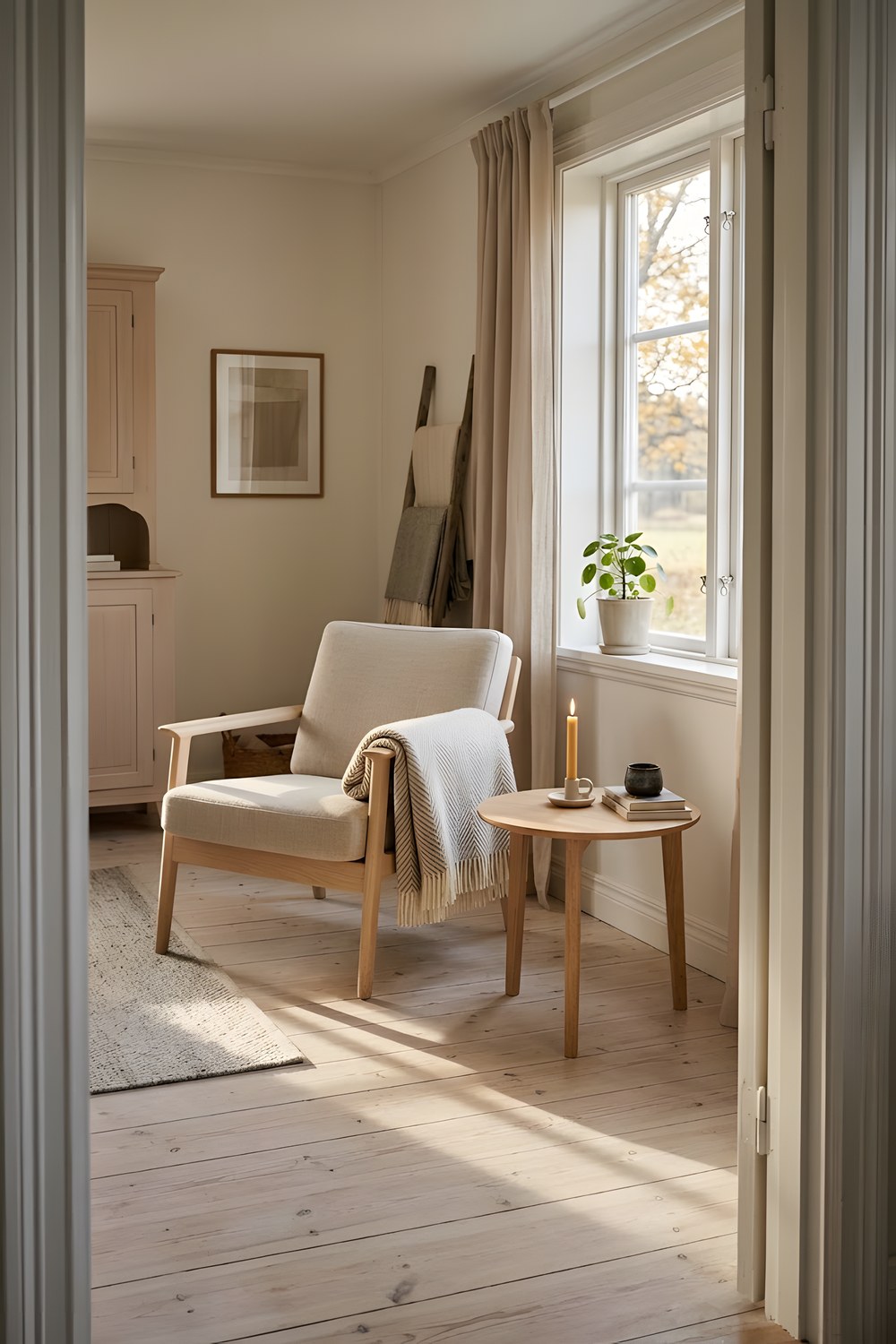
A chair angled toward late light and nothing else explains why people read there and nowhere else in the house. The reason has more to do with the body than the book.
The chair is not the point
A low armchair turned toward a window is a small piece of furniture logic. It works because it removes decisions. There is one direction to sit, one source of light, one obvious place to rest a cup or a folded throw. A sofa faces a room full of options: a television, a doorway, other people. A single chair angled at a window faces weather and time of day instead, which asks nothing of the person sitting in it.
Late light does more than it looks like it does
Afternoon light that comes in low and sideways, the kind that throws long shadows across a floor, has less glare than midday sun and less blue content than morning light. Eyes relax into it faster. It also marks time passing in a visible way, which is part of why a reading hour in that light feels finite and calm rather than open ended. A lamp gives even light all evening. A window at four in the afternoon gives light that is already leaving, and that quiet urgency is part of what pulls a person into a chair rather than a scroll on a phone.
Why the same habit shows up in a self help book about full living
A recent paperback on practical changes for living fully, written by a physician, makes a version of this same point without naming furniture: small environmental cues do more work than willpower. Choosing where a body sits shapes what the mind does next far more reliably than deciding to concentrate does. The chair by the window is not a mood board idea. It is a repeatable cue, and cues, not resolutions, are what make a reading habit or any other habit actually recur.
None of this requires a particular chair or a particular window. It requires one seat that faces light and away from distraction, used at roughly the same hour, often enough that the body starts to expect what comes next.