How to fold linen so it actually dries between uses
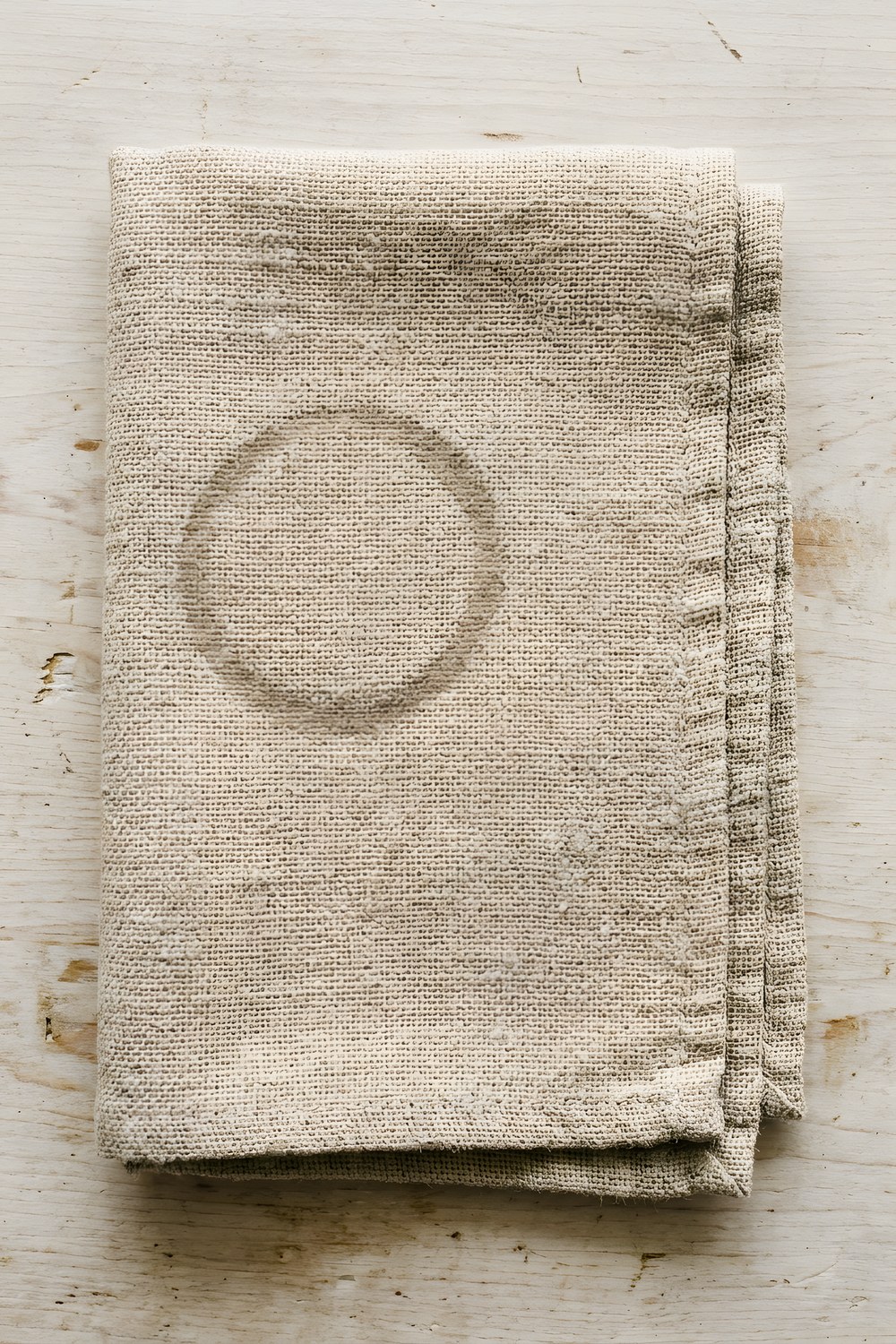
A folded towel holds more water than it looks like it does. The way it is folded decides whether it dries in an hour or stays damp all day.
Why the fold matters more than the fabric
A kitchen towel left flat on a counter has almost every inch of it exposed to air, so it dries fast. Fold it in half twice, the way most people store one, and the layers touching each other stay wet for hours after the outer surface feels dry to the touch. That trapped moisture is what causes the faint sour smell that shows up in towels nobody thinks to blame. Linen resists this better than cotton terry because the fibers are less absorbent to begin with and dry from a wet state roughly twice as fast, but even linen sitting in a tight fold will hold a damp ring under a coffee cup for most of a day.
A fold that actually breathes
Instead of a flat double fold, try an accordion fold: three panels folded back and forth like a fan rather than stacked directly on top of each other. This leaves a thin gap of air between each layer instead of two surfaces pressed flat together. Hang or rest it so the folded edge, not the flat face, points up and out, which lets air move through the gaps instead of across a sealed surface. On a countertop, prop one end against a canister or the edge of a cutting board so the towel is not lying completely flat against pale wood, since full contact with a nonporous surface slows drying on the underside by trapping a thin layer of still air.
Reading the water ring
A ring left behind after a cup is lifted is a rough gauge of how wet the towel underneath actually is, since a properly dried towel will not leave one. If a ring appears in the morning after the towel sat overnight, the fold used the night before was too tight, and a looser accordion fold or a hook instead of a flat rest will usually clear it up within a few days of the habit changing.