How to save herb seed from a sunny windowsill
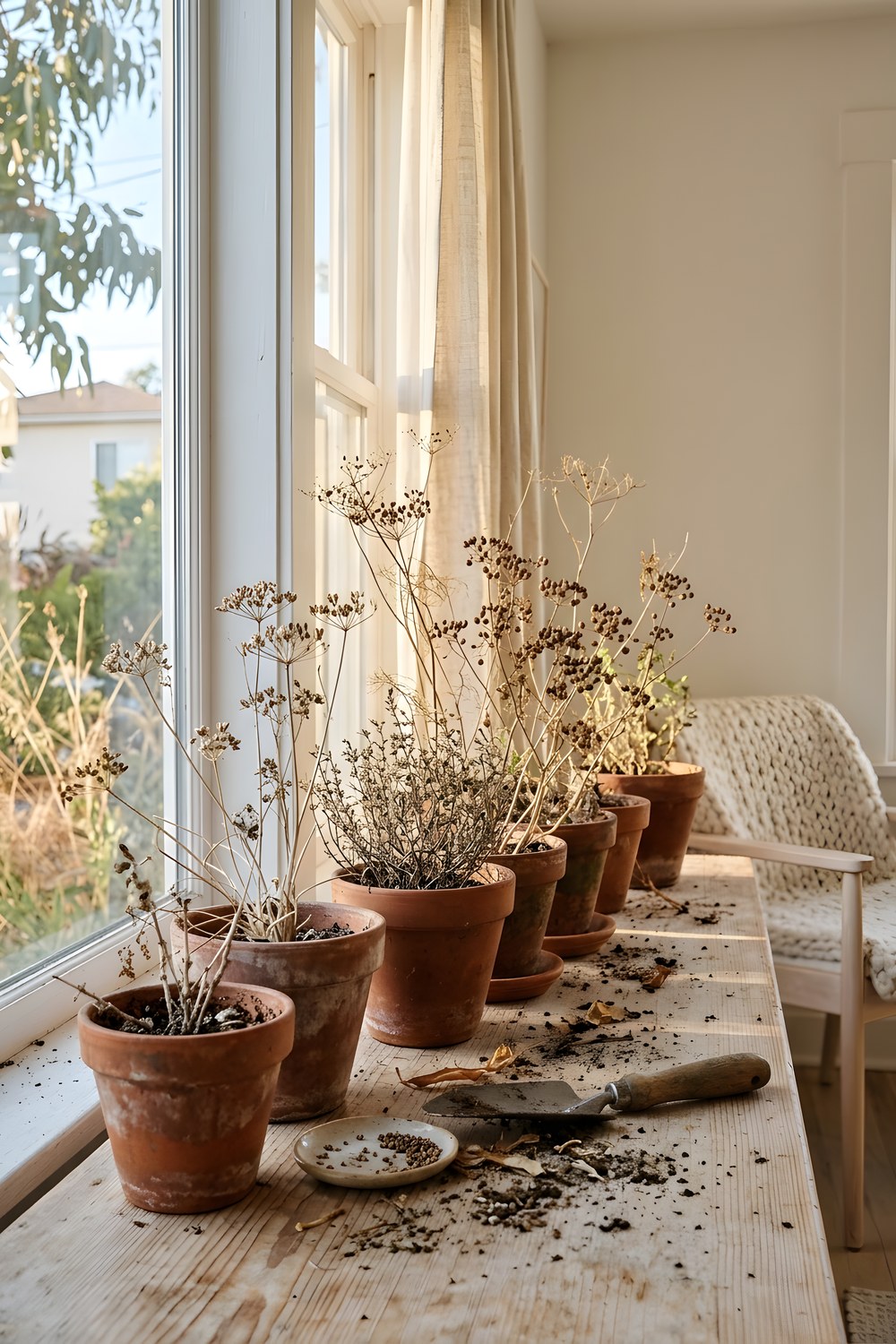
Herbs left to flower on a bright sill will finish their own cycle if you let them. Here is how to catch the seed before it scatters on the wood.
Why the plant bolts indoors
A pot of basil or cilantro kept in strong afternoon light and shallow soil runs out of room before it runs out of season. The plant reads the cramped roots and long light hours as a signal to stop making leaves and start making flowers, then seed. Outdoors this happens in high summer. On a warm sill it can happen any month, which is why a row of pots can look green in January and papery by March.
Step by step
Let the flower heads dry fully on the stem rather than cutting them while still green. A head that snaps cleanly and rattles is ready; one that bends is not. Hold a small paper bag under the stem and bend the dry head into it, then rub gently between thumb and finger so the seed falls free of the chaff. Terra cotta helps here because its porous walls let excess moisture leave the soil, so the last stems dry in place instead of rotting at the base, which is the more common failure with glazed or plastic pots.
Tip the bag’s contents onto pale wood or a plate in that same low afternoon light. The angled sun makes it easy to see which seed is plump and dark against the papery husks and dust, so you keep only the good fraction.
Storing what you collect
Spread the cleaned seed on a dry saucer for two or three more days before sealing it, since seed that feels dry to the touch can still carry enough moisture to mold in a closed jar. A small envelope, labeled with the plant and the season, keeps better than any container that traps air. Stored dark and cool, most kitchen herb seed stays viable for two to three years, though cilantro and dill fade faster than basil or parsley.