Why dried orange slices smell strongest in low light
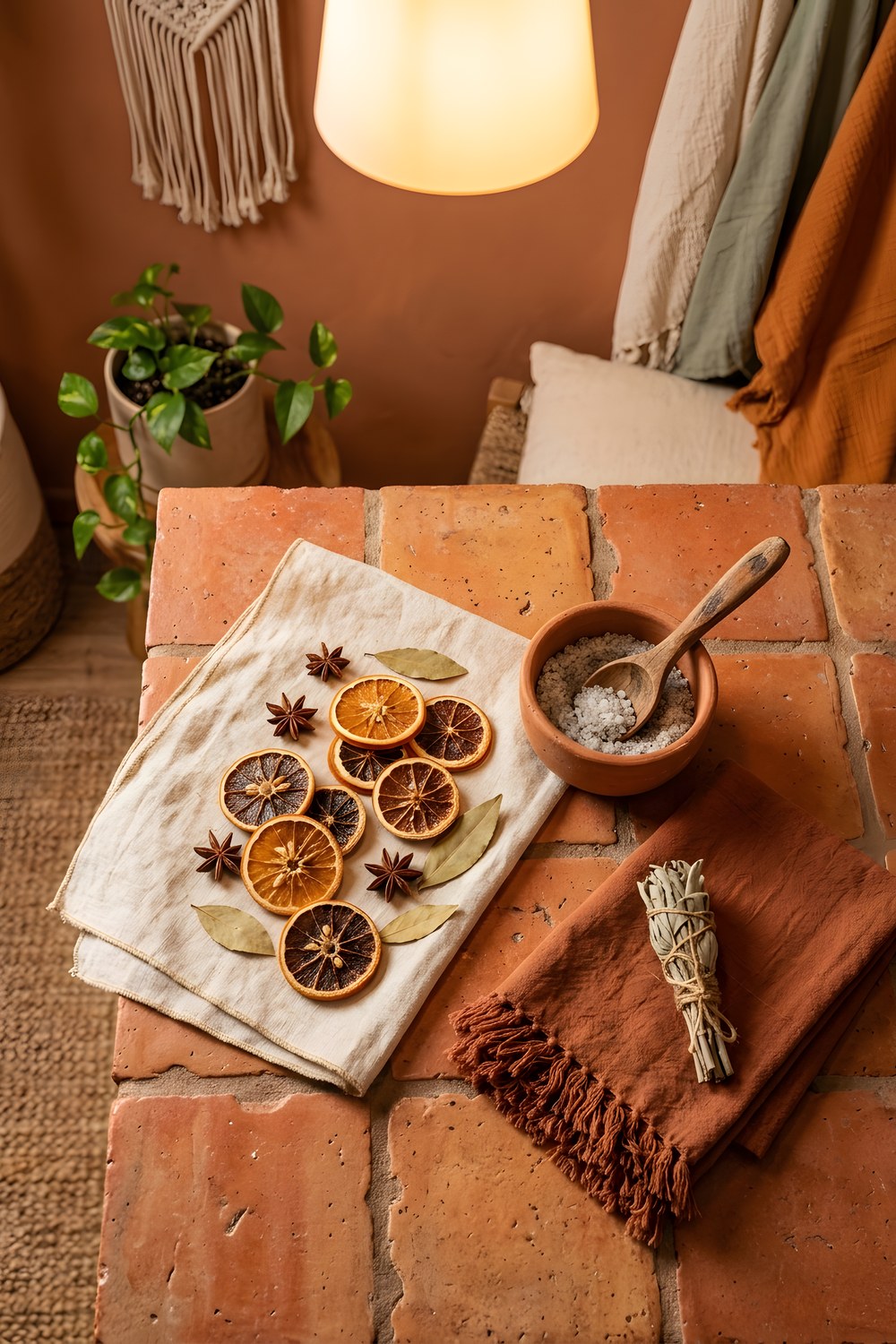
A dish of orange slices on a counter after dark is not decoration by accident. It is a small trick of chemistry and timing that this season makes easier to notice.
The nose works differently after dark
Under daylight, a kitchen counter competes for attention with color and movement outside a window. After sunset, with only a lamp lit nearby, smell becomes the sharper sense. This is why a bowl of dried orange slices set near warm light seems to carry further into a room in autumn evenings than it ever does at noon in July. The oils in the peel, mostly limonene, release slowly as the fruit dries, and gentle heat from a nearby lamp speeds that release a little more without scorching the fruit the way an oven would.
Salt does the opposite job
A small dish of coarse sea salt set beside the fruit is not there for looks either. Salt absorbs ambient moisture in a room, which in early autumn tends to swing between a humid afternoon and a dry, heated evening. Keeping it in an open dish rather than a shaker means it clumps less and stays ready for a pinch of finishing salt on whatever comes off the stove. Terracotta holds this well because the unglazed clay itself wicks a bit of moisture too, so the dish is doing double duty rather than sitting there inert.
What the season changes
Orange slices dry fastest and smell most vivid when cut in the weeks right after the first cool nights, when citrus is still in season and indoor heating has not yet dried the air completely. Leave slices out much past midwinter and the fragrance fades to almost nothing, leaving dry, woody discs with little scent left to give. A counter corner like this is really a small seasonal instrument, worth resetting every few weeks rather than treated as a permanent still life.