Why herbs left to dry outdoors often rot instead of curing
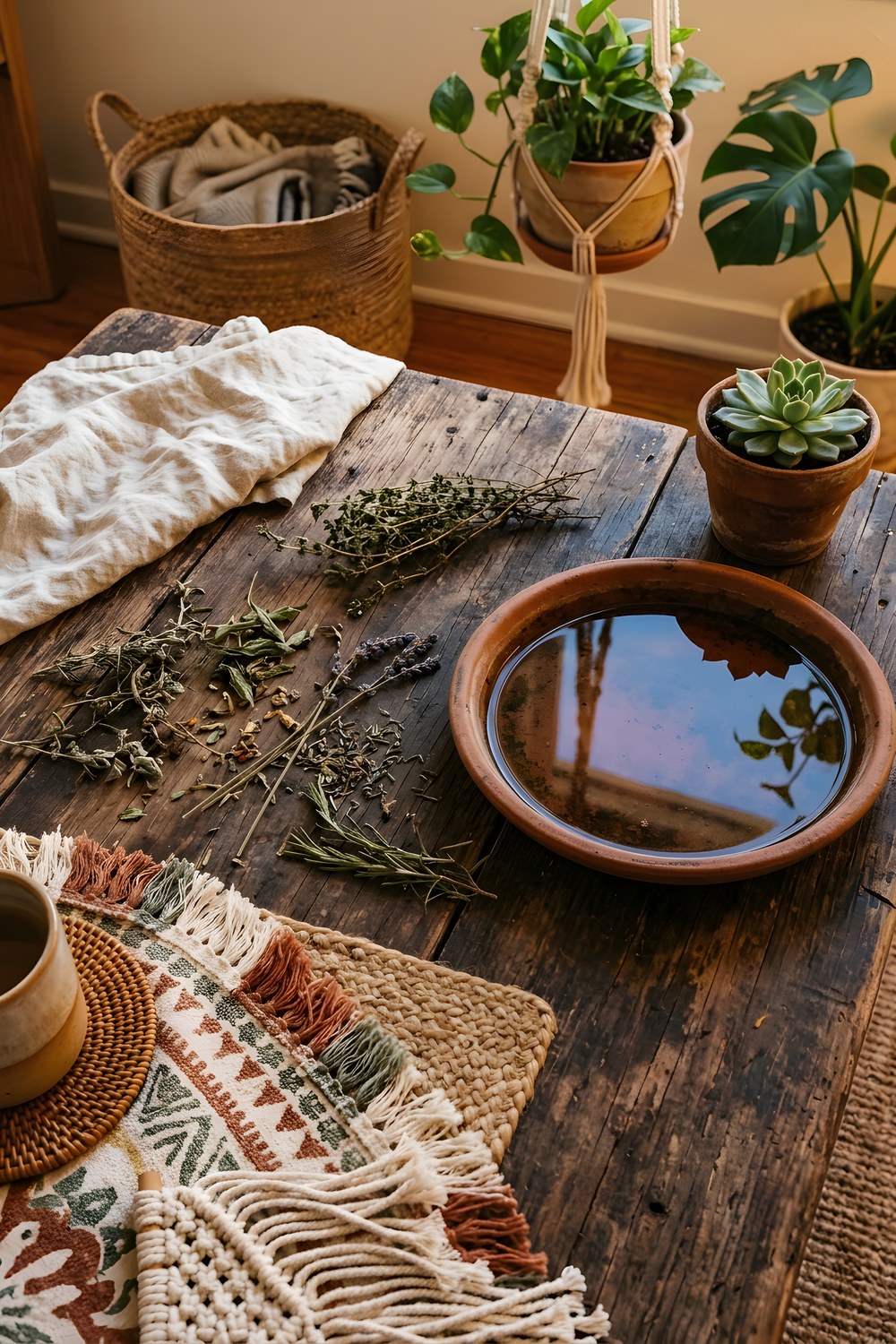
Cut stems and open air seem like a simple match, but dusk humidity undoes most kitchen garden drying attempts. Here is what actually turns leaves brittle instead of black.
What usually goes wrong
Stems get cut in the evening, tied loosely, and left on a table or windowsill overnight because that is when there is finally time. But the hours right after cutting are when a stem is heaviest with water, and the cool damp air of early evening slows evaporation instead of helping it. Herbs bundled at dusk often sit at close to full moisture until well past midnight, which is exactly the window mold needs. By morning the outer leaves look fine, but the thick centers of the bundle have already started to sour, and that smell does not leave even after the rest dries.
A saucer of standing rainwater nearby makes this worse, not because of splashing, but because it raises the local humidity right where the herbs are sitting. Terracotta holds and slowly releases moisture into the air around it long after the water itself would have evaporated from a sealed container.
What to do instead
Cut herbs in the late morning once dew has burned off, when stems carry the least water they will carry all day. Spread them in a single layer rather than tying them into bundles, since airflow between individual stems matters more than airflow around a hanging cluster. A woven surface, open weave cloth, or a rack with gaps does more work than a solid wood table, because damp air needs somewhere to go besides sideways.
Move the drying herbs indoors, or at least under full cover, before evening humidity rises. Outdoor curing works in the middle of a dry, warm day. It stops working the moment dusk cools the air enough for moisture to linger instead of lifting off. If leaves still feel leathery rather than brittle after a few days, they are not finished, no matter how good they look.