How to tell a lighted garden flag that lasts from one that fails
A lit flag is a small electrical device hung out in the weather, and most of the difference between good and poor comes down to where the water gets in.
The light is the part that fails
Start with the battery box. A good one has a lid with a rubber gasket or a tight lip, and it sits low or faces down so rain runs off instead of pooling. A poor one has a loose snap lid that lets in condensation every night the temperature drops. Cold also cuts battery output, so a flag that glows brightly in October can sulk by January. A built in timer helps, because a string left burning all night drains cells that were never going to last the season anyway.
Then look at the wire. Tiny LEDs sewn into the fabric are fine, but the point where the wire leaves the cloth is where wind flexing eventually breaks a strand. Good ones have strain relief, a bit of stitching or a sleeve that holds the wire still while the cloth moves.
The cloth and the stitching
Polyester is the usual fabric, and it is the right one, since it does not soak up water or rot. What varies is the print and the edges. Ink that sits on the surface fades under strong sun, which matters in southern California, where December light is still harsh. Color that goes through the weave holds longer. Hems should be double stitched, because a single row lets the edge fray, and a frayed edge keeps unraveling every time the wind picks up. A heavier weight also hangs flat instead of wrapping around the pole, where it would snag the lights.
The stand matters as much
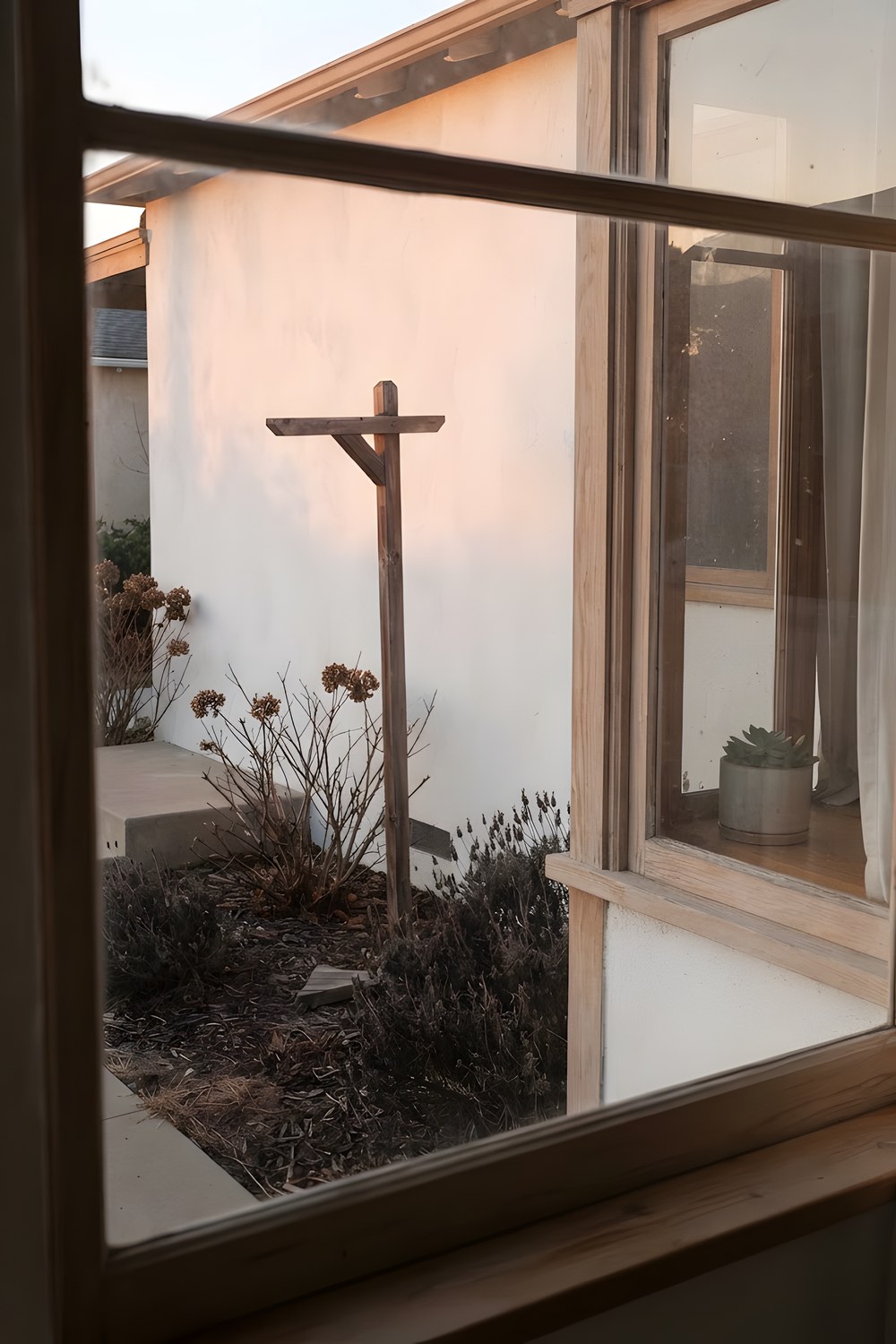
A wooden stand looks right against white stucco, but untreated wood takes up moisture at the base, swells, then cracks as it dries. If it is wood, it should be sealed, end grain included. Metal should be powder coated, since bare steel rusts first at the welds. Either way the base should be wide and heavy for its height. A flag acts as a sail, and a light stand tips on the first gusty night.
The pattern is the same in all three places. Anything that holds water, whether in a battery lid, a hem or a wood joint, is what fails first. A flag that sheds water will still be glowing when the frost browns the lavender beside it.