Why kiwi and apple taste sharper once the weather turns
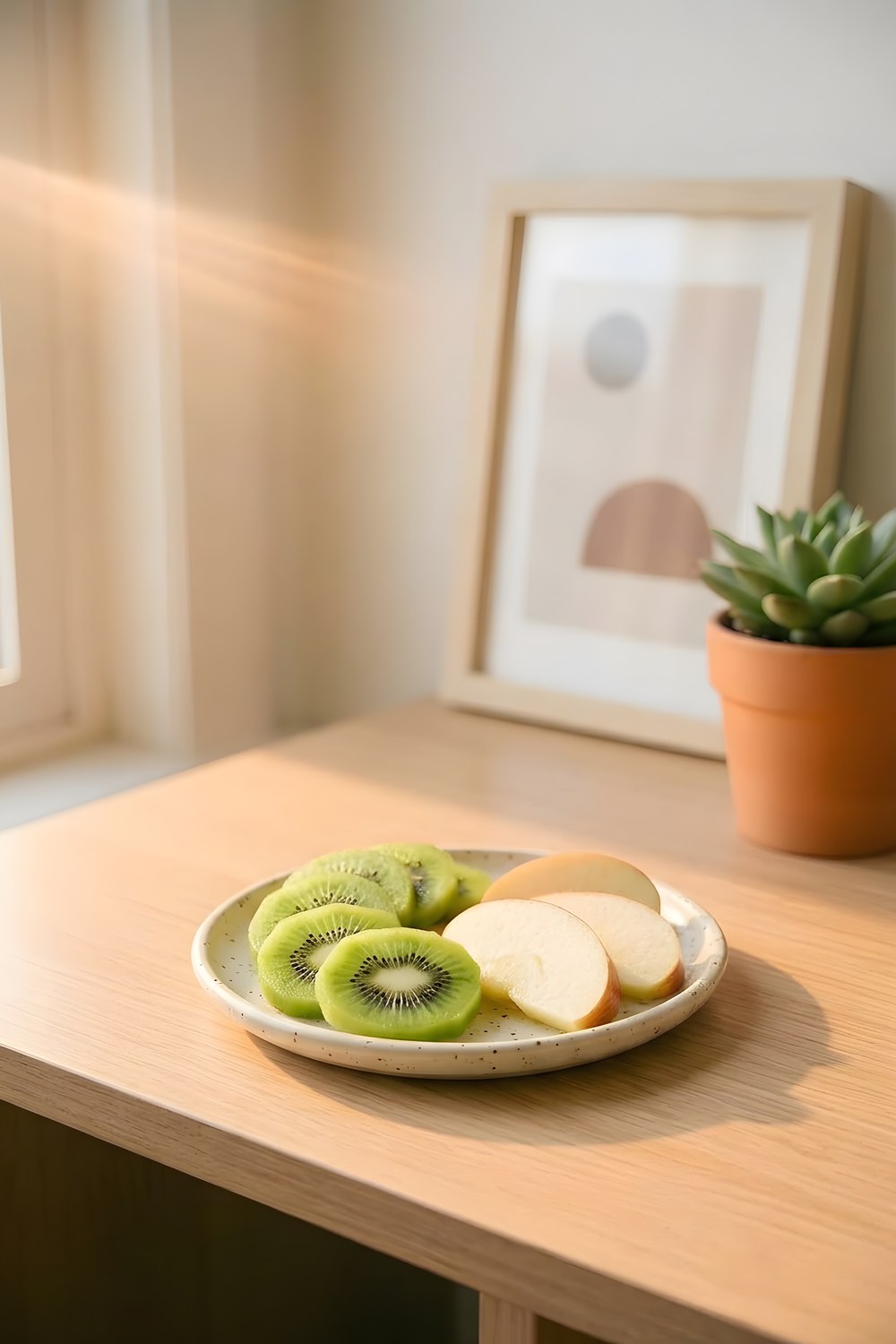
As the air cools, the same fruit on the same counter starts to taste different. Here is what actually changes and why.
The sugar has not moved, your mouth has
A kiwi in September and a kiwi in January can carry nearly the same sugar content, yet the second one tastes brighter. Cooler air dries out the inside of the nose slightly, and a drier nasal passage changes how aroma compounds reach the smell receptors that do most of the work in what we call taste. Sweetness itself is a small part of flavor. Aroma is the larger part, and aroma reads differently once the season shifts.
Apples do something more measurable. Many varieties are harvested from late summer into autumn, which means the apple on the counter in October is often closer to its actual picking date than the one bought in June, which has usually spent months in cold storage. Fresh off the tree, starches have not fully converted to sugar yet in some varieties, so the fruit can taste tarter and firmer. That is not a flaw, it is a stage.
Slicing changes the outcome too
Both fruits brown from the same reaction, an enzyme in the flesh meeting oxygen in the air. Kiwi browns slower than apple because its flesh is more acidic, which is part of why the two look different on a plate after ten minutes even when cut at the same time. If a plate needs to sit out before anyone gets to it, apple is the one to slice last.
A small note on serving
Colder rooms in autumn also mean fruit left out reaches room temperature more slowly, which actually helps flavor. Very cold fruit straight from the refrigerator carries less aroma than fruit given twenty minutes to warm slightly, since the compounds responsible for scent become more volatile as the temperature rises. A short wait before eating is not fussiness, it is a small, measurable difference in what the fruit tastes like.