Why folding wool instead of hanging it actually saves the shape
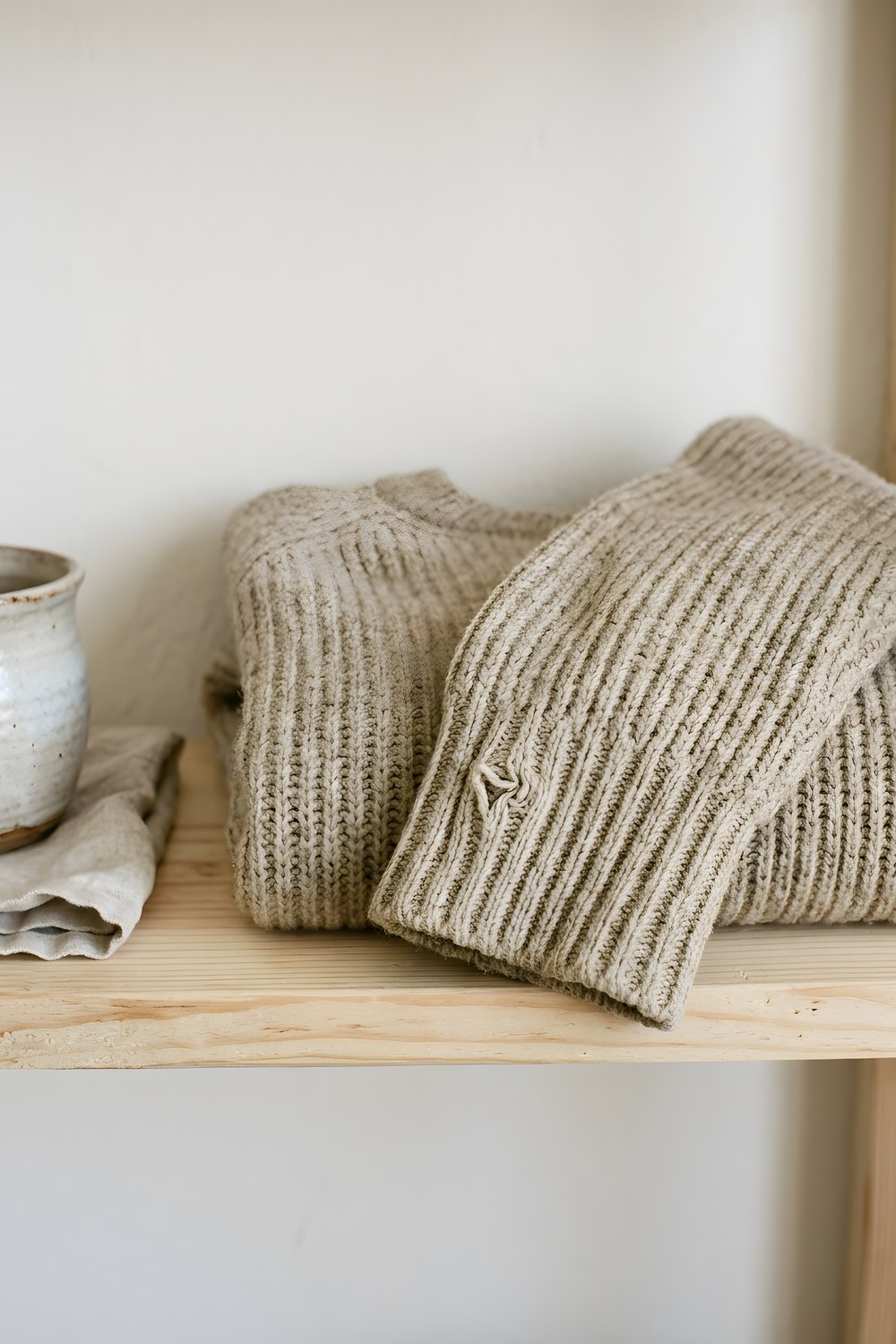
The habit of folding sweaters onto a shelf instead of hanging them is not tidiness. It is what keeps a collar from stretching into an odd oval by winter.
Gravity does the damage slowly
A wool sweater on a hanger looks fine for the first week. The trouble is gravity, working on damp wool fibre every single day. Wool absorbs a small amount of moisture from the air even indoors, and damp fibre stretches under its own weight far more easily than dry fibre. Hung by the shoulders, a sweater slowly pulls itself into a shape with points at the hanger tips and a collar that sags into an oval. Nobody notices this happening because it takes months, not days. By the time it is obvious, the sweater has learned a new shape and mostly keeps it.
Folding spreads the load instead of concentrating it
A folded sweater rests on a shelf with its whole weight spread across a flat surface, rather than hanging from two small points. There is nothing pulling on any one part of the knit for long enough to matter. This is also why the fold itself should change from time to time. Wool that sits creased along the exact same line for a season can develop a soft, permanent line there too, the same logic in miniature. Refolding along a slightly different edge every few weeks avoids that without any extra effort.
The pull in the yarn is a separate story
A small pull, a loop of yarn drawn out of the knit, usually comes from friction rather than storage, a rough surface, a zipper, a fingernail catching a loose stitch. It is worth resisting the urge to cut it off. Pulling the loop gently back through to the inside of the garment, using something blunt like the eye end of a needle, keeps the stitch count even. Cutting it leaves a gap that the surrounding yarn cannot fill back in.
None of this is about whether folding is neater than hanging. It is about the fact that flat storage removes the one force, sustained tension on damp fibre, that actually changes a sweater’s shape over time.