Why folded linen looks different as the light turns
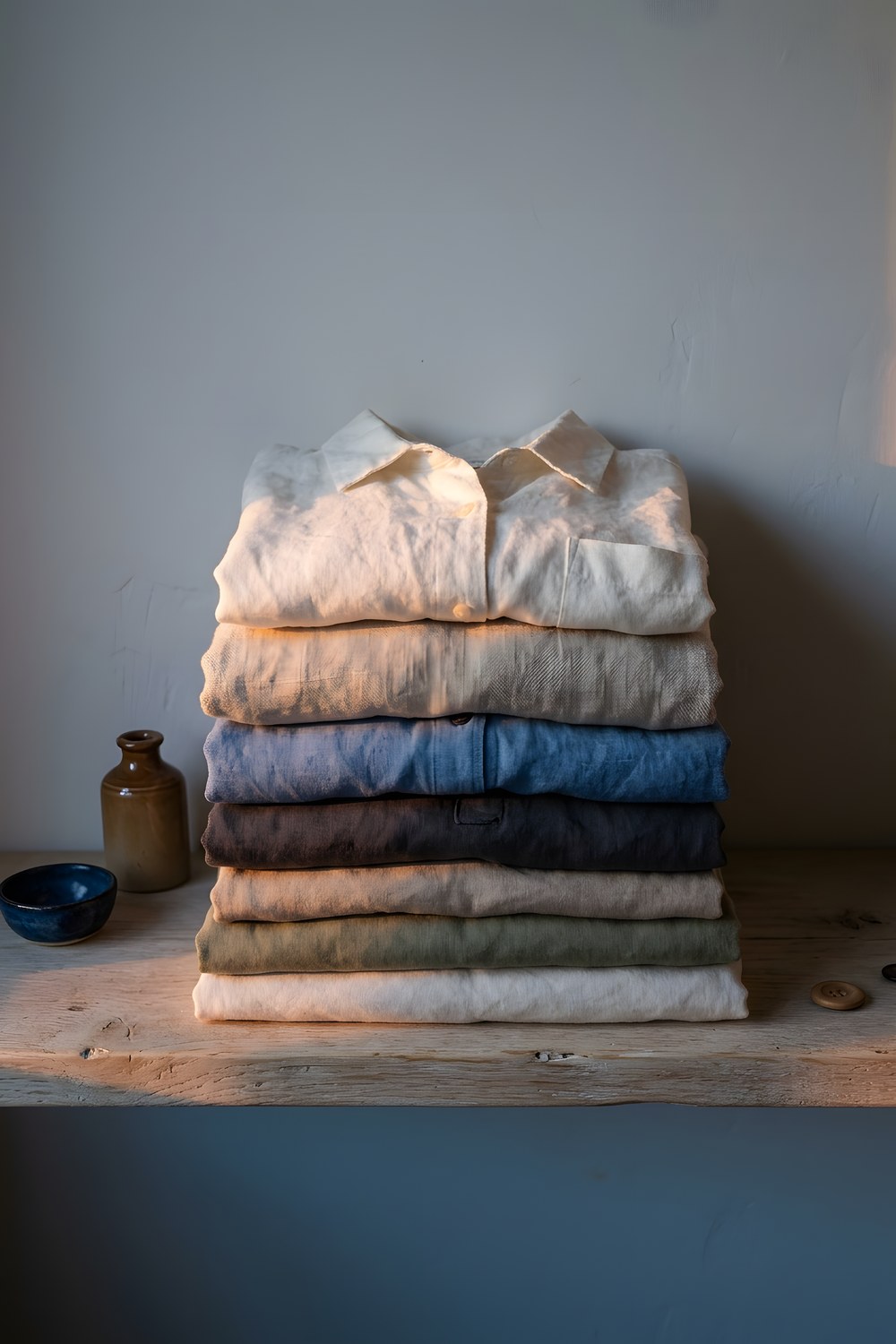
The same stack of linen on a shelf reads warm in July and cool in September. Here is what actually changes and why it is worth folding differently once the season turns.
What dusk does to a pale shelf
A stack of folded linen photographs differently in September than it did in June, and it is not just the mood. Flax fibre reflects light unevenly along its length, so a shirt or pillowcase that looked flat and bright under hard midday sun starts to show its weave once the light goes low and blue at dusk. That texture, the small slubs and irregular threads that make linen linen, is easiest to see when the light is soft and raking sideways across a surface, which is exactly what happens as evening comes earlier each week.
Folding for the season, not just for storage
In a small flat with one shelf instead of a wardrobe, how something is folded matters more than where it goes. Through summer, loose rolling keeps linen breathable and stops it creasing sharply in the heat. Once the air cools, tighter, flatter folds make sense instead, partly to save space as heavier layers arrive, and partly because linen relaxes and softens with handling, so a firmer fold now will not fight you later. This is a matter of habit rather than a fixed rule, and anyone’s shelf will settle into its own version of it.
The color shift nobody plans for
Undyed or lightly dyed linen tends to look warmer, almost gold, in the last hour of daylight, and cooler, closer to grey, once artificial light takes over indoors. That is worth knowing before deciding a piece looks wrong for a room. It usually does not. It is only the hour asking a different question of the same fabric, and by October the answer will have changed again without anything in the flat actually moving.