Why sidewalk flower stands change their whole stock in early fall
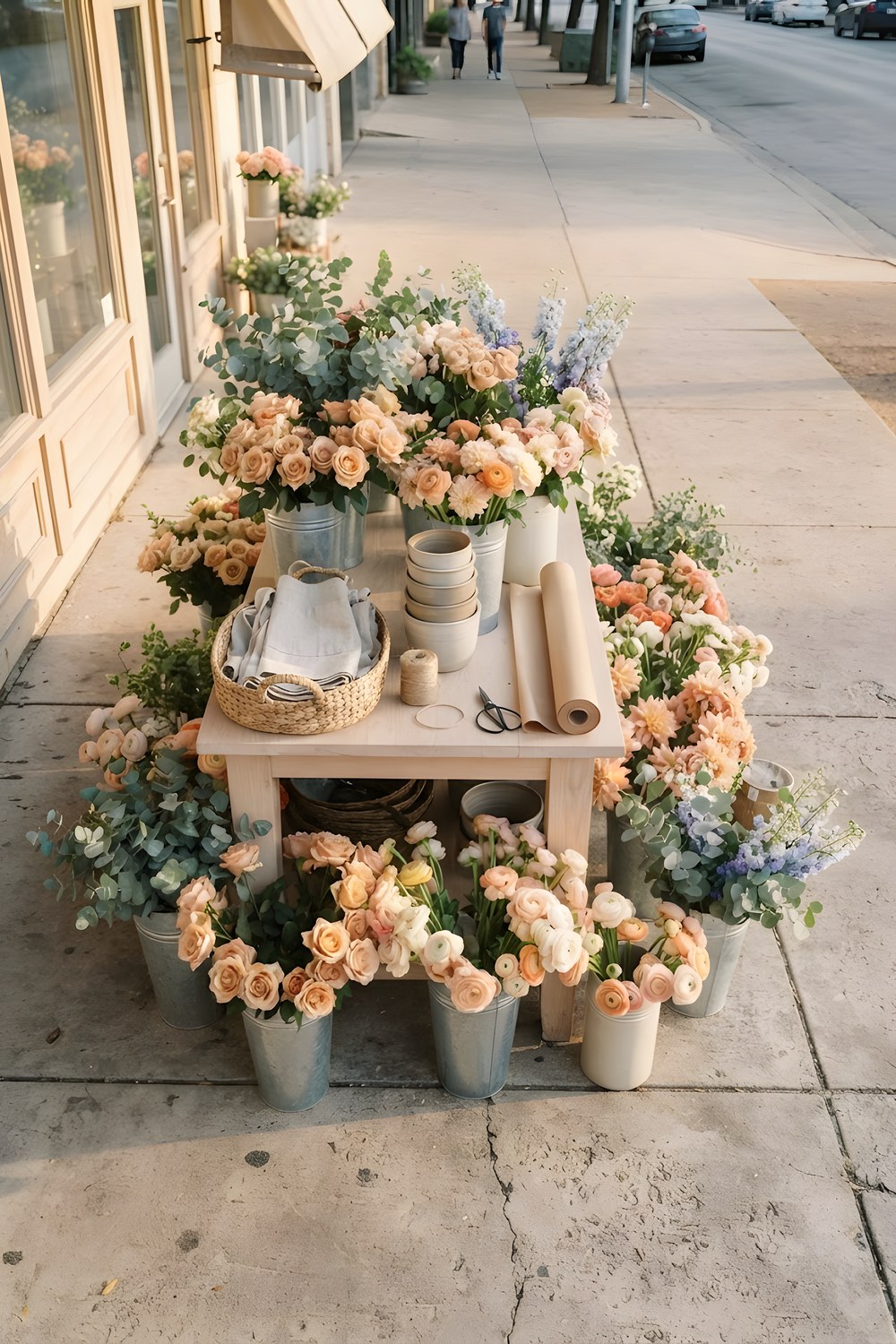
The buckets outside the shop shift fast once September turns, and knowing why makes the display easier to read.
The late summer clearance
Walk past a sidewalk flower stand in the last week of September and you will notice the buckets look different than they did even ten days before. Growers are clearing summer stock: dahlias, zinnias, sunflowers, anything that will not survive a cold night. Shops buy what is cheap and abundant right now, which is why you see armfuls of the same bloom priced to move rather than a careful mix. It is a clearance sale, just one made of stems instead of shelf tags.
What replaces it
By early October the buckets fill with what actually likes the cold: chrysanthemums, asters, and the first branches of berries or turning leaves sold alongside the flowers. These hold their shape in cool morning air far longer than a peony ever would, which is part of why a stand left out overnight in September still looks full and fresh at seven in the morning. The light helps too. Low early sun hits water in a metal bucket and throws a shadow across the pavement that would not exist under the flat glare of July.
A small note on timing
If a stand near you is putting out mums and dropping the dahlias, that is not a stylistic choice, it is the grower’s calendar showing up on the sidewalk a few weeks ahead of your own. Buying in that window, right as one crop clears and before the next fully arrives, is usually when the smallest bunches show up, because a shop is emptying old stock rather than stocking a full new set. It is a narrow moment, a week at most, and then the shift is done until the next one comes around after the first frost.