Why a lit shop window still stops you on an empty street
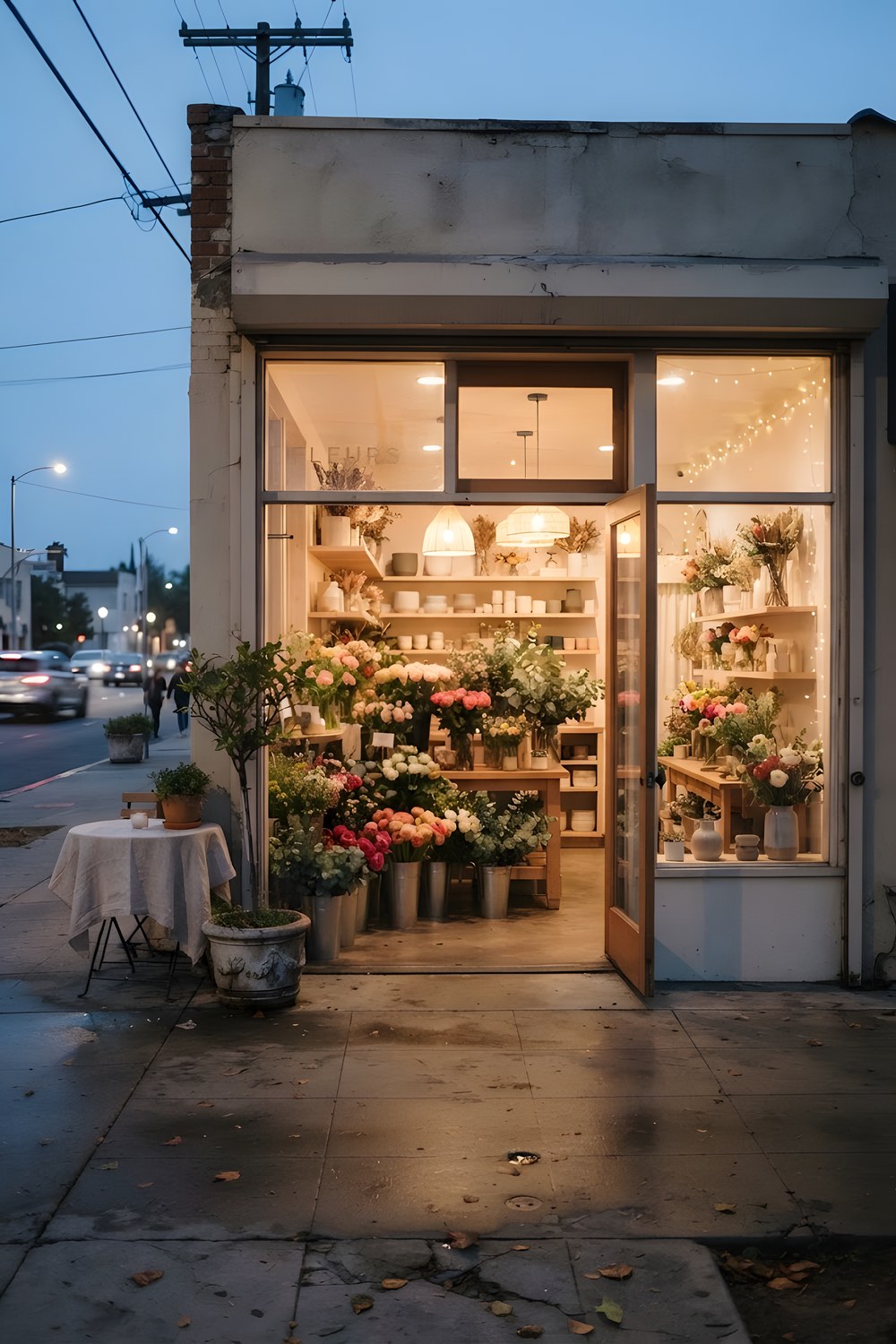
A flower shop glowing after closing time is not an accident of design. It taps something in how eyes and attention actually work.
The one warm window on a dark block
Walk past a street of shuttered storefronts at blue hour and one lit window pulls your eye before you have decided to look. That is not charm, it is contrast. Human vision is built to notice change against a baseline, and a dim street has a very low baseline. A few lamps and a bucket of pale stems become the brightest, warmest thing in the frame, so attention lands there whether or not anyone planned it that way.
Warm light reads as inhabited, even when it is empty
There is also a second, quieter signal. Warm toned light, the kind closer to candle or early lamp color than to office fluorescents, is read by most people as a sign that a space is cared for and recently occupied, even with nobody visible inside. Cooler, bluer light tends to register as clinical or unattended. A shop full of soft yellow bulbs and green stems suggests someone was just there, tidying buckets, even at an hour when the street outside is quiet and the shop itself is closed.
Why the habit shows up at home too
This is the same reason a single lamp left on in an otherwise dark flat feels different from an overhead light switched on and off in passing. One small pool of warm light near a shelf or a chair signals a room that is used slowly, not just walked through. It costs very little, a lamp instead of a ceiling fixture, and it changes how a space reads to anyone glancing in from outside, including yourself coming home late.