Buying flowers at the market without wasting half the bunch
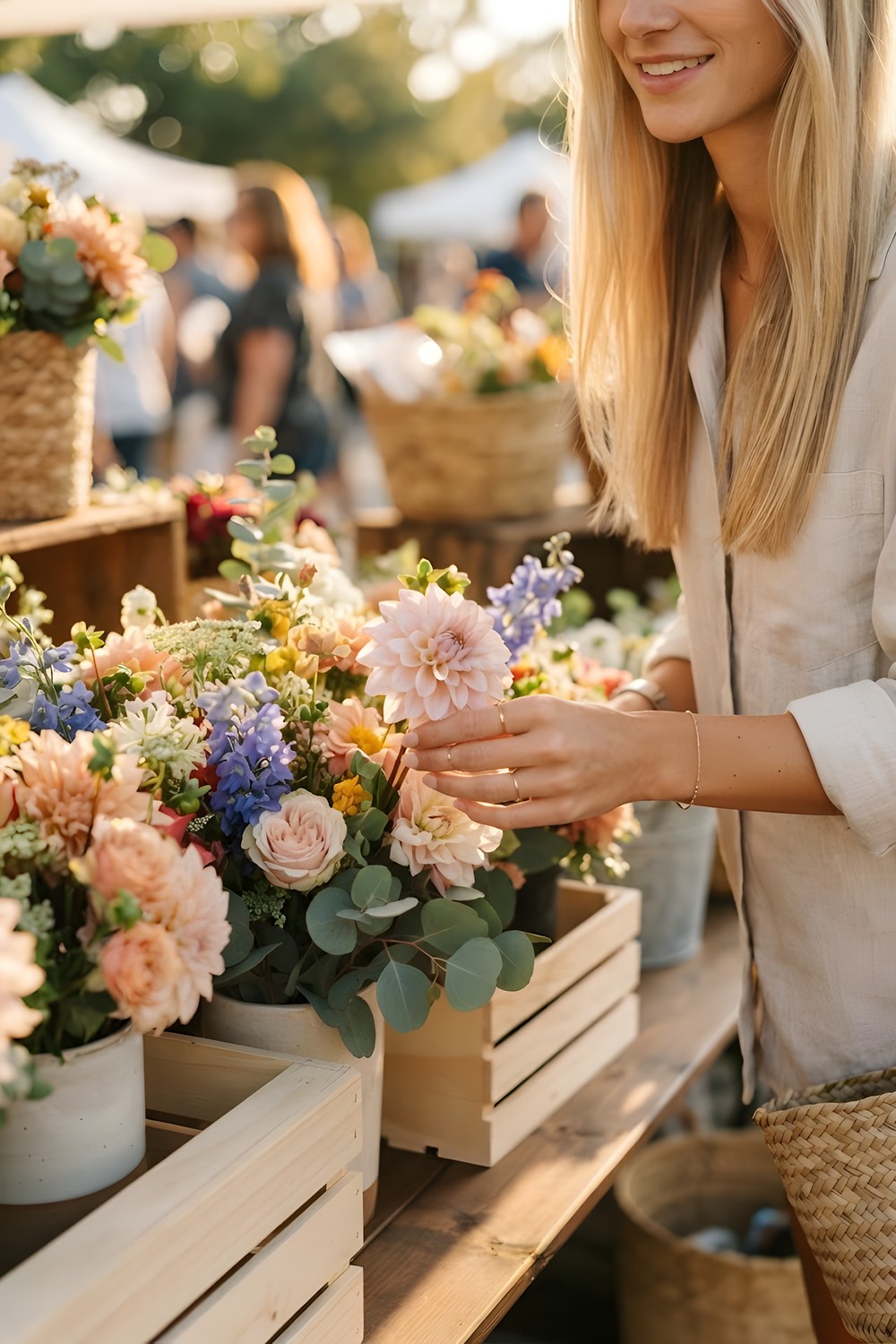
A stall of cut flowers looks simple until half of them wilt by Wednesday. A few small choices at the stall change that.
What usually goes wrong
Most people pick flowers the way they pick produce: by looking at the bloom that is already wide open and bright. That flower is often the closest to finished. It photographs well in the bucket but has little life left once it is cut and standing in a jar on your counter. The stems get grabbed loosely too, low down near the flower head, which bruises the very tissue that is supposed to carry water up the stem for the next week.
The other common mistake is buying a bunch without thinking about what water it will sit in at home. Tap water full of chlorine and bits of stem debris turns cloudy fast, and cloudy water is where bacteria build up and clog the stem ends, which is the actual reason flowers droop before their time. It is rarely the flower’s fault. It is the water.
What to do instead
At the stall, look for buds that are just starting to loosen, still tight at the base but with a bit of color showing. Hold the stem lower down, near the middle, so you are not pressing on the soft part near the bloom. Ask whether the flowers have been out of water long; a stall that keeps buckets full and stems trimmed under water is doing you a favor before you even pay.
At home, cut an inch off each stem at an angle before it goes in the jar, and change the water every two days rather than topping it off. A clean jar matters more than any packet of flower food. If the stems are woody, like lilac or hydrangea, a slightly deeper cut helps them drink.
The part people skip
Strip any leaves that would sit below the waterline. Leaves left underwater rot within a day and feed the same bacteria that shorten a bunch’s life. It takes thirty seconds and it is the difference between flowers that last five days and flowers that last ten.