How to tell a good entry bench apart from a poor one
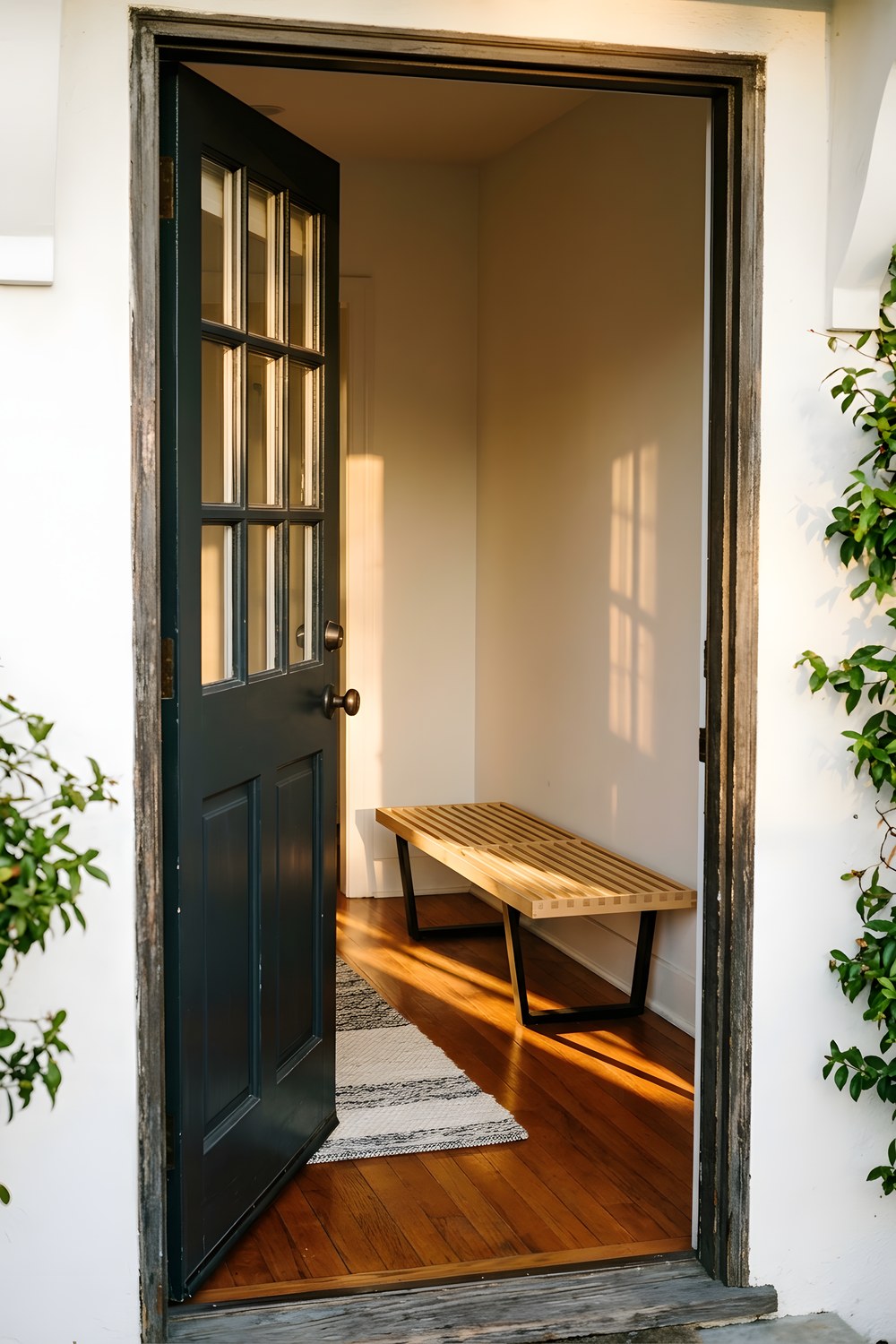
A bench by the door looks simple until it fails under real use. A few measurements tell you which ones hold up.
Height and depth matter more than looks
A bench meant for sitting to put on shoes needs to sit around 45 centimeters off the floor, close to standard chair height. Lower than that and getting back up becomes a small chore. Depth should run at least 30 centimeters, enough for a full seated foot without heels hanging off the edge. Anything narrower turns into a shelf that people avoid sitting on, which defeats the purpose.
Slatted tops, the kind common in Scandinavian style pieces, do double duty by letting dropped grit and moisture fall through instead of collecting on a solid surface. Check the gap between slats. Too wide and small items slip through; too tight and the bench stops draining at all.
Load rating and joinery
Weight capacity is where cheap benches show their limits first. A bench rated under 100 kilograms will flex or creak under two people or one person plus a bag of groceries set down mid shoe change. Look at how the legs meet the seat. Mortise and tenon or dowelled joints resist wobble far longer than screws driven straight into end grain, which loosens with repeated stress.
What sits beside it
A bench alone does not solve the pile of shoes that gathers on the floor beside it. That is a separate problem, usually solved by contained storage rather than open ground space, since bare floor next to a bench collects exactly what the bench was supposed to organize. Anyone who has tried to sweep around a scatter of shoes knows the appeal of a closed box instead. A good bench and a place to actually put the shoes are two different purchases, and treating them as one leads to disappointment with either.
The wood itself matters less than people think. Pale ash, oak, or pine all hold up fine outdoors under a covered entry if finished properly. What fails first is almost never the wood grain, it is the joints and the legs meeting an uneven floor without any leveling adjustment.