Why hanging Monday's shirt the night before works
Setting out a shirt on Sunday evening looks like a small ritual. It is really fibre chemistry doing quiet work while you sleep.
The habit
Plenty of people hang the shirt they plan to wear on the wardrobe rail the night before, or on the back of a door, instead of leaving it folded in a drawer. It feels like planning ahead. It is also physics.
What a crease actually is
Cotton is made of cellulose chains, long molecules that lie side by side and cling to one another through weak hydrogen bonds. Fold a shirt and stack it under other clothes, and those bonds reform in the folded position. That is all a crease is: fibres that have set in the shape they were stored in. A shirt that is mostly cotton, whether a poplin or a broadcloth, behaves this way. Polyester is different, because it is a thermoplastic and holds its shape through heat rather than moisture, which is why blends with a high polyester share crease less.
Those hydrogen bonds are not permanent. Moisture loosens them, and gravity gently pulls the fibres back toward straight. A shirt hanging overnight, especially in a room that picked up some humidity from a shower or a kettle, has hours to let its folds relax under its own weight. Nothing is pressed, but nothing is pushing the creases deeper either.
Why the hanger and the gap matter
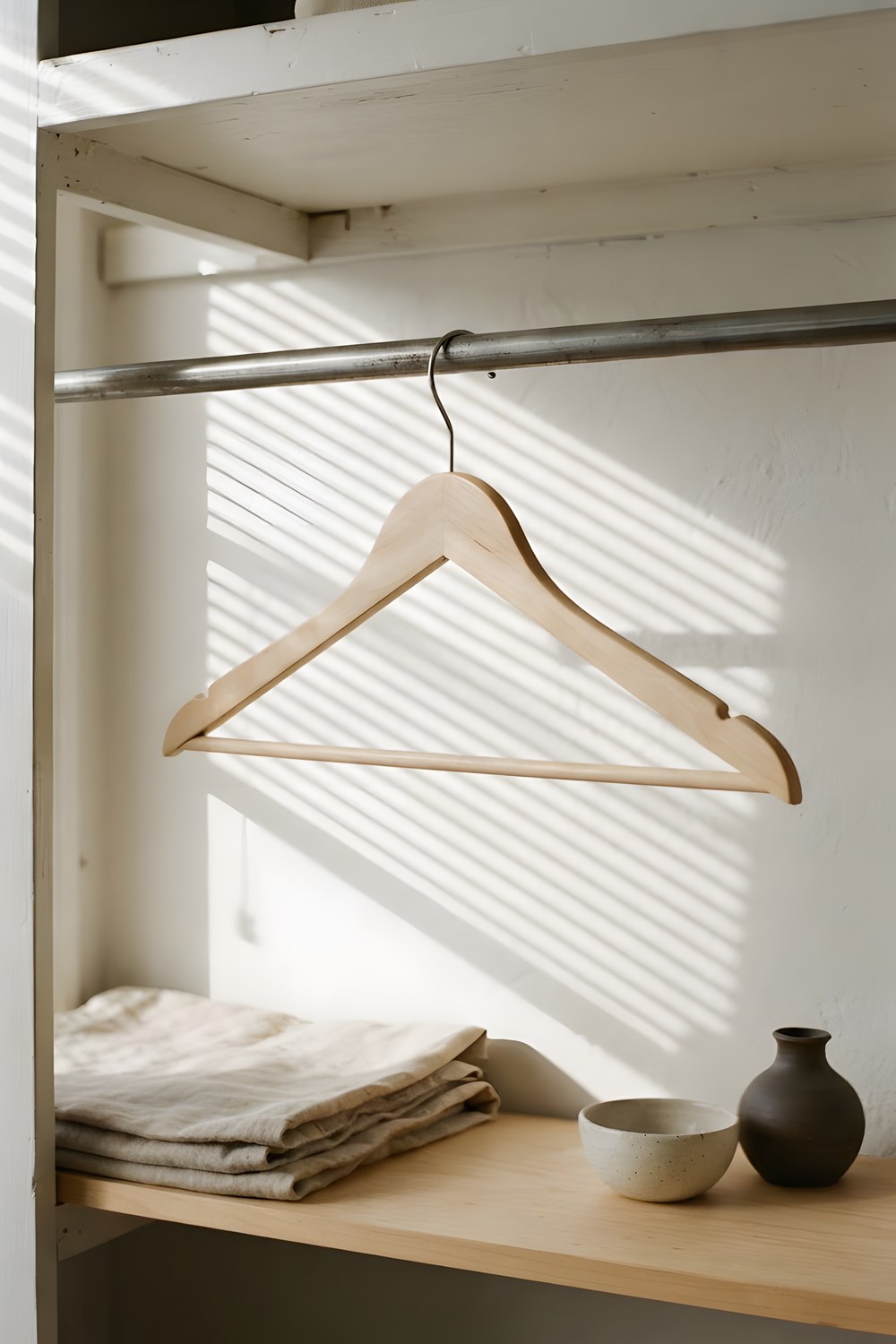
A wide wooden hanger with a curved shoulder gives the fabric somewhere to fall. A thin wire one pinches, and leaves a small dent where the sleeve meets the body. Fastening the top button and one in the middle keeps the placket from curling and the collar from folding in on itself.
Space on the rail counts too. In a one rail wardrobe it is tempting to push everything together, but shirts hung with about a finger’s width between them can settle, while crowded ones lean on each other and set new creases.
Whether you like a shirt stiff or soft is a matter of taste, not measurement. A crisp collar comes from a tight weave and a little starch, and a softer drape comes from repeated washing. Either way, the overnight hang does the same quiet job: it gives the fibres a few hours to forget the drawer.