How to tell a scarf worth keeping from one that is not
A scarf earns its place on a small rack by how it behaves after the first fold, not by how it looks on the first morning. Here is what to check before it joins the rotation.
Fibre first
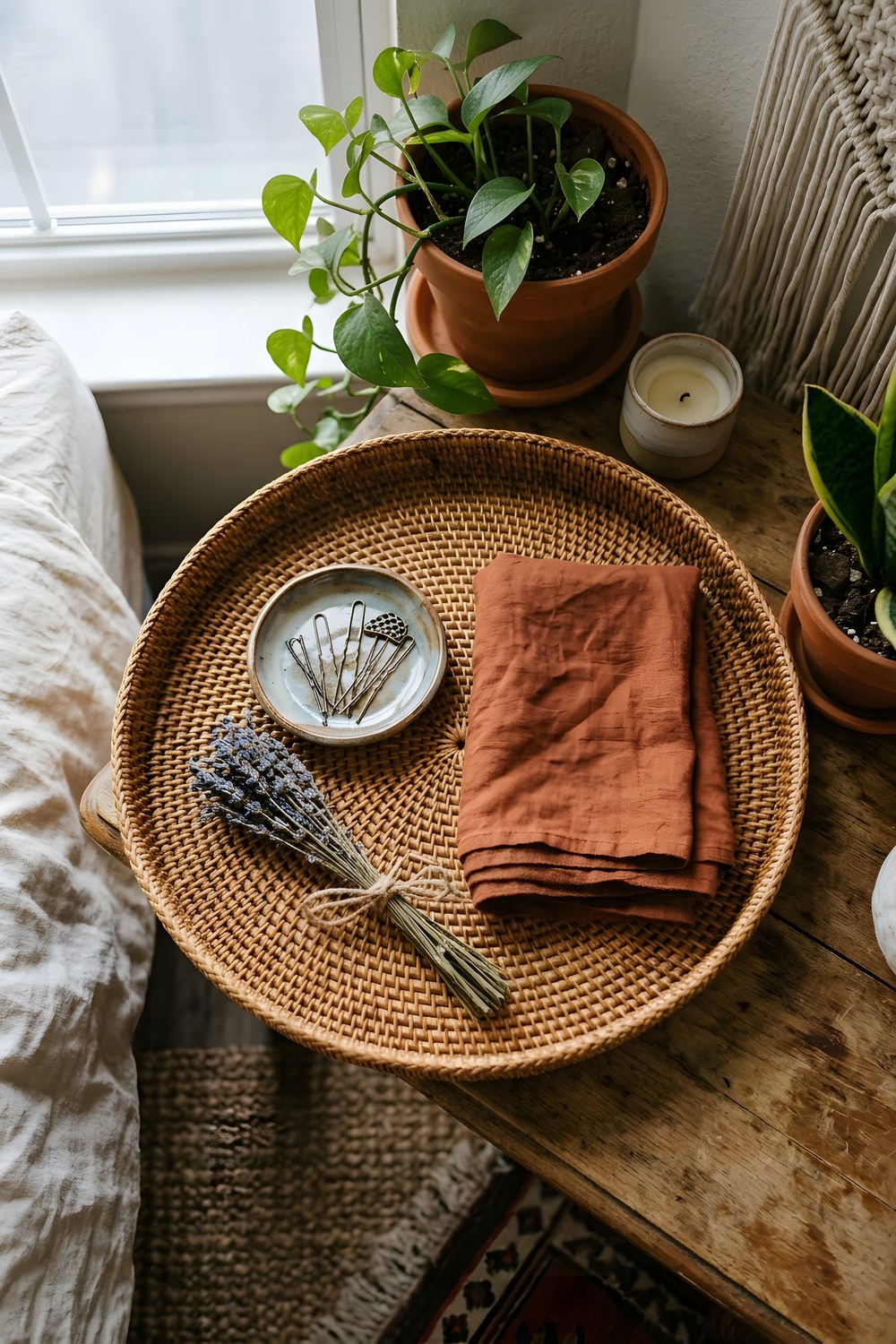
A scarf that lives on one rail in a small wardrobe has to do more than one job. Rust linen, the kind you might fold flat on a tray by the door, softens with each wash rather than pilling, because linen fibres are stiff and smooth rather than fuzzy. Wool and cashmere blends soften too, but they need a wider gap between wears to recover their loft, so they suit a household with more than one scarf in rotation. If there is only room for one, plain linen or a linen and cotton blend forgives more mistakes, including a hurried wash on a weekday evening.
Weight and fold
Hold a candidate scarf loosely and let it hang. A good one falls in soft, uneven folds rather than sitting stiff like a board or drooping like a wet towel. That drape usually comes from a looser weave, which you can check by holding the fabric up to a window. Light coming through in small, even gaps means air can move through the weave, which matters more than people expect in a flat with only two rings on the stove and not much room for a radiator to dry things out.
Edges and small details
Check the hem before anything else. A rolled or whipstitched edge holds up to being knotted and reknotted, while a raw or barely finished edge frays within a season, especially where it catches on a bag strap or a coat button. Fringe is a matter of taste, not quality, but if you like it, check that the strands come from the weave itself rather than being glued or tied on afterward, since those separate first. A stub of dried lavender kept nearby will do more for a scarf’s staying power in the drawer than any spray, since moths avoid it and it needs no attention beyond an occasional squeeze to release scent again.