Why a border gets marked with light instead of paint
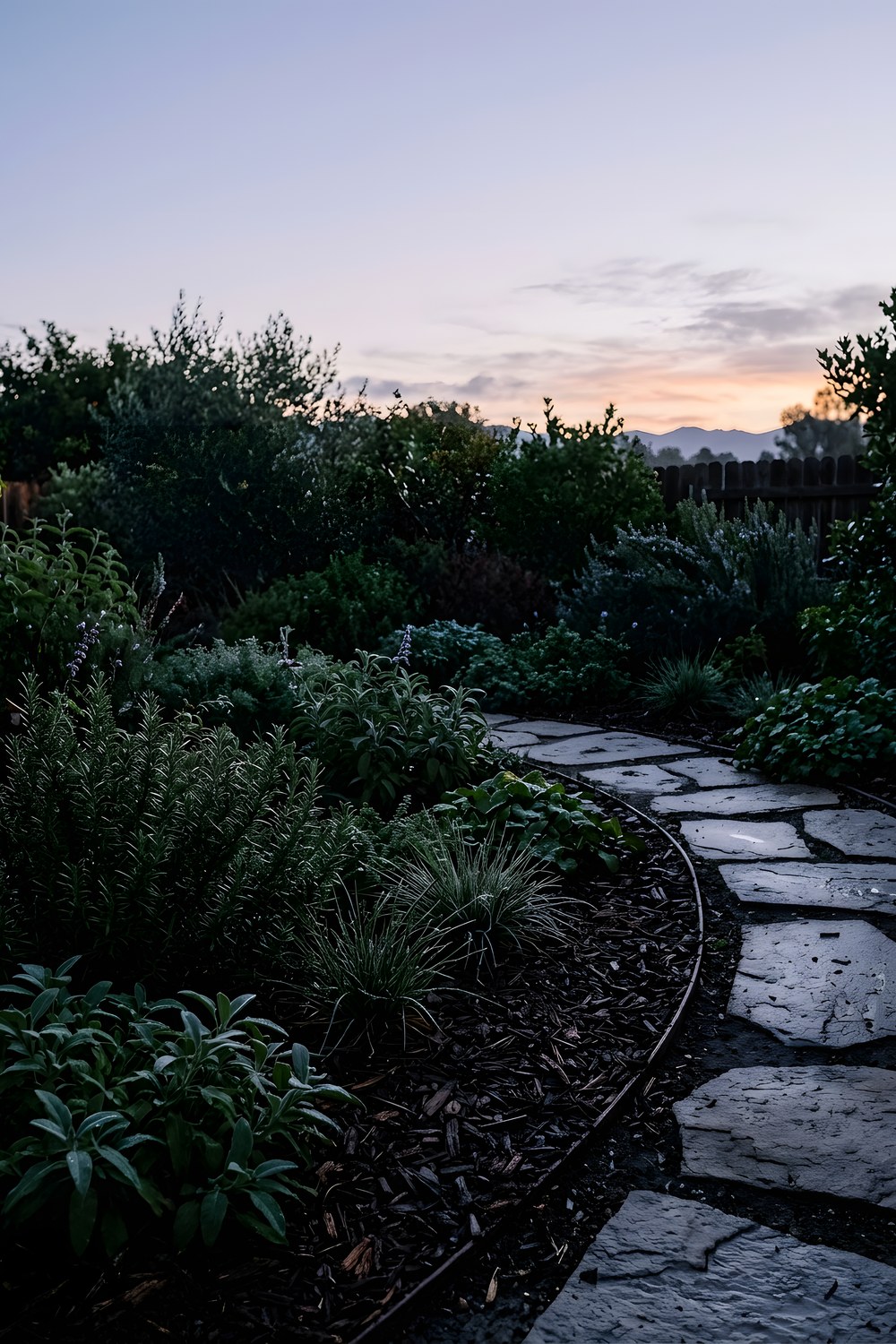
A row of small lights along a path is not decoration so much as memory, a way of telling the garden where its edges are after the sun forgets to.
The eye needs a line
Before sunrise, a garden bed is just shadow with shape somewhere inside it. The border between path and soil disappears first, because it was never a real edge to begin with, only the place where two textures happened to meet. Gardeners have always marked that meeting point with something: a row of stones, a strip of pale gravel, a line of low plants that reads differently than the mulch behind it. The instinct is old and practical. A body walking in dim light needs to know where the ground is reliable and where it is not.
Why small and low works better than bright
A weak, low glow along a border does something a floodlight cannot. It does not erase the dark, it only interrupts it at intervals, which is closer to how the eye already scans a path at dusk, in small jumps rather than one flat sweep. This is also why solar powered markers tend to survive better than wired ones in a climate with long dry stretches and sudden winter rain. There is no cord to crack underground, no connection to corrode after the first storm. The weak point instead becomes the small battery and the plastic lens, which is why the ones that hold up longest are usually the ones with a sealed, simple housing and nothing decorative added on top that can trap water or warp in heat.
What the habit is really doing
Marking a border this way is not about making the garden look finished. It is about making the garden legible at the one time of day most people actually pass through it without paying attention, half awake, moving toward coffee or a car. The light is not for admiring. It is a small, repeated promise that the path still goes where it went yesterday.