Why an empty shelf gets filled within a week
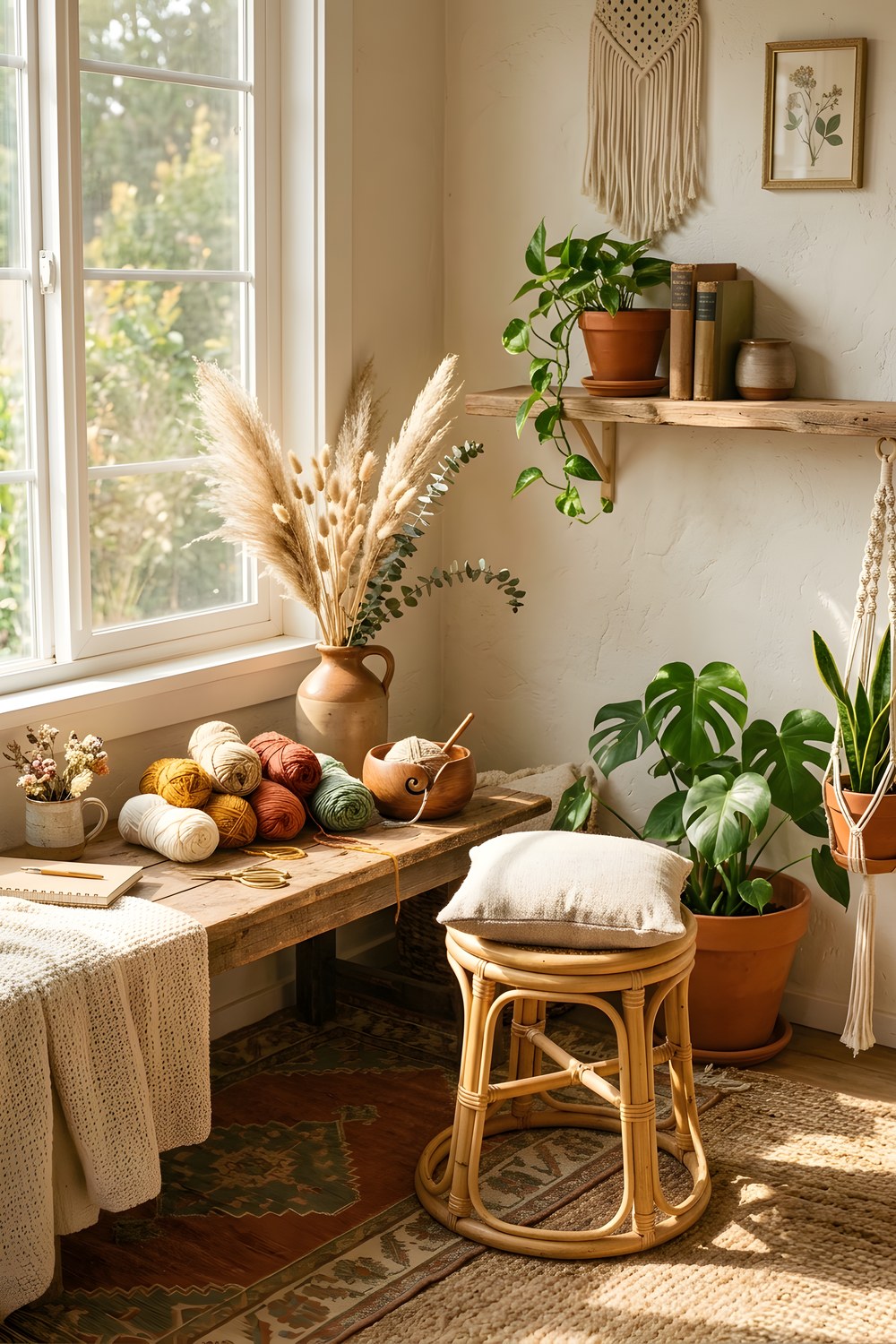
An open shelf in a craft corner never stays open for long, and the reason has more to do with the eye than with storage need.
The shelf as a magnet
Leave one shelf bare in a room full of texture and it will read as unfinished, even if nothing is actually missing. Yarn skeins, dried stems, a low table already carrying its own clutter, all of it sets a visual rhythm, and a blank plane interrupts that rhythm the same way a missing tile interrupts a floor. The eye keeps returning to it, not because the room needs another object, but because the pattern feels incomplete.
This is why so many craft nooks and sunroom corners end up with a shelf full of small jars, bins, or baskets within days of being styled. It is not accumulation for its own sake. It is the brain closing a gap.
Weight before width
Once something does go up there, the choice tends to follow gravity more than fashion. A shelf mounted with light duty brackets, common in older sunrooms and craft additions, usually holds somewhere between nine and eighteen kilograms per bracket pair, depending on the wall anchor. Skeins of yarn are light, a clay jug with dried pampas is light, but a run of full storage containers is not. Anyone loading a shelf with anything more substantial than a few plants should check the bracket rating before assuming the wall will absorb the difference.
Why clear or open beats closed
A nook used for an active hobby gets opened and closed constantly through the day, so anything stored there benefits from being visible at a glance rather than labeled and guessed at. That is the same logic behind glass front cabinets in old sewing rooms: not aesthetics first, but the practical saving of not having to open five things to find one spool of thread. A shelf that lets contents be seen does the sorting work before a hand ever reaches for it.
The empty corner in a sunroom, then, is less a gap in decor and more a short countdown. Something will fill it, and what fills it well is usually decided by load limits and sightlines, not by what looked good in a photograph.