Why one bathroom shelf works better than a full cabinet
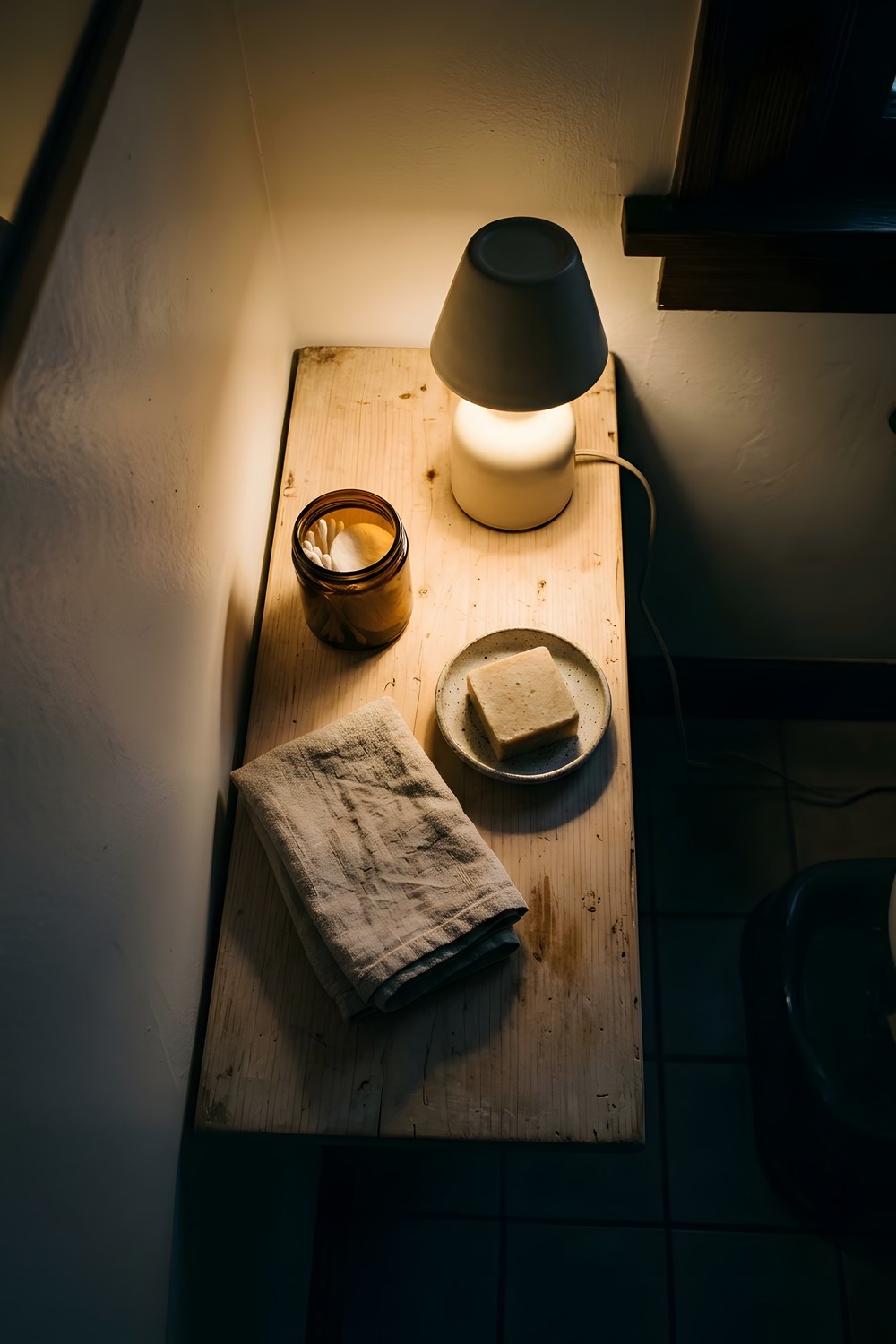
Keeping soap, a cloth and a jar out on the counter is not clutter. It is why people actually use them.
The habit already exists
Most people wash without deciding to. Hands go to the counter, not to a cabinet, because opening a door and choosing among six bottles takes a second of thought that the brain would rather skip. A shelf with three things on it removes the choosing. What is visible gets used. What is behind a door gets forgotten until it is nearly empty, at which point it gets replaced rather than finished.
This is not a claim about willpower. It is closer to how a kitchen counter works. A knife left out gets used for the next apple. A knife put away in a drawer often does not, even though reaching it takes only a few more seconds. Small frictions matter more than they should, and a bathroom counter at night, under one warm lamp rather than the overhead light, is a low friction place.
Glass, cloth, dish
The three objects that tend to survive on a narrow shelf share a trait: they show their own state. A glass jar shows how much is left, so nobody opens it expecting more than there is. A folded washcloth, cotton rather than a synthetic blend, dries faster and does not hold odor the way a thicker microfiber one can, so it gets picked up again instead of swapped for a fresh one each night. A small dish under a bar of soap keeps the underside dry, which is the actual reason bar soap in a puddle turns soft and disappears twice as fast as it should. None of this is about which brand of anything sits there. It is about whether the object tells you, at a glance, what to do next.
What changes with less
A shelf holding three things instead of twelve is not a style choice so much as a maintenance one. Fewer things to wipe around, fewer bottles to knock over reaching for the one behind them, and a lamp instead of a bright bulb because most of what happens at that counter happens in the last twenty minutes before bed, when eyes do not want daylight.