How to make dish washing the calm part of your evening
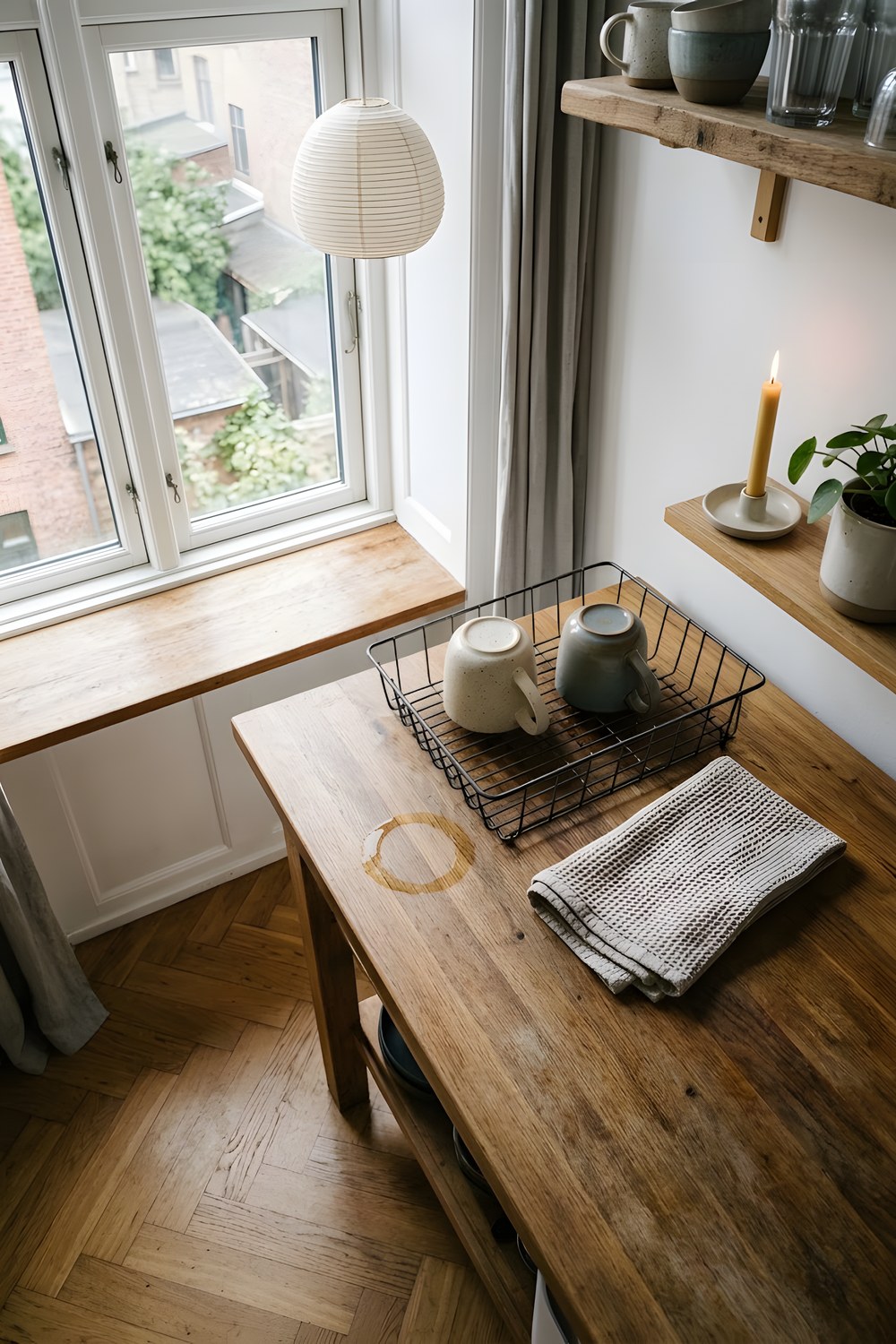
A slow wash and dry at the sink can turn ten dull minutes into a small reset before bed. Here is a simple order that makes it work.
Clear the counter first
Before any water runs, take everything off the counter and sink edge that is not a dish. A clear surface does two things: it gives wet cups a place to breathe and it tells your body that the evening is winding down. Fill the basin with water warm enough to cut grease but not so hot it turns your hands red. Add soap once the water is running, not before, so it foams instead of sitting flat.
Wash in an order, not at random
Start with glasses and mugs, since they carry the least residue and will foul the water last. Move to plates and bowls next, and finish with anything greasy like a pan. Rinse each piece under running water rather than letting soap dry on it, since dried soap film is what makes stoneware look cloudy over time. A cotton cloth with a waffle texture is worth having near the sink for this step. The raised grid holds more water than a flat weave and rinses out fast under the tap, so one cloth can wipe a counter, dry a mug, and still be wrung nearly clean by the time you hang it.
Dry with air, not a rush
Once washed, set mugs and glasses upside down on a wire rack rather than stacking them on a towel. Air moving under and around a piece dries it faster than cloth pressed against it, and it avoids the faint smell a damp towel can leave behind if it never fully dries. Wipe the counter last, working from the driest corner toward the sink so you push crumbs and water toward the drain instead of spreading them. Wring the cloth, drape it flat over the tap or a hook, and leave the kitchen with nothing left standing on the counter. That last empty surface, more than anything you washed, is what makes the room feel settled for the night.