Why a wooden comb behaves differently once the heat breaks
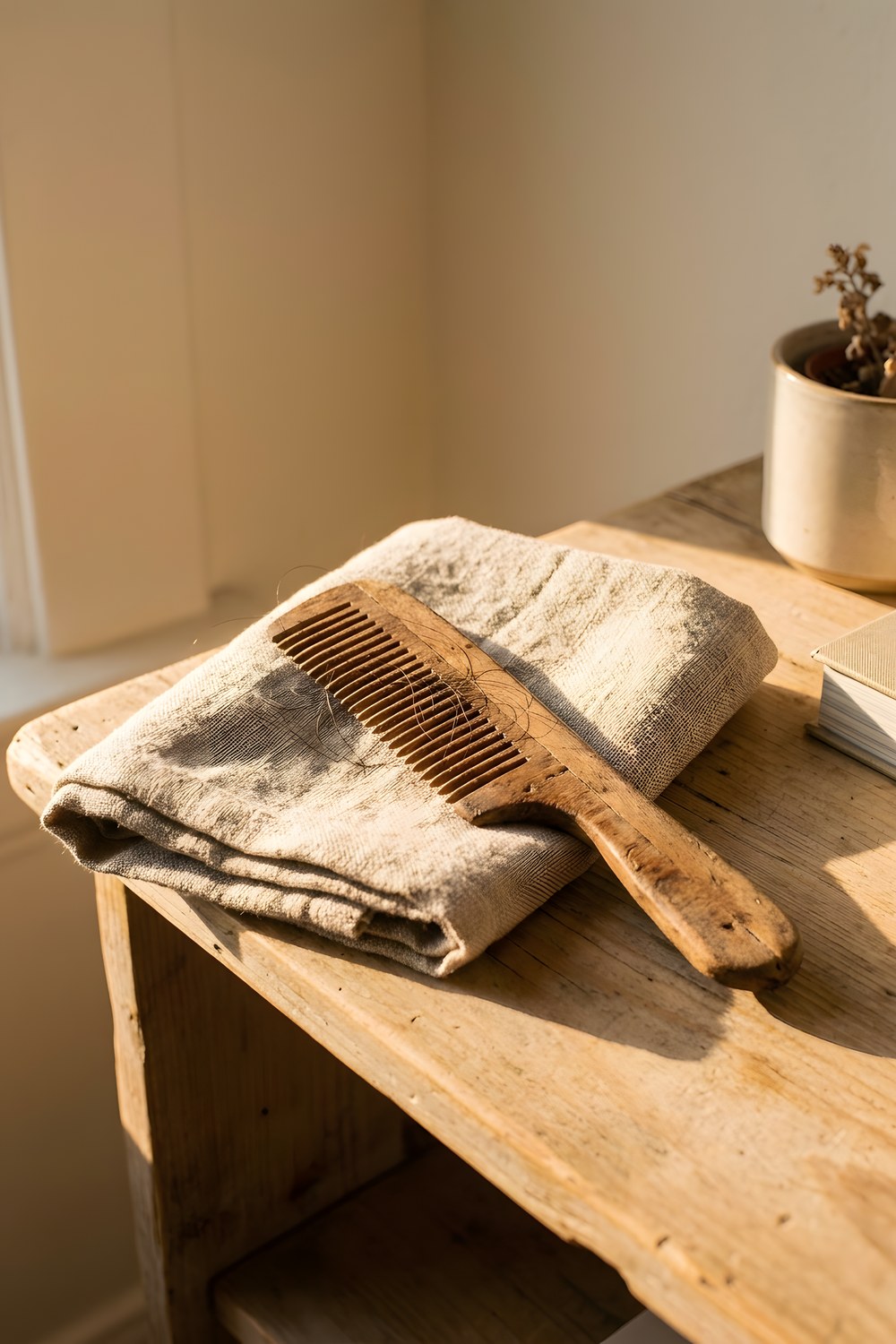
As the air in a rented flat turns dry and then damp again with the season, the material of a comb starts to matter more than its shape.
What the teeth are actually made of
A comb cut from a single piece of wood, usually beech or a pale ash, has no seam and no glue line down the spine. That matters because plastic combs are molded in two halves and pressed together, and the join often leaves a thin ridge that catches on strands as they pass through. Wood cut whole does not have that ridge. The teeth are shaped and then sanded round, so the edge meeting the hair is dull rather than sharp, which is a matter of comfort rather than performance and worth saying plainly.
Why late September changes the comb
Through summer, a wooden comb kept near a bathroom mirror in Los Angeles heat can dry out faster than it would in a damper climate, and the grain can tighten and go slightly rough at the tips. Once the season turns and the apartment holds a bit more moisture in the evening air, the wood tends to soften again and the surface smooths out on its own over a few weeks. This is just wood responding to humidity, the same way a wooden spoon or a picture frame does, and it is not something to correct with oil or polish unless the comb was left somewhere genuinely hot, like a windowsill in direct sun.
A small habit worth the shelf space
A comb kept flat on a folded towel rather than standing in a cup dries more evenly, since water does not pool at one end of the teeth. That is a small thing, but it is the difference between a comb that lasts through several dry and wet seasons and one that starts to split at the base after a year. None of this requires much attention, just a flat surface and a season change to notice it by.