Why cafe mugs feel heavier in your hand once fall starts
The same cup that felt light in July starts to feel dense and grounding in October, and the reason has to do with heat, not weight.
The season changes what a mug is for
In summer a mug is mostly a shape. Coffee is often iced, or drunk fast and cool, and a thin walled cup does the job fine. Once the weather turns, the same object starts doing real thermal work. Stoneware and other dense clays hold heat longer than porcelain because the walls are thicker and the clay body is less refined, with more mineral content packed into it. That density is what makes a cup feel substantial in the hand around this time of year, and it is also why a drink stays warm through a slower, more distracted sip.
Why bar shelves lean toward stoneware in the cold months
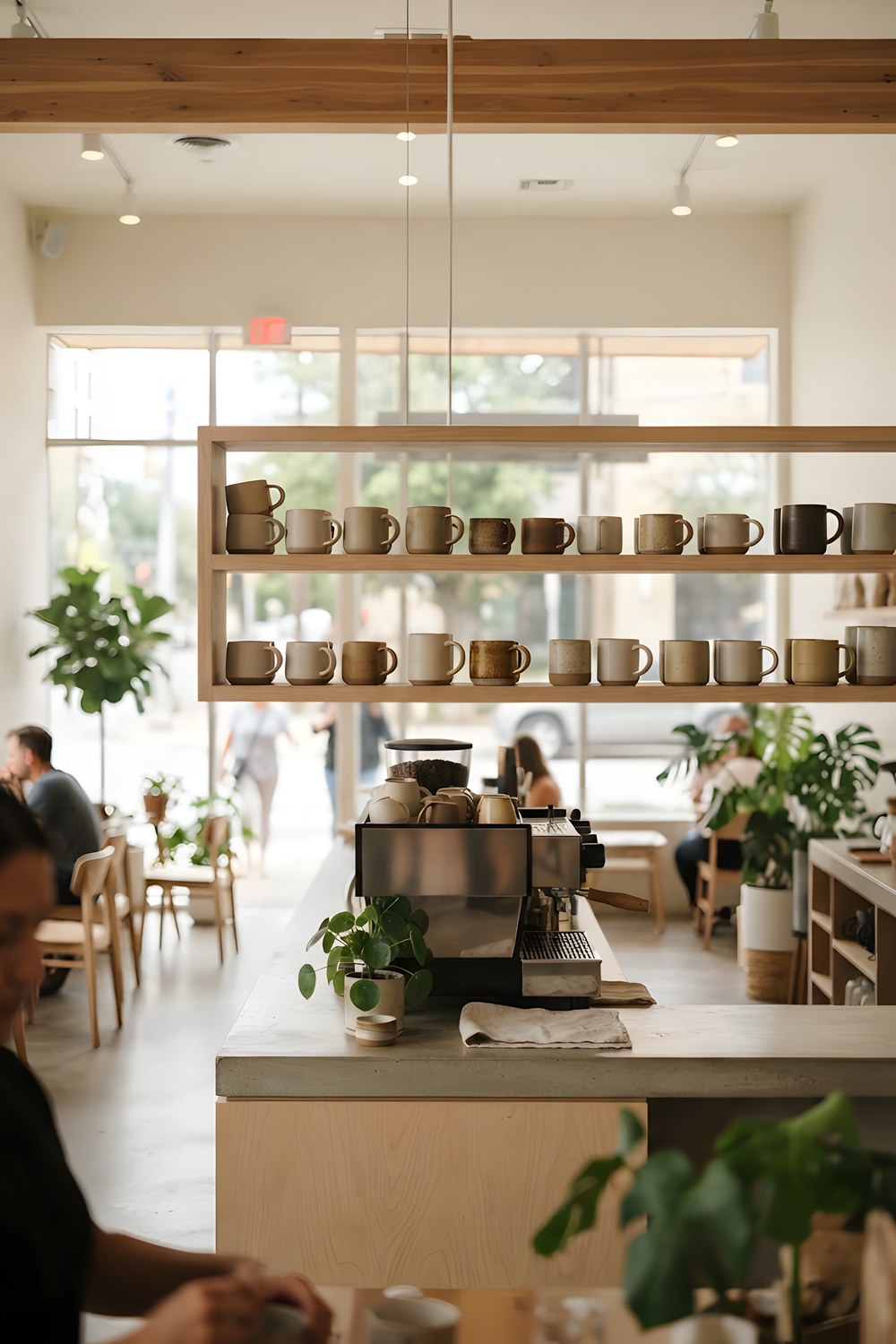
Coffee counters that swap out their cups seasonally are not just decorating. Stoneware is fired at a higher temperature than earthenware, which closes up the clay so it holds heat more evenly across the whole cup rather than losing it fastest at the rim. A shelf full of matching stoneware mugs, all the same pale or warm brown tone, is partly a practical choice about how long a drink stays hot while someone stands around talking, and partly just a look that reads as calm and unfussy.
What to notice in your own cupboard
This is a good week to sort your own shelf by weight rather than by pattern. The mugs that stayed in the back all summer, the heavier ones, are worth pulling forward now. There is no single correct thickness. Some people want a cup light enough to hold one handed while working, others want something dense enough to warm their palms. That part is preference, not a rule, but it is worth choosing on purpose rather than by habit.