Why folded linens shift when the season turns
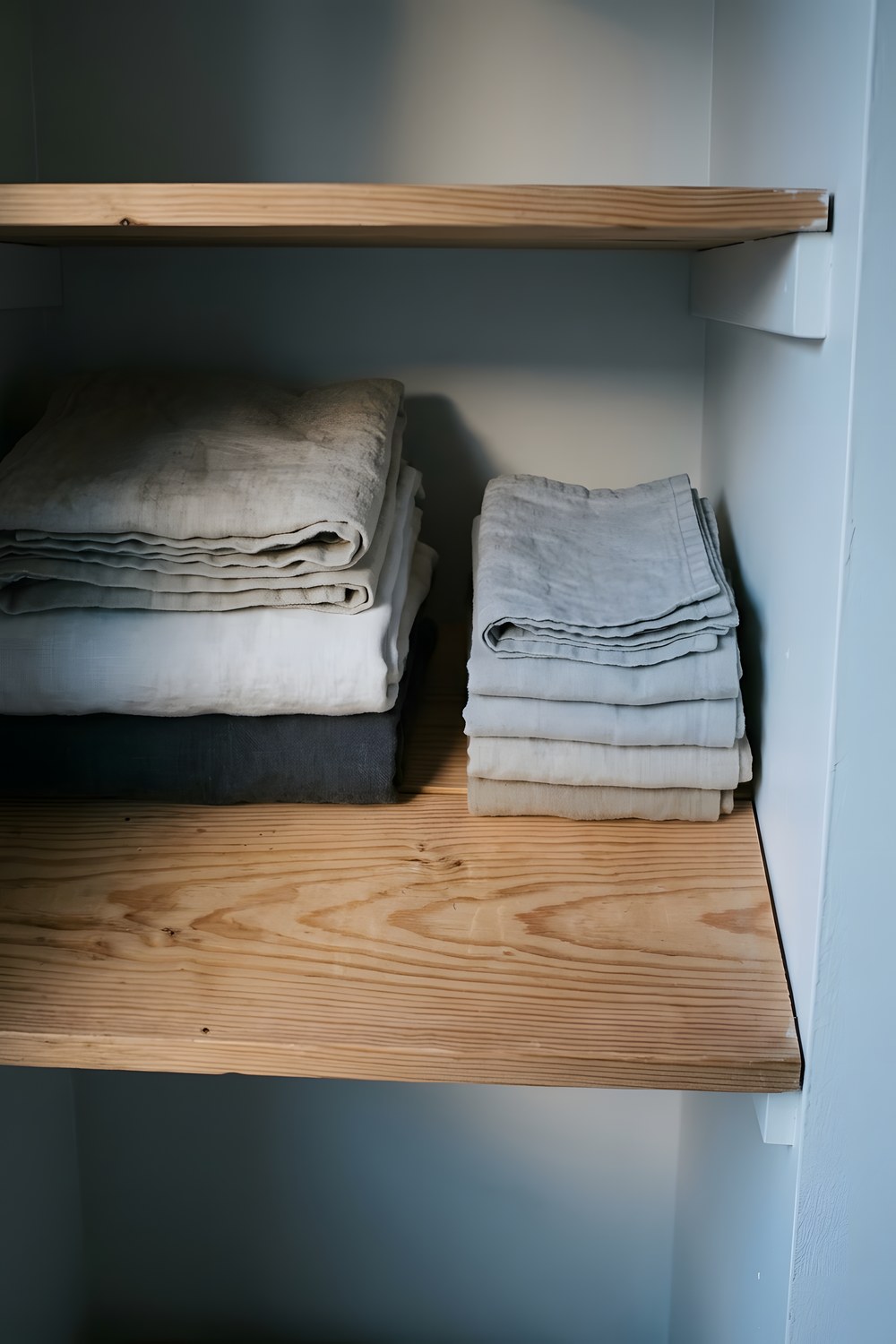
Closet shelves that hold summer sheets have to be rearranged as the light changes, and the fold matters more than the shelf.
The shelf is not the problem
A pale wood shelf looks generous until it is asked to hold both the light cotton sheets of summer and the heavier flannel that waits behind them. The trouble is rarely the shelf itself. It is the folding method, which most households never revise after childhood. A sheet folded into a loose square expands sideways under its own weight within a week, spreading past its stack and crowding the pile next to it.
What September changes
As the light through a west facing window turns thin and blue in the early evening, the linens that get pulled out most often switch too. Lightweight cloths move to the back. Heavier weaves come forward. This is also when piles get reordered, and reordering is where most closets lose their shape, because a stack that was square in June has usually slumped by September. A shelf that photographs cleanly in low dusk light is almost always one where each fold sits on a firm edge rather than directly on wood or on another cloth.
Structure without a container
There is a real argument for keeping linens uncontained, resting directly on open shelving, since it lets the fabric breathe and lets a hand find the right weight by feel rather than by label. The tradeoff is that open piles need discipline: folding to a consistent width, about 30 to 35 centimeters across for a standard sheet, and rotating stock so the same three sheets are not pulled every week while the rest go stale and take on the faint mineral smell of undisturbed cotton. Southern California’s dry air helps here, since it does not carry the moisture that turns closets musty elsewhere, but it also means static builds in synthetic blends faster, which is worth knowing if a stack seems to cling together for no reason.