Why a small closet gets messier the more you fold
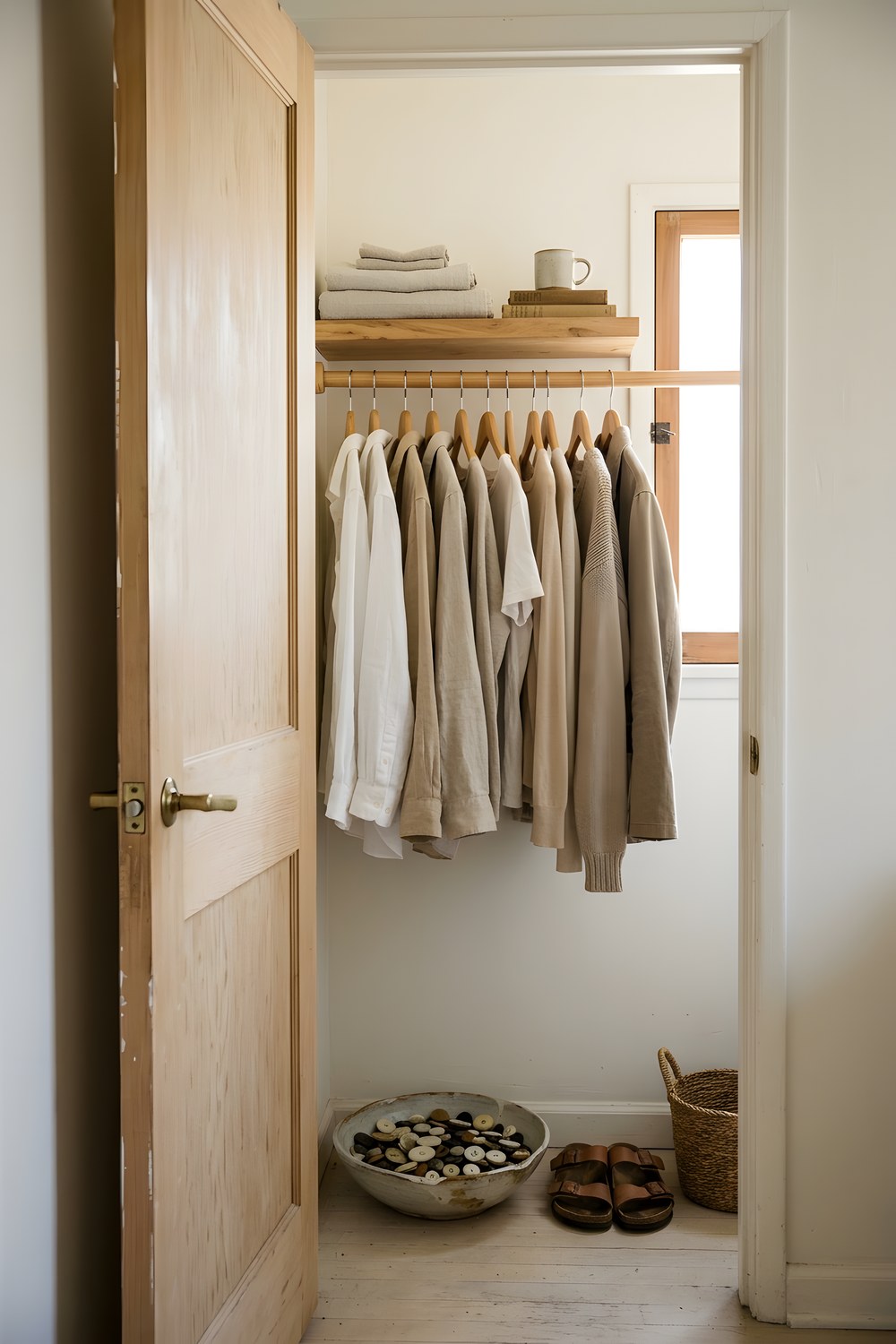
A single rail and one shelf hold more than they look like they should, if the clothes on them are sorted by a rule instead of by mood.
What usually goes wrong
Most small wardrobes fail for the same reason: everything is hung the way it was worn last, not the way it will be found next. A wool coat ends up between two cotton shirts, a linen dress next to a pair of jeans, and within a week the rail looks full even though half the garments are barely used. The eye reads a crowded rail as a full closet, and a full closet gets treated as finished, so nothing on it is questioned again. Buttons and spare thread often end up loose in a drawer for the same reason, scattered rather than kept somewhere visible, so a missing button on a shirt turns into a reason to stop wearing the shirt.
What to do instead
Group by fibre before you group by colour. Linen and cotton drape and crease differently from wool and synthetic blends, and hanging them apart makes it obvious at a glance what needs ironing and what does not. A rail sorted this way also reveals gaps honestly, a section that is nearly empty is a genuine gap, not a trick of colour or lighting. Keep loose buttons, spare thread, and small repair bits in one open container at eye level or just below it, a bowl works better than a drawer because nothing gets buried and forgotten. That single visible spot means a small mend takes a minute instead of becoming a reason to put a garment aside for weeks.
Light does the rest
A closet near a window, even one lit only at midday, shows fibre and wear far more honestly than the bulb inside a wardrobe frame ever will. Checking clothes in that flat, hard daylight is the fastest way to notice fading, bobbling, or a hem that has dropped, long before any of it becomes obvious in a mirror.