Why a candle at the end of a meal makes the room feel finished
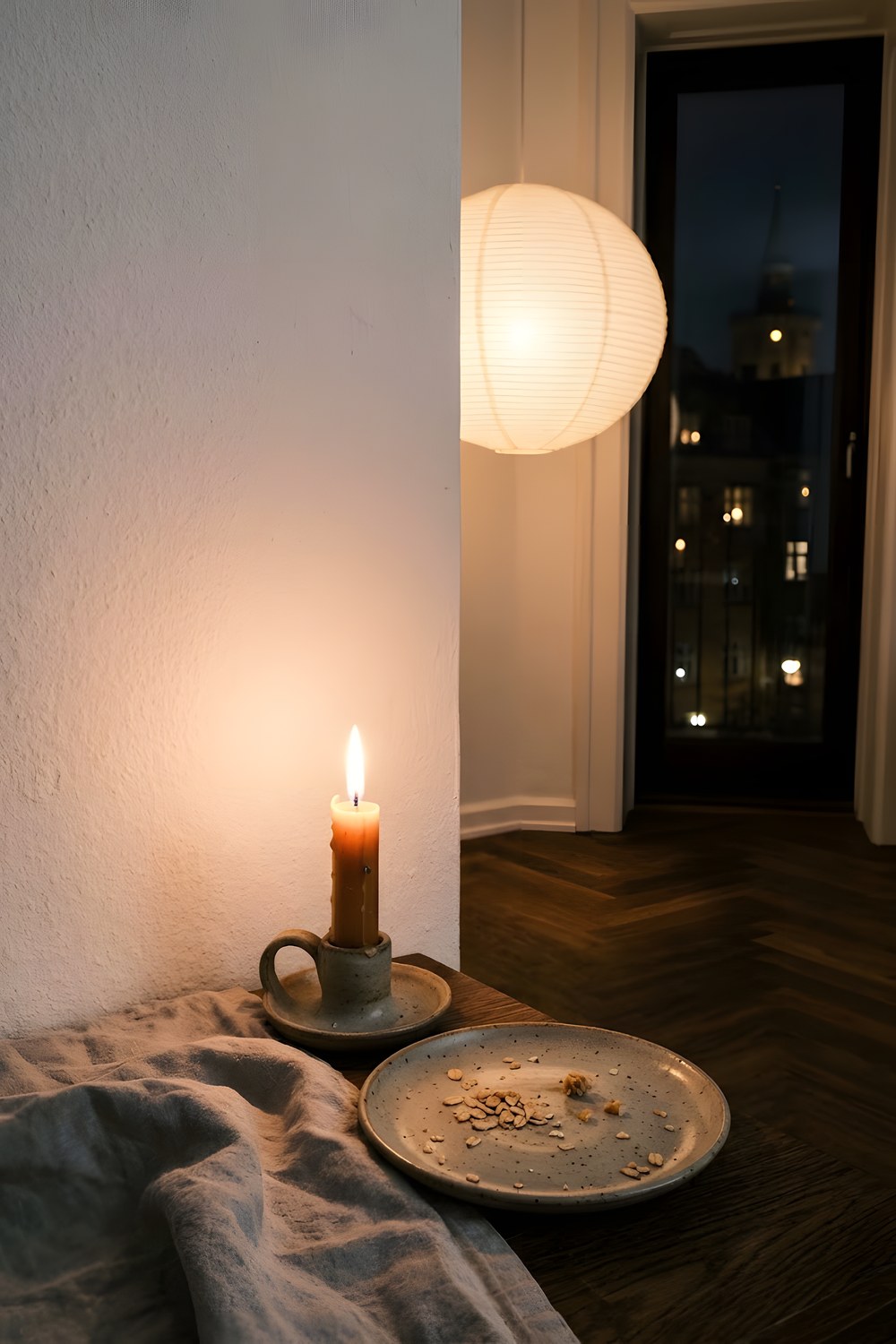
The last bite is rarely the last thing people remember about a meal. What closes it, the light, the quiet, does the remembering for them.
The meal ends before the plate is empty
A plate with a few crumbs left on it, lit by one candle, tells you something about how eating actually works. The stomach stops caring long before the evening does. What keeps a meal alive after the food is gone is the setting around it, and light does more of that work than people give it credit for.
Overhead light asks a room to keep functioning. It says there is still washing up, still a list, still somewhere else to be. A single flame does the opposite. It shrinks the room to the size of a table and a wall, and the eye has nowhere else to go, so it settles. That settling is most of what people mean when they say a meal felt like an ending rather than a stop.
Why the body reads flame as a signal to slow down
A candle flickers at a pace slower than a heartbeat, somewhere around a few beats a second, and eyes tend to fall into rhythm with whatever moves steadily in front of them. Fluorescent or LED light holds still and gives nothing to follow. Flame gives the eye a small, low stakes job, which is part of why a lit room after dark reads as restful even with no other change to it.
An old habit with a practical root
Before electric light, a candle at the table was often the last one lit for the night, since oil and wax were rationed by the hour. Its arrival at the end of a meal meant the working part of the evening was done. Nobody plans it this way now, but the habit stayed on after the reason for it disappeared, the way many household habits do. A small plate, a bit of wax burning down, a white wall catching the glow: none of it needs planning. It only needs someone to notice that the meal is really over when the light says so, not the fork.