The right way to butter toast so it soaks in evenly
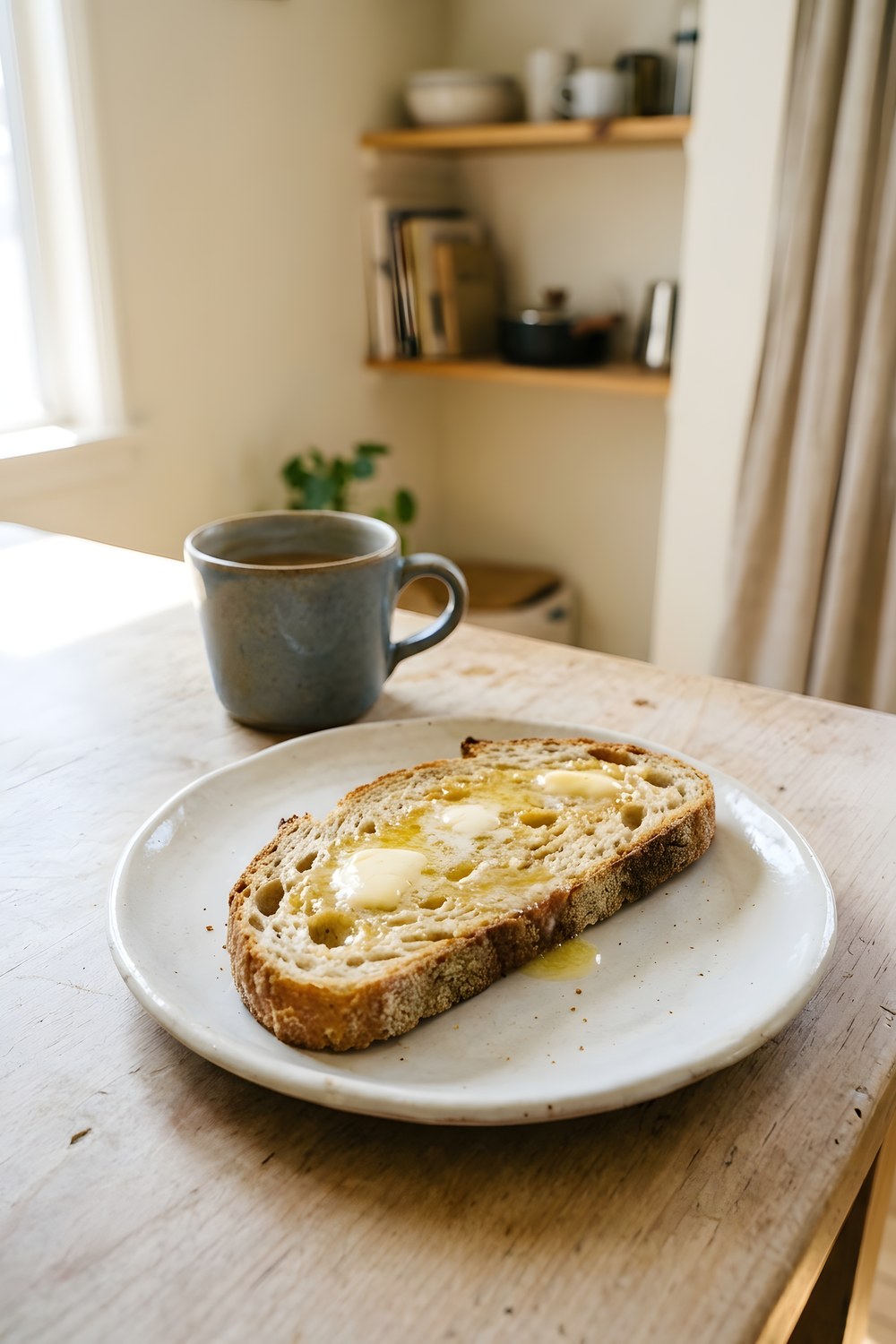
Most butter sits on top of toast and slides off in one greasy sheet. A slower method gets it into the crumb instead.
Why butter slides instead of sinking
Bread straight from the toaster is hottest at the surface and cooler underneath. Butter dropped on top melts fast where it lands and stays solid an inch away, which is why one corner ends up swimming while the rest stays dry. The fix is not more butter. It is timing and pressure.
The actual method
Toast the bread until the crust has real structure, not just color, since a floppy slice cannot hold liquid fat without bending. Let it sit for about ten seconds off the heat so the surface temperature drops slightly and stops flash melting whatever touches it.
Use butter that has softened at room temperature for twenty minutes rather than a cold block straight from the fridge. Cold butter drags and tears the surface, cold spots melt slowly and unevenly, and by the time it has spread the toast has already cooled too much to help it along.
Spread in two passes. The first pass is thin, almost a scrape, and its job is to seal the crumb so the second layer has something to grip instead of soaking straight through to the plate. Wait fifteen seconds, then apply the second, thicker layer working from the edges toward the middle, since the edges cool fastest and need the fat to set there before it can travel inward.
Salt, if used, goes on after both layers, never into the butter itself. Fine salt stirred into butter dissolves and disappears into the crumb. A few flakes on top stay put and still register on the tongue.
What this is actually for
A plain white plate under warm lamplight shows exactly how butter behaves, which is partly why it photographs so well after dark. The visible pool in the crumb is not excess. It is what even melting looks like when the timing was right.